
Back to blog
Article
How to Install Curtains in Container Houses
Admin September 15, 2026
Installing curtains in container houses requires selecting an appropriate method based on the window type, spatial structure, and functional requirements. Common methods include track installation, Roman rod installation, and special structure adaptation installation.
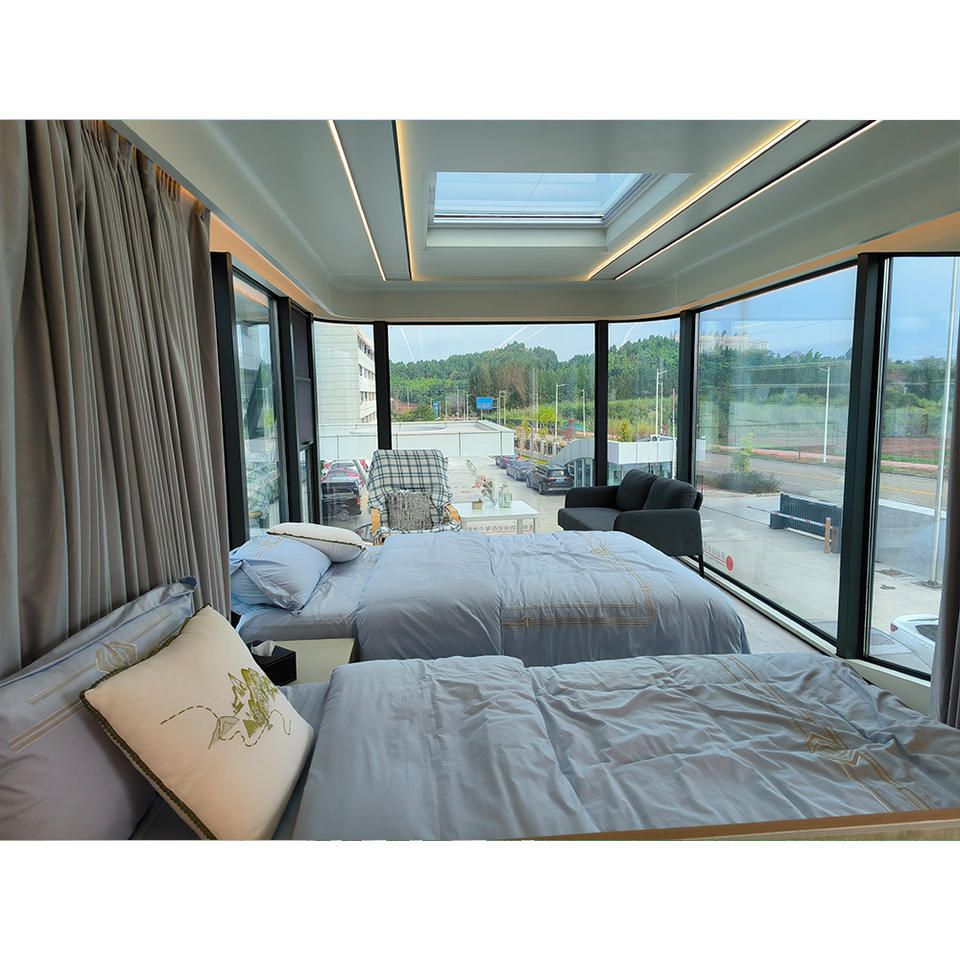
I. Track Installation Method
Track installation is suitable for most window types, especially the standardized window structures in container houses.
1. Positioning and Measurement
- Use a tape measure to measure the width of the window frame and determine the length of the track (usually 20-30 cm wider than the window frame to create folds).
- Measure the distance between the fixing holes and mark the installation positions for the track. For concrete walls, use an electric drill to make holes and insert expansion screws; for wooden structures, self-tapping screws can be used directly for fixation.
2. Installing the Track - A single track is used for single-layer curtains, while a double track can accommodate both sheer curtains and drapes simultaneously. When the window width exceeds 1200 mm, the track should be disconnected and offset with a bend, with an overlap length of no less than 200 mm.
- For exposed curtain boxes (tracks hidden within the ceiling), install the track first; for recessed curtain boxes, install the track later. Heavy-duty curtain tracks require additional fixing points, with wood screws no less than 30 mm in size.
3. Hanging the Curtains - Fix the curtain hooks or pulleys onto the track to ensure smooth sliding. Position the curtains on both sides to prevent them from gathering in the middle when drawn.
II. Roman Rod Installation Method
Roman rods are suitable for container houses without curtain boxes, offering a simple and cost-effective installation.
1. Positioning and Bracket Installation
- Measure the height from the floor to the installation position of the Roman rod and mark the fixing points for the brackets (15 cm from the side wall and 5 cm from the ceiling).
- For insulated walls, use aircraft expansion tubes to fix the brackets; for regular walls, screws can be driven in directly.
2. Installing the Roman Rod - Insert both ends of the Roman rod into the bracket holes, ensuring it is parallel to the window. Use shims to adjust the levelness and prevent uneven curtain heights.
3. Hanging the Curtains - Attach the curtains to the Roman rod using hooks or ropes, adjusting the uniformity of the folds.
III. Special Structure Adaptation Installation
1. Inward-Opening Window Treatment
- If the window opens inward, create a groove (2.5-4 cm deep) at the top or side of the window frame to reserve space for track installation, preventing the window from being unable to open fully.
- Alternatively, choose ultra-thin tracks or embedded serpentine tracks to reduce visual bulk.
2. Bay Window Installation - Installation Against the Window: Suitable for L-shaped bay windows or small spaces, saving countertop area. Use U-shaped glass exposed tracks with gentle bends at the corners.
- Installation Against the Wall: Suitable for large windows or living rooms, offering a more grand visual effect. Reserve a curtain box or install double tracks to prevent light leakage.
- Double-Layer Curtain Design: Sheer curtains against the window and drapes against the wall, balancing privacy and light blocking needs.
IV. Precautions
- Completeness of Accessories: Before installation, confirm that all accessories such as tracks, clips, and pulleys are complete to avoid rework.
- Installation Sequence: Install the track or Roman rod first, then apply wallpaper or paint the walls to prevent drilling from contaminating the decorative layer.
- Mosquito Screens: If the curtains are installed on the inner frame, reserve space for mosquito screen installation.
- Track Material: Prioritize aluminum alloy tracks, which are more durable than plastic tracks and require less frequent maintenance.
Related



