
How to Install a Computer in a Container House
Installing a computer in a container house requires planning that combines the structural characteristics of the container house with the general requirements for computer installation, focusing on spatial layout, power supply, heat dissipation, and environmental adaptability.
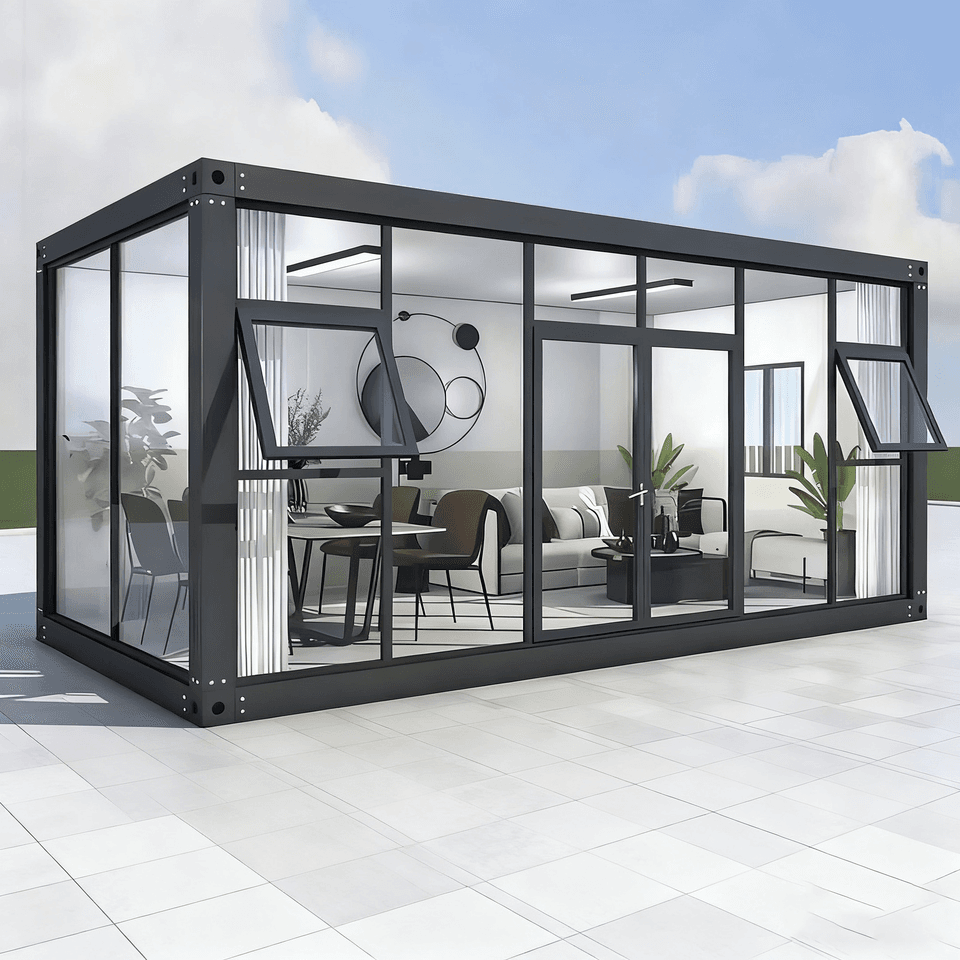
Spatial Layout and Equipment Fixation
The interior space of a container house is usually relatively regular, but the location needs to be planned according to the type of computer (such as a desktop, server, or laptop). For a desktop, a sturdy table or bracket should be selected to prevent the equipment from tipping over due to the transportation or movement of the container. For servers, the design of container data centers can be referenced, using rack-mounted installation methods to fix the equipment on standard racks, saving space and facilitating management. In addition, the floors of containers are often anti-static composite raised floors. During installation, it is necessary to ensure that the floor load-bearing capacity meets the equipment requirements, and load-distributing support brackets should be installed under large equipment.Power Supply and Wiring Planning
Computers require a stable power supply to operate. Container houses are usually equipped with distribution cabinets. Independent circuits need to be planned according to the equipment power (such as a maximum load of 10KW per rack) to avoid overloading. Strong-current wire troughs and weak-current wire troughs should be arranged separately to reduce electromagnetic interference. Power cords should be copper-core cables that comply with national standards, and overload protection devices should be installed. If laptops are used, sufficient sockets need to be reserved, and an uninterruptible power supply (UPS) should be considered to cope with sudden power outages.Heat Dissipation and Ventilation Design
Computers generate heat during operation, and heat dissipation needs to be carried out in combination with the ventilation system of the container. Container data centers usually adopt rack-mounted air conditioners or hot/cold aisle designs. For ordinary container houses, exhaust fans or split-type air conditioners can be installed to ensure a suitable indoor temperature. In addition, it is necessary to avoid the equipment being in close contact with the container walls (mostly color-coated steel plates) to reduce heat accumulation. For high-power equipment, ventilation openings can be reserved under the floor or air guide troughs can be installed according to data center standards.Environmental Adaptability and Safety Protection
Container houses need to have fire-resistant, moisture-proof, and dust-proof capabilities. The computer installation area should be kept away from the discharge ports of fire extinguishing devices to avoid damage to the equipment caused by gas fire extinguishing agents. Soundproof shielding materials can be installed on the walls to reduce external noise interference. If used outdoors or in highly corrosive environments (such as coastal areas), the equipment needs to be rust-proofed, and industrial-grade computers should be selected to enhance adaptability.



