
How to Flush Mobile Toilets on Film Sets
The flushing method for mobile toilets on film sets depends on the specific type, with common methods including high-pressure air-water flushing, foam flushing, water storage tank flushing, and foot-pedal flushing. The specific choice should be based on the on-site water and electricity conditions and usage requirements.
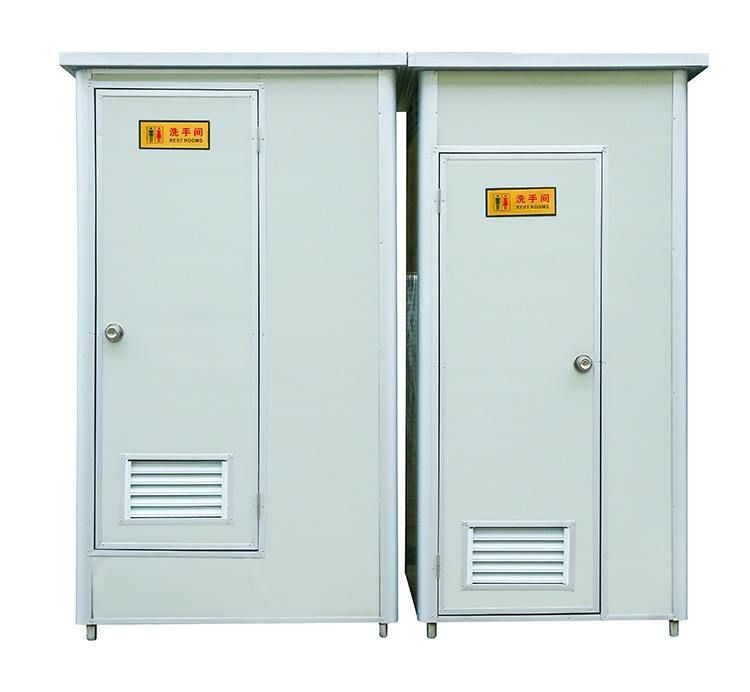
1. High-Pressure Air-Water Flushing This method achieves efficient flushing by mixing high-pressure water flow with air, with the core advantage being water conservation. Its working principle involves using compressed air to pressurize water to a specific pressure, forming a fine water mist that covers the inner walls of the toilet bowl, combined with the impact force of the air to remove waste. Due to the concentrated and wide-ranging flushing pressure, the water consumption per flush is only one-fifth of that of a regular flush, making it suitable for film set scenarios with stable water and electricity supplies and long-term usage needs. The flushing process is automatically triggered by an infrared sensor and controlled by a computerized intelligent system to regulate water volume and frequency, avoiding resource waste caused by human operational errors.
2. Foam Flushing This technology generates a large amount of foam through an automatic foaming machine to cover the surface of the toilet bowl, forming a physical isolation layer. The foam, made by mixing foaming liquid with water, has dual functions of lubrication and sealing: on the one hand, it reduces waste adhesion; on the other hand, it blocks odor emission. Since continuous flushing is not required, only a small amount of foaming liquid is consumed per use, with a water conservation rate of over 90%. This method is suitable for filming locations with water shortages or high environmental protection requirements, but it requires regular replenishment of foaming liquid and cleaning of residual foam.
3. Water Storage Tank Flushing For outdoor scenarios without municipal water supply, mobile toilets are equipped with independent water storage tanks as the water source. The tank capacity is usually designed based on the number of users, for example, a toilet for 50 people requires a 1-2 cubic meter tank. During flushing, water is delivered to the toilet bowl by gravity or a small water pump, and after waste discharge, the wastewater is drained into a septic tank or collection box. This method relies on manual regular water replenishment and is suitable for short-term filming or areas with weak water and electricity infrastructure, but attention should be paid to tank cleaning to prevent bacterial growth.
4. Foot-Pedal Flushing Simple mobile toilets often adopt mechanical foot-pedal devices. After the user steps on the pedal or button, an internal valve opens to release stored water for flushing. This design is simple in structure, has a low failure rate, and does not require electricity support, making it suitable for temporary setups or remote filming locations. However, attention should be paid to controlling the stepping force to avoid insufficient flushing or waste caused by improper operation. Some models are equipped with manual spray guns as supplementary cleaning tools.
Selection Advice: Film crews should make comprehensive decisions based on the filming duration, site conditions, and budget. For long-term projects, priority should be given to high-pressure air-water flushing or foam flushing to enhance the user experience; for short-term or remote locations, water storage tank or foot-pedal flushing can be chosen to reduce costs. Regardless of the method, regular equipment maintenance and training for staff on correct operation are essential to ensure hygiene standards and resource utilization efficiency.



