Back to blog
Article
How to Dismantle Residential Container Houses
Admin September 17, 2026
Dismantling residential container houses should follow standardized procedures. The specific steps are as follows:

I. Preparation
- Safety Assessment: Check the structural stability of the house to ensure there are no issues such as tilting, rusting, or deformation. If the rusted area exceeds 30%, professional reinforcement treatment should be carried out first.
- Tool Preparation: Equip with lifting equipment (with a load capacity of ≥5 tons), gas cutting equipment, electric wrenches, crowbars, protective nets, and other tools. Ensure that operators wear personal protective equipment such as safety helmets and gloves.
- Water and Power Disconnection: Turn off all water and power lines and drain the water in the pipes to avoid electric leakage or water seepage accidents during the dismantling process.
II. Dismantling of the Main Structure
- Roof Removal: Remove the roof color-coated steel sheets one by one from the outside to the inside to avoid structural imbalance caused by overall lifting.
- Door and Window Handling: Use a crowbar to separate the door and window frames from the connections with the container body. Retain hardware such as hinges and locks for reuse.
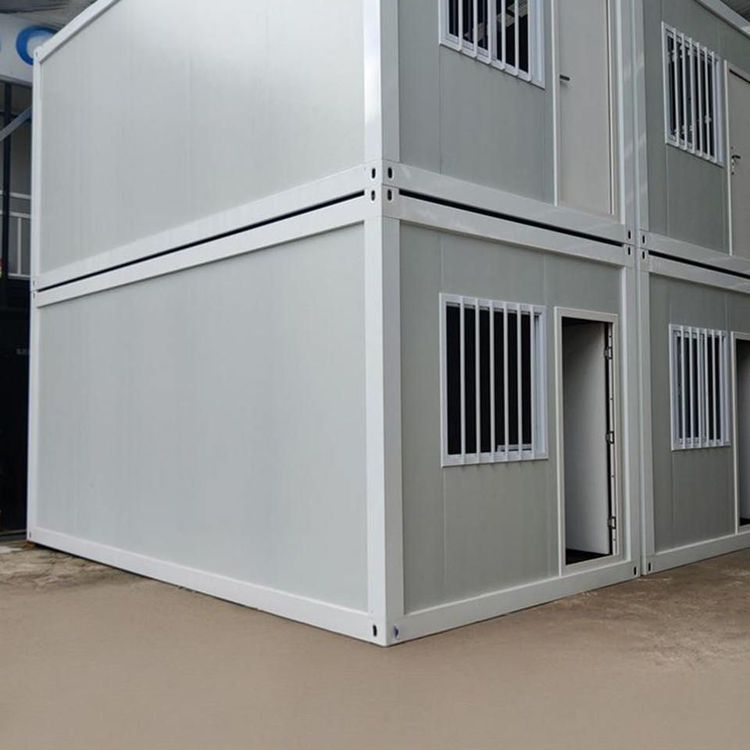
- Container Body Separation: For assembled container houses, first fix the upper container body with lifting equipment, then remove the corner fitting connection bolts, and finally lift it to the storage area. Maintain the balance of the container body during operation to prevent deformation.
III. Handling of Internal Facilities and Details
- Pipeline Handling: Mark and cut the electrical circuits in the order of live wire, neutral wire, and ground wire. Use a hot-melt machine to separate the water supply pipe interfaces to avoid material corrosion caused by residual water.
- Filling Layer Recycling: Rock wool or polyurethane filling layers should be separately packaged and recycled according to the 'Technical Standard for Construction Waste Treatment' to reduce environmental pollution.
- Floor Removal: If the base layer is a steel frame, its integrity should be retained for secondary installation. Floor rubber or composite floors can be directly peeled off.
IV. Post-Dismantling Sorting and Transportation
- Component Sorting: Metal components, insulating materials, glass, etc., should be packaged separately to avoid mixing and affecting subsequent use.
- Site Cleaning: Check whether all embedded parts in the foundation have been pulled out, backfill the pits, and level the site to ensure there are no safety hazards.
- Transportation Specifications: No more than 2 standard containers (6-meter specifications) should be transported at a time. For oversized components, special vehicles should be applied for to prevent overturning during transportation.
Precautions:
- Dismantling operations should be carried out by certified personnel. Operations should be suspended during typhoon seasons or extreme weather conditions.
- After dismantling, the containers should be stored in a dry and well-ventilated area to avoid long-term moisture causing rust.