
How to Dismantle a Mobile Toilet
The dismantling of a mobile toilet requires step-by-step operations based on its type and design, with core processes including tool preparation, water and electricity handling, component removal, structural decomposition, and cleaning and storage. Details are as follows:
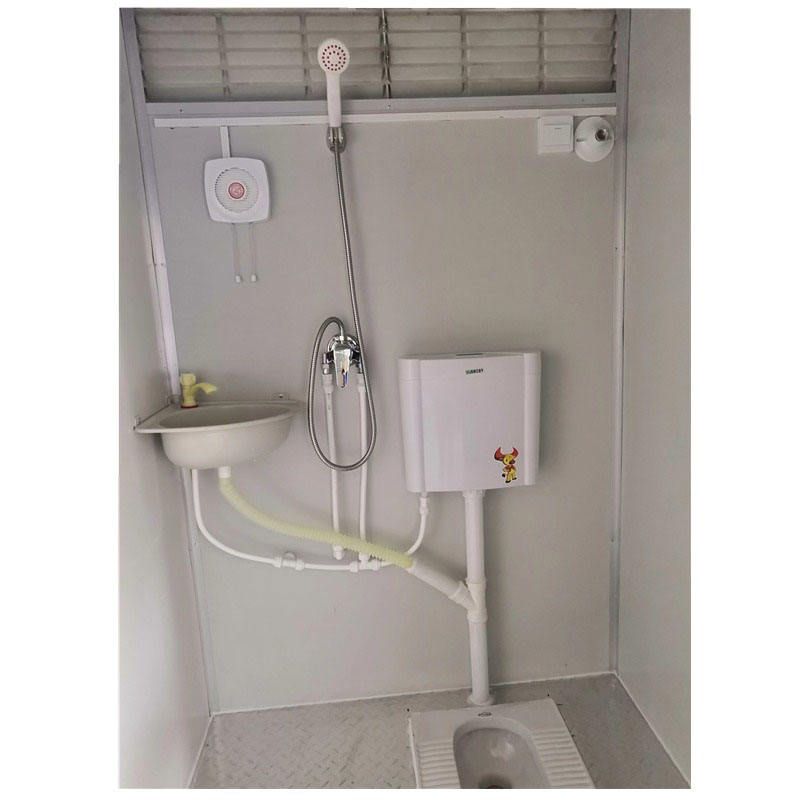
1. Tool Preparation and Protective Measures
Before dismantling, basic tools such as wrenches, screwdrivers, and hammers should be prepared. For plastic toilets, an additional screwdriver is needed to pry open the retaining ring. Operators should wear gloves, goggles, and non-slip shoes to avoid scratches or injuries from flying debris during the dismantling process. If working at heights (e.g., for trailer-mounted toilets), safety ropes and fall protection equipment should be used.
2. Shutting Off Water and Power Supplies
Cutting off water and power supplies is a prerequisite for safe dismantling. The main water supply valve of the toilet should be closed, and the main power line (especially for integrated smart toilets) should be disconnected, with exposed wire ends wrapped in insulating tape. For modular toilets, independent valves for each module (e.g., sinks, toilets) should be closed separately to prevent sewage backflow or electric shock risks during dismantling.
3. Dismantling Connectors
- Water, Electricity, and Sewage Pipe Handling:
- Use a wrench to loosen water pipe joints, clean the interfaces, and seal them with rubber plugs to prevent foreign objects from entering the pipes.
- The drainage pipe should be removed as a whole from the chassis interface to avoid pipe breakage caused by forced pulling.
- The power cord should be marked with wire sequences (e.g., L/N/E) for easy reinstallation or recycling later.
- Special Operations for Plastic Toilets:
- Release the fixing device (e.g., rotating buckles or quick-release buttons) between the toilet seat and the waste storage tank, and gently lift to separate them.
- Use a screwdriver to pry open the hose retaining ring and slowly withdraw the hose to avoid splashing of residual waste.
- When withdrawing the metal shaft of the toilet seat pivot, retain the rubber shock absorber to prevent loss and ensure reuse.
4. Removing Internal Facilities
- General Component Removal:
- Partitions, toilets, sinks, etc., should be removed in an “outside-in” order and packaged separately (e.g., wrap ceramic toilets with bubble wrap).
- Small parts such as screws and bolts should be placed in sealed bags and labeled with their positions to avoid confusion.
- Structural Decomposition of Modular Toilets:
- Remove in the order of “ceiling panel-wall panel-chassis”. Wall panels should be separated from the connecting corner pieces to protect the panel edges from damage.
- The bolts fixing the chassis to the ground should be removed with an electric wrench. If severely rusted, a loosening agent can be sprayed.
- Handling of Integrated Toilets:
- For box-type toilets, use a crane to lift them as a whole and then decompose the modules (e.g., separate the waste storage tank from the main frame) on a flat surface.
- Plastic toilets can be folded into a flat shape (e.g., 70×40 cm) to reduce transportation space.
5. Cleaning and Storage
- On-Site Cleaning:
- Remove garbage, residual waste, and debris generated during dismantling, especially cleaning sediment from the sewage pipes.
- For toilets used by the elderly, soak the screw holes with a chlorine-containing disinfectant for 30 minutes to eliminate odors and bacteria.
- Component Inspection and Recycling:
- Check whether panels and pipe fittings are intact and classify materials for recycling (e.g., PP plastic can be recycled).
- Contact the manufacturer to confirm whether they provide free on-site recycling services to reduce storage costs.
Precautions:
- The complexity is influenced by the toilet type (integrated, modular, trailer-mounted), scale, and environmental conditions (terrain, climate). It is recommended to be operated by a professional team.
- Dismantling should comply with the Hygiene Standards for Mobile Toilets (GB/T 21239-2023) to ensure the process meets environmental protection and safety standards.


