
How to Decorate a Container House
Decorating a container house requires comprehensive consideration of space utilization, lighting, insulation, facade beautification, and personalized design. Through reasonable planning and attention to detail, a comfortable and livable living environment can be created.
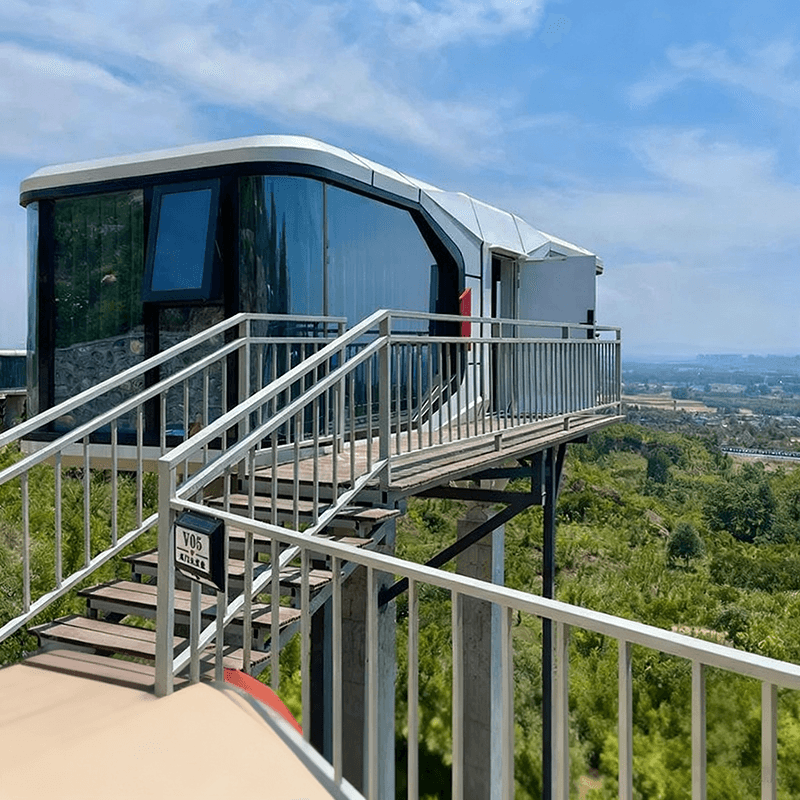
I. Space Layout and Functional Zoning
Container houses have limited space and need to expand functional areas through splicing or staggered-level designs. For example, two containers can be connected to form an open space integrating a living and dining area, or staggered stacking can be used to create a sense of hierarchy, with the lower level designed as a leisure courtyard or passageway. For small units (e.g., 15㎡), it is recommended to use multifunctional furniture such as foldable beds, foldable tables, and integrated cabinets, which can serve as sofas or workstations during the day and convert into sleeping spaces at night, enhancing space utilization.
II. Lighting and Insulation Design
For lighting, large floor-to-ceiling windows, roof skylights, or glass partitions can be installed to enhance indoor transparency. For example, in one case, a triple-glazed window design was used, providing better insulation than a red brick wall, achieving warmth in winter and coolness in summer. Insulation layers need to cover the walls and roof, combined with eaves or sunshades to prevent excessive sun exposure in summer. If used in cold regions, solar panels can be installed to assist with heating and reduce energy consumption.
III. Facade Beautification and Courtyard Integration
The exterior facade can be treated with paint spraying, themed murals, or glass curtain walls to摆脱 (get rid of) the industrial feel. For example, black paint paired with natural wood interiors creates a visual impact, or bright green decorative strips can be used to indicate orientation. Courtyard design can incorporate independent foundations (e.g., pile foundations) for moisture and insect resistance, while planting greenery or setting up terraces enhances interaction with nature.
IV. Personalization and Detail Handling
Incorporate technological or natural elements based on living needs. For example, a post-90s homeowner transformed a container into an 'aviation cabin' using blue-gray floors, natural wood cabinets, and circular windows, paired with smart appliances; in another case, an aunt expanded the sense of space through openable walls and installed panoramic floor-to-ceiling windows to enjoy the view. Additionally, attention should be paid to rust prevention (e.g., grinding cutting edges and applying epoxy primer), waterproof sealing (regularly replacing sealants), and preventing condensation (avoiding direct contact of the container with the ground).



