
How to Cool Container Houses
Cooling container houses can be achieved through the application of thermal insulation materials, ventilation optimization, shading design, and auxiliary cooling methods.
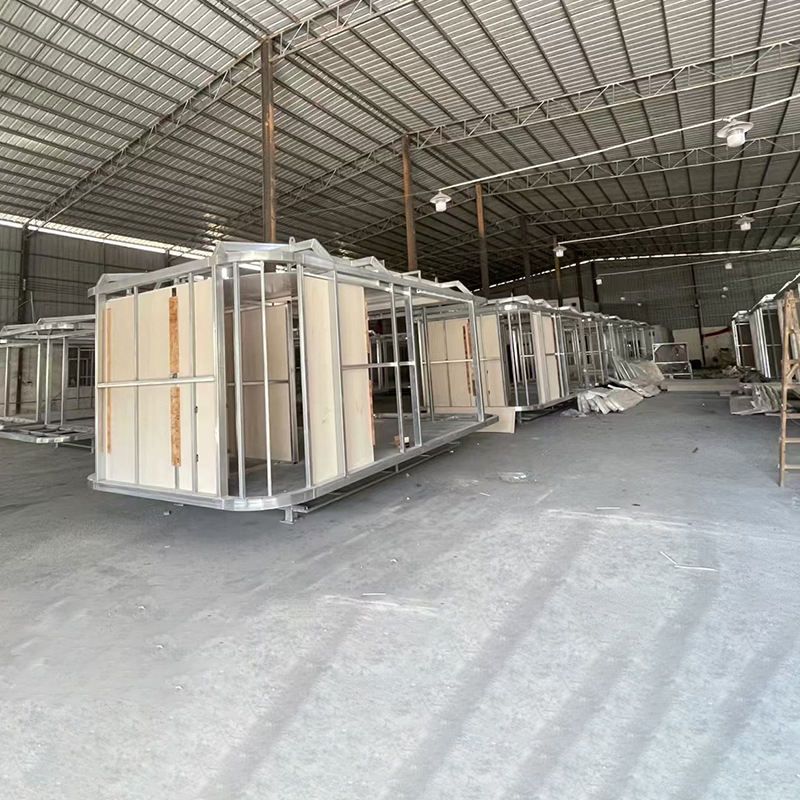
1. Application of Thermal Insulation Materials
The thermal insulation performance of container houses directly affects indoor temperature. The outer layer uses anti-corrosion color-coated steel sheets to reflect sunlight, the middle layer is filled with over 50mm of polyurethane foam to block heat conduction, and the inner layer employs fire-resistant gypsum boards in conjunction with moisture-proof films for coordinated temperature control, significantly reducing heat transfer. For example, China's "Technical Standard for Steel Structure Integrated Houses" requires that the heat transfer coefficient of residential container walls be ≤0.45W/(㎡·K), which is 1.8 times the thermal insulation efficiency of traditional brick-and-concrete walls. In actual tests, the indoor temperature of the container rises 22 minutes slower than the outdoor temperature in summer, and the indoor temperature drops by only 1.3℃ after being closed for 8 hours in winter. Additionally, increasing foam thickness or using rock wool can also enhance thermal insulation effects. New building materials that combine black steel sheets with polystyrene foam also possess efficient thermal insulation properties.
2. Ventilation Optimization
Combining natural ventilation with mechanical ventilation can accelerate heat dissipation. Install vents on the top or sides of container houses to create natural convection using the principle of hot air rising; if conditions permit, fans or negative pressure fans can be installed to enhance air circulation and prevent stratification of hot and cold air. For example, industrial large fans cover a large area through low-speed rotation, breaking temperature stratification. When combined with environmentally friendly air conditioners that deliver cool air, a 3-5℃ perceived temperature reduction can be achieved.
3. Shading Design
External shading is key to reducing indoor temperature. Install shading awnings, shading nets, or reflective panels on the roofs or walls of container houses to block direct sunlight and reduce heat absorption. For example, a double-decker container café uses sandwich panels with aluminum foil reflective layers, paired with adjustable shading roofs, allowing the interior to remain comfortable without air conditioning even under direct afternoon sunlight.
4. Auxiliary Cooling Methods
Sprinkler systems, green plants, and ice can serve as auxiliary measures. Sprinkler systems lower temperatures through water mist evaporation and heat absorption, but humidity control is necessary; green plants can balance humidity and absorb some heat, making them suitable for placement near east- or west-facing windows; ice melting absorbs heat for temporary cooling but requires regular replacement. Additionally, reducing electrical appliance usage and using curtains properly can also lower indoor heat load. For example, drawing curtains during the day can reduce sunlight heat entry by 60%.



