
How to Choose Mobile Toilets
Choosing mobile toilets requires comprehensive consideration of factors such as usage scenarios, material craftsmanship, sewage disposal methods, and after-sales customization services. Specific choices can be made from the following aspects:
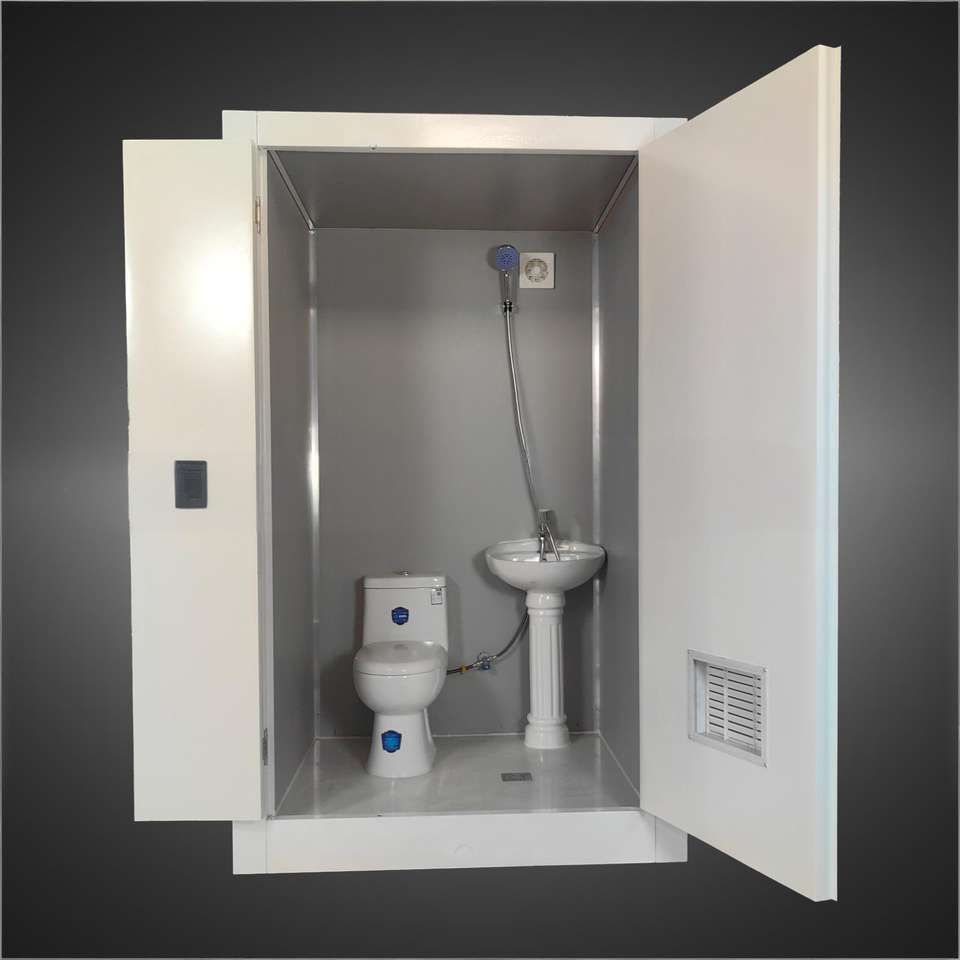
I. Select Models Based on Usage Scenarios
Different scenarios have significantly different functional requirements for mobile toilets. Construction sites, temporary construction sites, or short-term events (such as music festivals) require frequent disassembly and assembly. It is recommended to choose simple steel-structured mobile toilets, which are sturdy, easy to disassemble and assemble, and can be repeatedly transported, quickly responding to temporary needs. Public places such as scenic spots and parks are more suitable for prefabricated landscape mobile toilets, which have a simple and elegant appearance, strong sealing, effectively reduce odor accumulation, and have high coordination with the surrounding environment. Non-piped sites such as rural outdoors and camping bases need to choose piped-free ecological mobile toilets, which have reasonable sewage disposal designs, adopt anti-leakage structures, do not require complex civil construction, and are convenient for later cleaning and maintenance. For large-scale events and exhibitions with dense personnel, multi-compartment mobile public toilets are recommended to increase the number of squatting positions, improve personnel turnover efficiency, and avoid queuing congestion.
II. Focus on Examining Material Craftsmanship
Material craftsmanship directly affects the durability and safety of mobile toilets. The main frame should preferably choose a hot-dip galvanized square steel welding structure, which has excellent wind, sun, and corrosion resistance and is not easily deformed after long-term use. Exterior wall panels need to be selected according to the scenario: metal carved panels combine thermal insulation, waterproofing, and corrosion resistance functions, and have a good appearance texture; color steel panels have lower costs and are suitable for short-term use on construction sites; landscape modeling panels enhance appearance through imitation wood grain or stone textures, suitable for gardens and cultural tourism scenic spots. The internal configuration should include anti-slip and wear-resistant floors, odor-proof ceramic sanitary ware, ventilation and air exchange equipment, energy-saving lighting, privacy door locks, and storage hooks, while paying attention to sealing processes (such as door seam sealing strips) and odor-proof designs (such as U-shaped traps).
III. Choose Sewage Disposal Methods Based on Site Conditions
Sewage disposal methods need to match the site's piped network conditions. Areas with municipal piped networks can choose flush-type toilets, which use high-pressure water flow to flush away excrement, with high cleanliness but requiring continuous water supply; areas without piped networks recommend foam-type toilets, which use foaming liquid to cover the surface of excrement, reducing odor and saving water; scenarios with extreme water shortages or high environmental protection requirements (such as deserts and plateaus) are suitable for packaged-type toilets, which collect excrement in biodegradable bags, do not require external water sources, and are convenient for centralized disposal.
IV. Pay Attention to Odor-proof and Anti-slip Design and After-sales Customization Services
Odor-proof design requires a combination of ventilation systems (such as forced exhaust), sewage disposal methods (such as gravity flow), and internal structure sealing (such as floor slopes ≥ 2%); anti-slip design requires ensuring that the ground material has a friction coefficient ≥ 0.5 and a reasonable slope (usually ≤ 5%) to avoid water accumulation. In addition, prioritize manufacturers that provide nationwide warranty, door-to-door delivery, and rapid response, and confirm that they support customization services for size, color, and function (such as adding barrier-free facilities) to reduce long-term usage costs.



