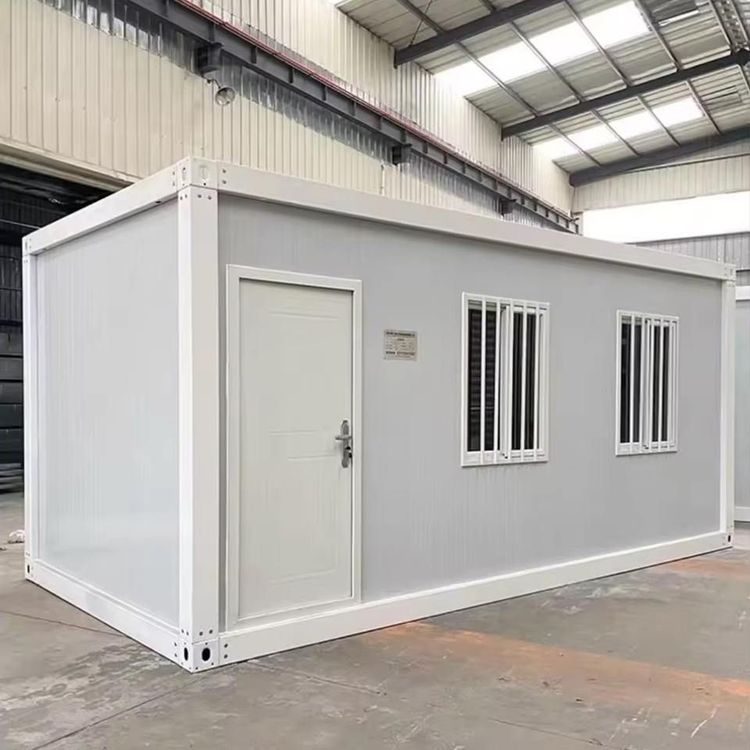
How to Build Prefabricated Houses
The construction process of prefabricated houses typically includes six core steps: modular prefabrication, foundation treatment, module transportation and assembly, detail processing and sealing, parallel operation optimization, and quality and precision control, as follows:
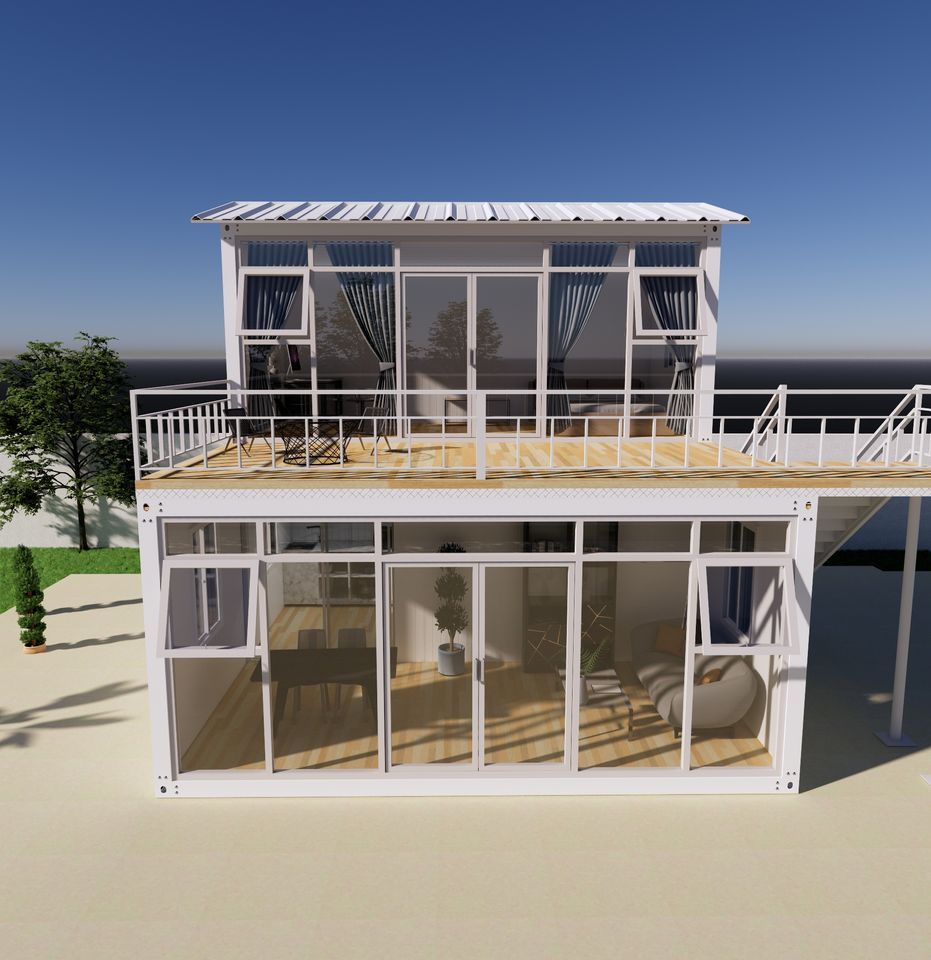
1. Modular Prefabrication: Standardized Production of Core Components in Factories
The core of prefabricated houses lies in breaking down the building into independent modules and completing standardized production in factories. For example, components such as ceilings, walls, floors, and plumbing and electrical lines are manufactured separately, with details like the waterproof layer in bathrooms and the piping layout in kitchens integrated in advance. Some factories employ automated production lines, using robotic arms to complete module assembly, ensuring that the dimensional accuracy of each component is controlled to the millimeter level. This approach not only reduces errors during on-site construction but also minimizes material waste through mass production.
2. Foundation Treatment: Site Preparation Based on Local Conditions
The foundation must be treated according to the geological conditions. Taking a rural case in South Korea as an example, the construction team first excavates foundation pits, lays white plastic sheets as a moisture barrier, and then pours a concrete垫层 (sub-base layer), without using steel reinforcement to simplify the structure. If the soil is soft, the excavation depth needs to be increased or pile foundations should be used; for rocky foundations, blasting and leveling are required. The key is to ensure that the ground height and slope meet design requirements, providing stable support for subsequent module installation.
3. Module Transportation and Assembly: Rapid On-Site Assembly Techniques
After being transported to the construction site by trucks, prefabricated modules need to be precisely assembled using cranes. For example, foundation piles weighing about 5 tons are installed using mobile cranes, beams are fixed with mortise-and-tenon joints or high-strength bolts, and stairs are lifted and installed layer by layer like building blocks. After assembly, floor slabs are laid and gaps are grouted to ensure structural integrity. During this stage, it is crucial to strictly follow the installation sequence to avoid rework due to module misalignment.
4. Detail Processing and Sealing: Key to Enhancing Durability
Gaps between components need to be filled with expanding foam, and nut fixings should be sealed with cement to prevent rainwater infiltration. Some projects also apply sealant at joints, install drainage channels and downspouts, and attach sealing strips. For example, a public housing project in Shenzhen, Guangdong, effectively solved leakage problems and extended the building's service life by attaching rubber sealing strips at module joints.
5. Parallel Operation Optimization: Core Strategy for Shortening Construction Period
Unlike traditional on-site sequential construction, prefabricated houses adopt a factory parallel operation model. For example, while modules are being produced, foundation treatment can be carried out simultaneously on-site; during module transportation, workers can prepare lifting equipment in advance. A public housing project in Shenzhen, Guangdong, assembled 6,028 concrete modules, reducing the construction period from 2.5-3 years to 1 year, with a more than 60% increase in construction efficiency.
6. Quality and Precision Control: Full-Process Digital Management
Each module comes with an 'ID card' (containing project name, model, production date, etc.), allowing production records to be traced by scanning a QR code. During the design phase, BIM technology is used to simulate the assembly process, controlling errors to the millimeter level. For example, a project used a three-dimensional scanner to detect module dimensions, ensuring that all components could be seamlessly connected without on-site adjustments.