Back to blog
Article
How to Build a Portable Toilet
Admin September 23, 2026
There are various ways to build a portable toilet, and different materials and structural forms can be selected according to needs. Below are two specific construction examples and classification descriptions:

I. Building a Portable Toilet Using a Water Storage Barrel
Basic Structure Construction
- Use an angle grinder to split the water storage barrel vertically in the middle, creating two semi-circular barrel bodies.
- Install universal wheels at the four corners of a wooden board to serve as a mobile base; use wooden strips and self-tapping screws to increase the height on the side of the barrel body and reserve a doorway position.
- Install sponge strips to form a door frame, embed plastic soft boards as walls, and invert the upper part of the barrel body as a roof to form an enclosed space.
Functional System Installation
- Drainage System: Drill a hole at the bottom of the barrel to install a drain pipe, connect a direct joint on the side, and attach an external plastic barrel as a small-scale sewage storage device.
- Water System: Install a simple bathroom heater, toilet, and water tank modified from water pipes. Connect the drain pipe to the sewage barrel; extend the water pipe to the doorway as the inlet pipe for the sink.
- Door Design: Install a simple door to ensure sealing and mobility convenience.
II. Building a Portable Toilet Using a Water Storage Tank and a Pallet
Mobile Frame Production
- Fix universal wheels at the four corners of the bottom of a pallet and place a water storage tank as the main structure.
- Use an angle grinder to cut the top of the water storage tank to form an open tank body; stack two tank bodies and fix them with self-tapping screws to increase the internal space height.
Internal Facility Configuration
- Sewage System: Drill a hole in the internal floor of the tank body, install an elbow and a water pipe, and connect it to the toilet's sewage outlet; after placing the toilet, apply glue to fix it and prevent leakage.
- Water System: Install a faucet, sink, and toilet water tank, connect a shower hose and bracket, and equip it with a spray-type showerhead.
- Door Design: Fix wooden boards and hinges to form a door body, install a door handle, and ensure smooth opening and closing.
III. Classification of Portable Toilets
By Structural Form
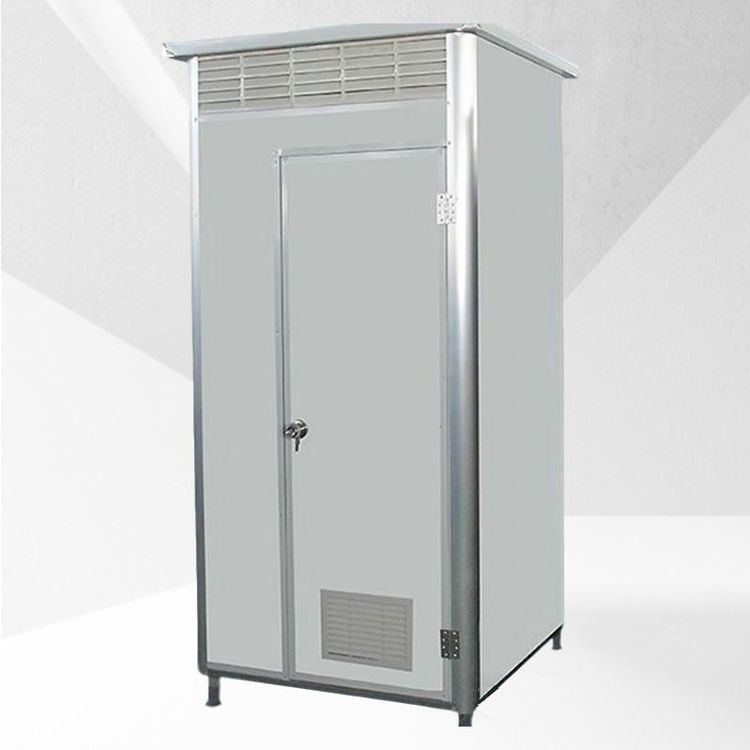
- Single-Unit Structure: An independent unit suitable for small-scale scenarios.
- Composite Structure: Composed of multiple units, allowing for the expansion of functional areas.
By Mobility Method
- Lifting and Handling Type: Relies on mechanical equipment for overall handling.
- Powered and Trailer Type: Equipped with a power system or a trailer design for easy long-distance mobility.
By Sewage Treatment Method
- Water-Flush and Waterless-Flush Suction Type: Relies on water for flushing or regular suction for sewage removal.
- Circulating Water-Flush Type: Uses a filtration system to recycle water resources, reducing water consumption.
When constructing, choose an appropriate plan according to the usage scenario, budget, and environmental protection requirements, and ensure that the structure is stable and the functions are complete.
Related