
How to Build a Mobile Toilet
There are various ways to build a mobile toilet, and different types and processes can be selected according to needs, mainly including overall finished product installation, water storage tank modification, and construction classified by structure/mobility/treatment methods.
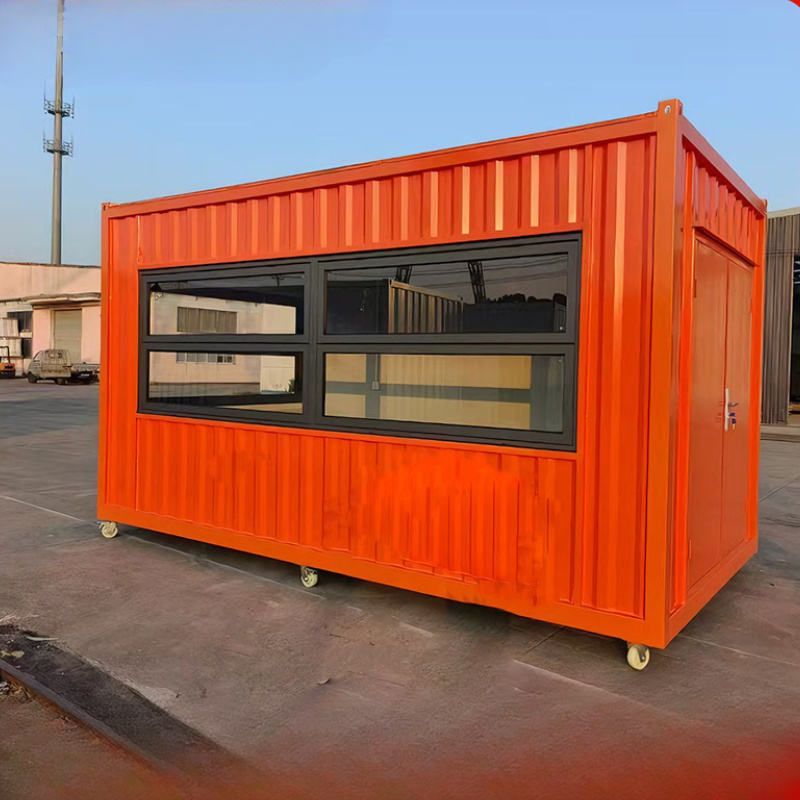
Overall Finished Product Installation
No civil engineering is required; it adopts a modular design and is assembled like building blocks. The specific process involves first installing columns as support structures and then fixing each module through splicing to ensure that each buckle fits tightly. The advantages of this construction method are a short construction period, low site requirements, and immediate usability upon placement, making it suitable for temporary events or emergency needs. For example, large-scale outdoor music festivals and sports events often use such mobile toilets, which can be quickly deployed and meet the usage needs of a large number of people.
Water Storage Tank Modification
Using recycled water storage tanks as the base material, they are made through cutting and assembly processes. The specific steps are as follows:
- Bottom Modification: Fix universal wheels at the four corners of the拖板 (drag plate) bottom for easy mobility; place the recycled water storage tank from a garbage station and use an angle grinder to cut along the top marking line to form an open-top tank.
- Tank Assembly: Stack two open-top water storage tanks upside down and fix them with self-tapping screws to form a double-layer structure for increased stability.
- Functional Area Division: Cut out a rectangular opening as the doorway, drill a hole in the internal floor, insert an elbow, and connect it to a water pipe for sealing; install a toilet and fix it; fix a water pipe on the wall buckle to install a faucet, connect a pipe cap below it, drill a hole, and install a stainless steel sink; connect an inlet pipe to the toilet water tank, install a shower hose and bracket, a toilet seat, and a spray-type showerhead.
- Door Production: Make a door with wooden boards and hinges and install a door handle to complete the overall structural enclosure. This construction method has a relatively low cost but requires certain manual skills and tools, making it suitable for users who are sensitive to cost and have some hands-on abilities.
Construction Classified by Structure/Mobility/Treatment Methods
- Structural Form: Divided into single-unit structures (independent units suitable for small-scale use) and composite structures (multiple units combined, suitable for large-scale or long-term use).
- Mobility Methods: Divided into lifting and handling types (requiring external equipment for assistance in movement) and powered and towed types (with built-in power or towable for movement, offering higher flexibility).
- Sewage Treatment Methods: Divided into water flushing and non-water flushing suction types (dependent on water sources, with high cleanliness) and circulating water flushing types (reusing water resources through a filtration system, saving water and being environmentally friendly). Users can choose the appropriate type according to the usage scenario, budget, and environmental protection requirements.



