
How to Assemble Prefabricated Houses
There are mainly two ways to assemble prefabricated houses: modular building assembly and cement prefabricated house assembly.
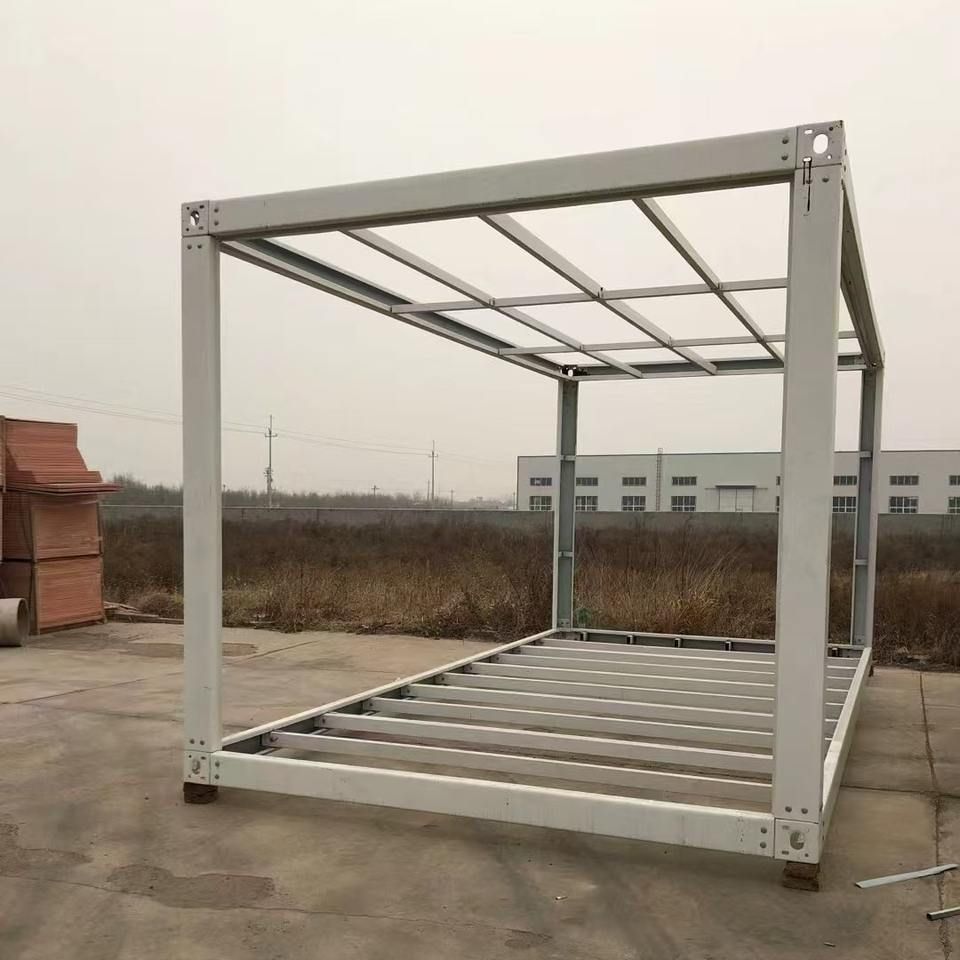
Modular Building Assembly
Modular building assembly involves breaking down the entire building into individual modules. These modules are fully manufactured in a factory, covering all parts of the house such as ceilings, floors, and water and electricity pipelines. Taking the China Construction Haolong Intelligent Construction Industrial Park in Shenzhen, Guangdong as an example, the ceilings, walls, and waterproof layers of bathrooms in the houses are all meticulously produced in the factory. Some scattered components are first produced separately on the second or third floors and then sent to the final assembly station. At the final assembly station, highly automated equipment such as welding robots is used to complete the final assembly. This highly automated production method ensures the manufacturing accuracy and quality stability of each module. After final assembly, the modules are transported to the construction site and assembled like building blocks. The advantage of this assembly method is that since most of the work is completed in the factory, the workload at the construction site is significantly reduced, and the construction period is noticeably shortened. At the same time, the relatively stable production environment in the factory is conducive to ensuring building quality and reducing interference from external factors during construction. Moreover, modular building assembly offers high flexibility, allowing modules to be combined and adjusted according to different needs to meet diverse building functional requirements.
Cement Prefabricated House Assembly
Cement prefabricated house assembly involves dividing the house into multiple components, including wall panels, floor slabs, stairs, balconies, and beams and columns. These prefabricated components are manufactured in the factory by workers using molds based on precise calculations. During the production process, strict requirements are placed on the accuracy of the molds and the proportion of concrete to ensure that the quality and dimensions of the components meet standards. The manufactured prefabricated components are transported to the homestead and assembled by several workers with the assistance of a crane. The assembled house looks somewhat similar to a house built with Lego bricks. This assembly method is relatively simple and has relatively low requirements for construction equipment and technology, making it suitable for use in scenarios with limited construction conditions and low requirements for building scale and complexity. However, its construction accuracy and quality depend to a certain extent on the workers' operational skills and on-site construction management.



