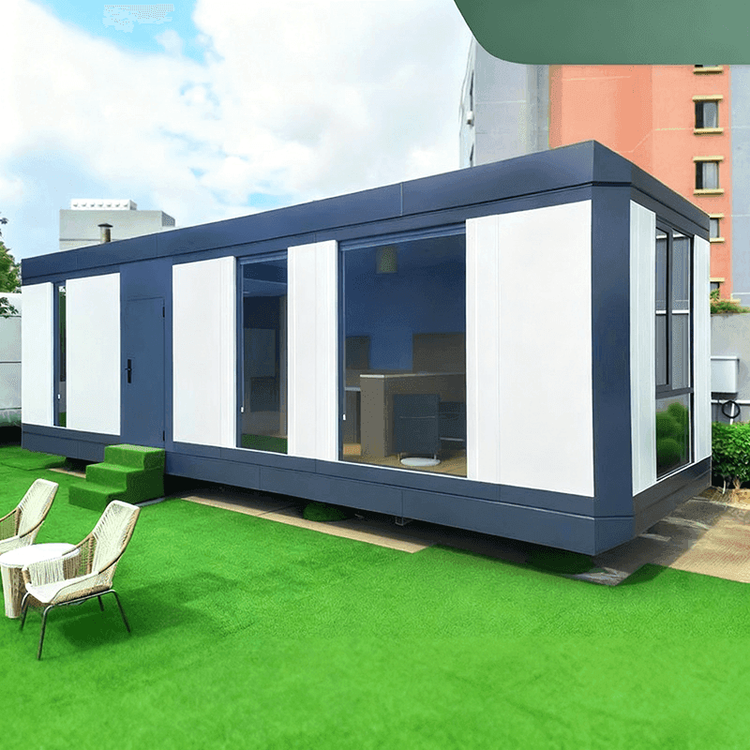
How to Apply for a Mobile Toilet
Applying for a mobile toilet usually requires going through local administrative departments or professional service providers, following the steps below:

1. Understand Local Regulations
Before applying, clarify the regulations regarding the installation of mobile toilets in your area, including installation locations, quantity limits, and maintenance requirements. These regulations are typically formulated by urban management, environmental sanitation, or municipal departments. For example, some cities require mobile toilets to be kept at a certain distance from residential areas or to be equipped with sewage treatment facilities. If they are to be installed in public places (such as scenic spots or construction sites), they must also comply with industry-specific standards. It is recommended to check specific documents through the local government's official website or the urban management department's service window to avoid application rejection due to missing information.
2. Submit a Formal Application
Submit a written application to the competent department or professional service provider, including the following core information:
- Basic Information: Installation location (precise address), estimated duration of use (start and end dates must be specified for short-term events), type of mobile toilet (such as single-unit or connected-unit) and specifications (such as size and number of toilet stalls).
- Purpose of Installation: Explain the reason for the application, such as temporary needs for large-scale events, construction site support, or public area service optimization.
- Maintenance Plan: Commit to regular cleaning and disinfection, and to assigning professional personnel or entrusting a service provider for daily maintenance. If renting, additionally specify the number of toilets to be rented, rental period, and installation location, and sign a rental agreement committing not to change the purpose or sublet without permission.
3. Review and Adjustment
After receiving the application, the administrative department may conduct an on-site inspection, focusing on verifying the following:
- Whether the installation location complies with planning requirements (such as not occupying fire lanes or affecting traffic);
- Whether the type of mobile toilet is suitable for the intended use scenario (for example, toilets for the disabled must comply with national standard dimensions: an independent toilet area of ≥4.00 square meters, an internal wheelchair turning space diameter of ≥1.50 meters, equipped with a low-position toilet and safety handrails);
- Whether the maintenance plan is feasible. If the application is not approved, adjust the plan according to the feedback (such as changing the location or increasing the frequency of maintenance) and resubmit it.
4. Installation and Use
After approval, complete the installation as instructed by the administrative department and strictly comply with the following requirements:
- Regular Maintenance: Clean and disinfect daily to ensure no odors or stains;
- Compliant Use: Do not move the location or alter the structure without permission;
- End-of-Use Handling: Remove or return the toilet as per the agreement after use and restore the site to its original condition. If it involves a construction project (such as a permanent mobile public toilet), additional steps such as planning site selection, land use review, design plan approval, and construction permit are required, making the process more complex and requiring early planning.