
How to Apply for a Container House
To apply for a container house, you need to complete the approval process and select a compliant supplier. The specific steps are as follows:
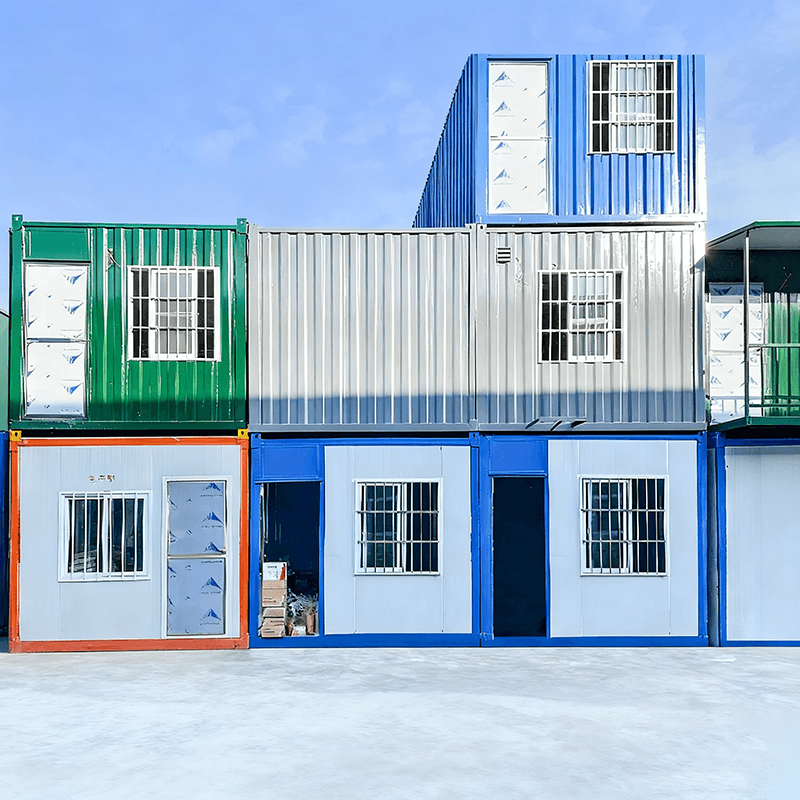
I. Approval Process and Compliance Requirements
Necessity of Approval Container houses fall within the category of buildings. Whether used for temporary accommodation, commercial operations, or private purposes, they must be declared and approved by the local housing management department or urban planning department. Unauthorized construction without application may face neighbor complaints or legal penalties. For example, placing a container house in your own yard still requires submitting an application to the housing management department.
Approval Basis According to Article 25 of the Urban Real Estate Administration Law of the People's Republic of China, real estate development must strictly adhere to urban planning, implementing comprehensive planning and rational layout. The construction of container houses must conform to the principle of integrating economic, social, and environmental benefits, ensuring that they do not occupy public spaces or affect the surrounding environment.
Special Scenario Certification If container houses are used for export or specific commercial purposes (such as 24-hour self-service fitness pods, emergency medical facilities, etc.), international certifications (such as CE, UL, ETL, CSA, etc.) are required. Certification requires providing house drawings, material lists, test reports, and other documents. The process is complex and costly.
II. Supplier Selection and Material Preparation
Supplier Qualifications Select suppliers with full-chain capabilities, including steel structure design, thermal insulation, plumbing and electrical pre-installation, and fire safety compliance. Prioritize examining the company's production qualifications, number of patents, implemented cases, and delivery systems. For example, Sichuan KuaiZhu Integrated Housing Co., Ltd. holds over 30 utility model patents and 3 invention patents and has passed the international three major management system certifications.
Basic Material List
- Container: The mainstream specifications are 20-foot or 40-foot standard shipping containers.
- Steel: Angle steel, channel steel, pipe materials, etc., are used for frame reinforcement.
- Thermal Insulation Materials: Polyurethane foam, rock wool, glass wool, etc., prevent steel deformation under extreme temperatures.
- Panels: Color steel plates, calcium silicate boards, cement fiber boards, etc., are used for interior and exterior wall decoration.
- Doors and Windows: Aluminum alloy bathroom doors, sliding windows, skylights, etc., ensure ventilation and lighting.
III. Cost and Flexibility Advantages
Cost Advantage The price of container houses is significantly lower than that of traditional brick-and-mortar houses or commercial shop rentals. For example, the total cost of customizing and renovating a 15㎡ container shop is approximately 30,000-50,000 yuan, while the initial investment for a traditional shop in a prime business district may exceed 100,000 yuan.
Flexibility Modular design supports rapid relocation without complex civil engineering. For example, a foldable container, when folded, has a height of only 48 cm, saving transportation costs by 4-5 times. One person can complete the installation on-site in 5 minutes.



