
How Long Can Container Houses Last
The service life of container houses is typically between 20 and 30 years, with some high-quality products or specially designed ones reaching up to 50 years. The specific lifespan is influenced by factors such as quality, environment, and maintenance.
I. Basic Lifespan Based on Materials and Design
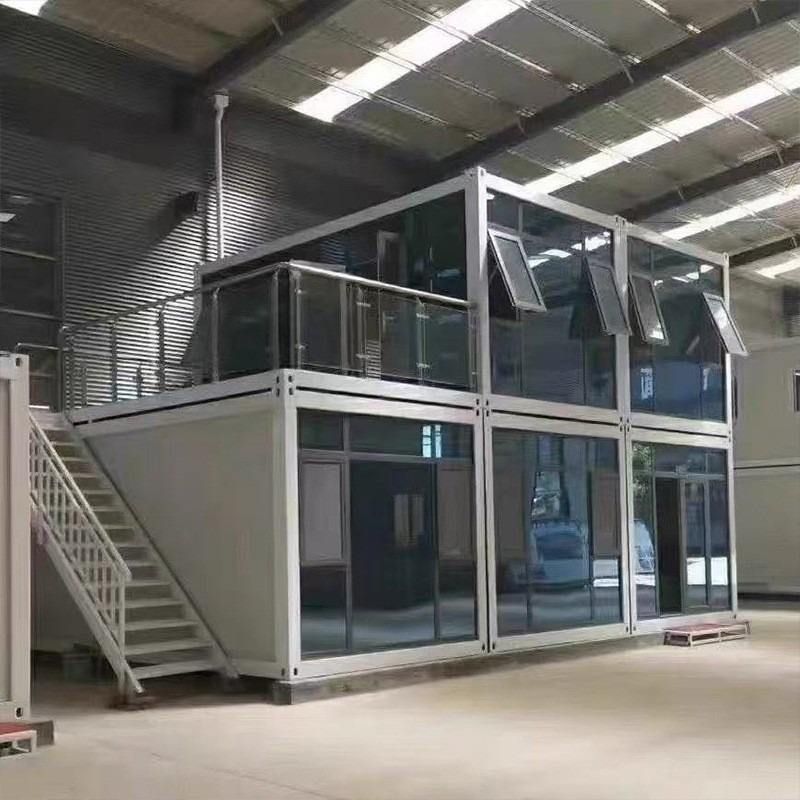
Container houses are centered around steel frames, and the corrosion resistance of steel directly affects their lifespan. The designed lifespan of standard containers is 25 years, but through anti-corrosion treatments (such as shot blasting for rust removal followed by spraying zinc-rich primers and polyurethane topcoats) and structural optimizations (such as adding C-shaped steel purlins to distribute loads), their actual lifespan can be extended to over 30 years. For example, a company in Baotou used anti-corrosion technology to maintain the effective lifespan of steel in the northwestern environment for over 15 years. After structural reinforcement, the stacked three-layer container bodies remained stable.
II. Differences in Environmental Adaptability
- Climate Impact: Humid or high-salt environments (such as coastal areas) accelerate steel corrosion and shorten the lifespan, while dry environments (such as deserts) may extend it. For example, Qinghai Guangzan Light Steel points out that container houses are "resistant to dryness but not to moisture." In humid environments, their lifespan may be shortened to 10-15 years, while in dry environments, it can reach over 25 years.
- Usage Scenarios: Temporary buildings (such as construction site dormitories) typically have a designed lifespan of 5-20 years. Semi-permanent buildings (such as cultural and tourism accommodations) can be extended to 25-50 years through special designs (such as thermal-break lining structures and rigid polyurethane foam filling). For example, in the Venezuelan Central Power Plant camp project, some container houses used as semi-permanent buildings had a service life of 50 years.
III. The Key Role of Maintenance and Upkeep
Regular maintenance can significantly extend the lifespan:
- External Protection: Apply anti-rust paint and thermal insulation coatings every 1-2 years, check joints and water tightness to prevent corrosion and structural damage.
- Internal Maintenance: Regularly inspect pipelines, electrical systems, and thermal insulation facilities, maintain ventilation and cleanliness, and avoid internal wear and tear.
- Usage Specifications: Avoid arbitrarily changing the layout or applying paint and rust removal by oneself to prevent structural damage due to improper operations. For example, the average lifespan of Zeyu Housing's container houses is 20 years, but it requires meeting the usage condition of "approximately 500 folding cycles."
IV. Special Design and Technological Breakthroughs
Some cases break through the lifespan limit through innovative designs:
- Structural Reinforcement: For example, adopting light steel villa technology combined with container modular design gives the house semi-permanent building attributes.
- Material Upgrades: Using high-strength steel or composite materials improves corrosion resistance and load-bearing capacity.
- Smart Maintenance: Integrating sensors to monitor structural conditions and provide real-time warnings of potential risks enables preventive maintenance.



