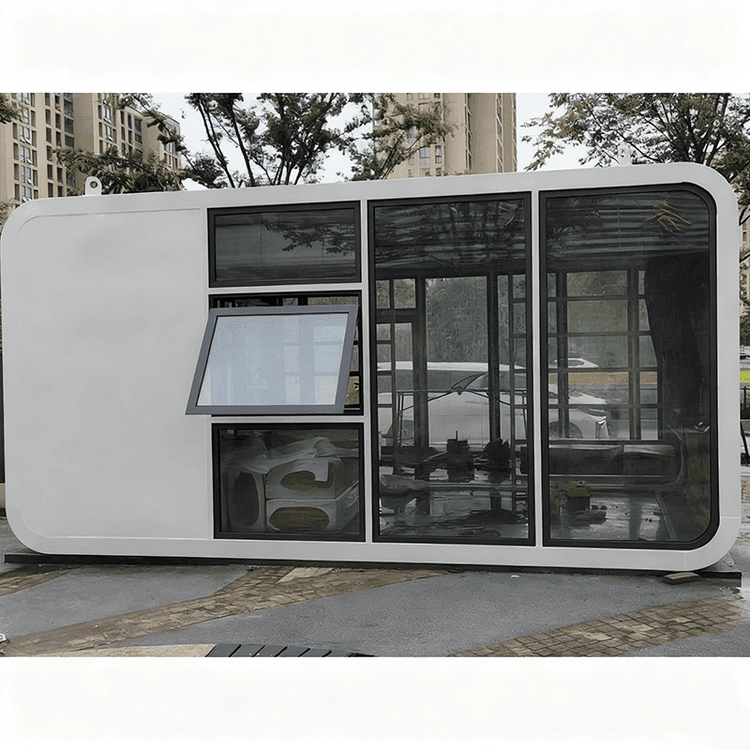
How Environmentally Friendly Are Mobile Toilets
Mobile toilets are highly environmentally friendly, with their eco-friendly features reflected in multiple aspects such as water conservation, technological solutions, resource recycling, and material selection.

I. Water Conservation Technologies
Mobile toilets significantly reduce water consumption through the combination of new materials and water-saving technologies. For example, some products use automatic collection of hand-washing water and add special agents to achieve a flushing effect with only 0.46 liters of water per person, substantially reducing water usage compared to traditional toilets. Additionally, some mobile toilets are equipped with rainwater collection and filtration systems, purifying rainwater for toilet flushing and further reducing reliance on municipal water supplies. The hand-washing water reuse technology for toilet flushing recycles wastewater from hand washing, enabling secondary utilization of water resources and further enhancing water-saving efficiency.
II. Eco-Friendly Technological Solutions
Mobile toilets offer various eco-friendly technological solutions to meet the needs of different scenarios. Waterless flush toilets do not require connection to water supply and drainage pipes, treating excreta through biodegradation or physical sealing technologies to avoid environmental pollution from sewage discharge. Foam-sealed toilets use foam generated by foaming agents to cover excreta, forming a sealed layer that reduces odor diffusion and water usage. Although water-flush toilets require a small amount of water, they can still achieve efficient water conservation through optimized flushing system designs. The selection of these technological solutions enables mobile toilets to be flexibly deployed in areas without municipal water supply or drainage, while minimizing environmental impact.
III. Resource Recycling
Mobile toilets achieve water resource recycling through eco-friendly technologies. For example, the hand-washing water reuse technology for toilet flushing collects and purifies wastewater from hand washing for toilet flushing, forming a closed-loop system. Some products are also equipped with fecal treatment devices that convert excreta into organic fertilizers or biogas, enabling resource reuse. This recycling model not only reduces water waste but also lowers waste disposal costs, aligning with the concept of sustainable development.
IV. Eco-Friendly Materials
The main frame of mobile toilets is typically made of steel, known for its high strength and durability. Exterior wall materials are selected from eco-friendly options such as color-coated steel plates, metal carved panels, aluminum-plastic panels, or anti-corrosion wood. These materials are not only aesthetically pleasing and durable but can also function normally within a temperature range of -20℃ to 50℃, adapting to different climatic conditions. Furthermore, these materials have minimal environmental impact during production and use and are recyclable, further reducing the ecological footprint of mobile toilets.