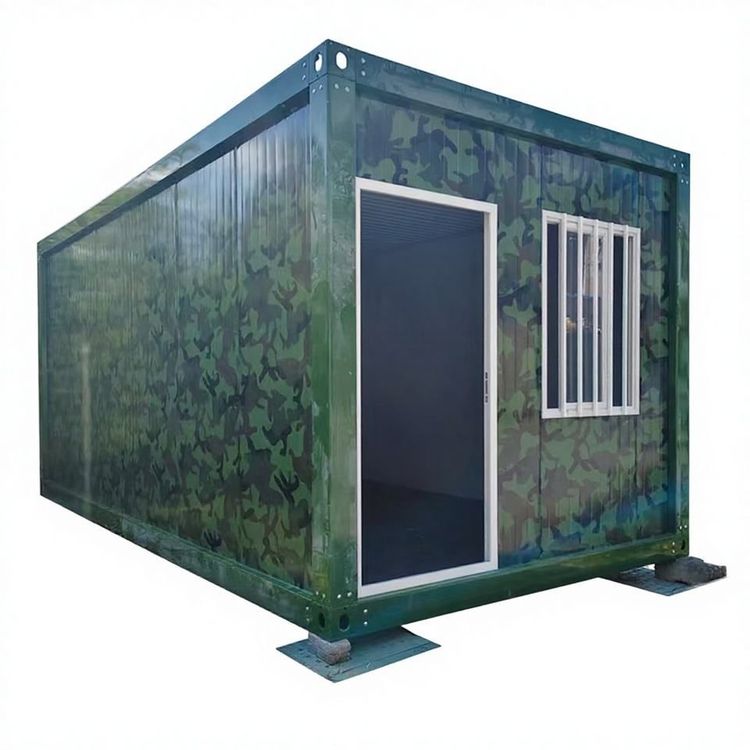
How Do Container Houses Dissipate Heat?
Heat dissipation in container houses can be achieved through methods such as installing ventilation equipment, using shading facilities, applying thermal insulation materials, utilizing cooling technologies, reducing heat sources and optimizing layout, and optimizing building structures.

Installing Ventilation Equipment
Container houses need to enhance air circulation to dissipate heat. Exhaust fans, vents, or windows can be installed inside to promote natural ventilation. If natural ventilation is insufficient, mechanical equipment such as air conditioners and fans can be installed to accelerate heat dissipation. For example, installing vents on the roof or walls can create convection circulation and lower indoor temperatures.Using Shading Facilities
Reducing direct sunlight is key to lowering heat accumulation. Shade awnings can be erected on top of containers, shade cloths or nets can be laid out, or climbing plants can be grown to form a natural shading layer. These measures can effectively block solar radiation, reduce the heat absorption of metal exterior walls, and thus decrease the rise in indoor temperature.Applying Thermal Insulation Materials
Cutting off the heat conduction path is a core strategy. Filling walls with thermal insulation materials such as foam plastic, rock wool boards, or glass wool, and adding thermal insulation layers to roofs or applying coatings that reflect sunlight (such as white reflective paint) can significantly reduce heat conduction through metal exterior walls. For example, rock wool boards not only have excellent thermal insulation properties but also have fire-resistant functions, making them suitable for long-term use.Utilizing Cooling Technologies
- Mist Cooling: Install mist systems around or inside the house to lower the ambient temperature through the heat absorption of water mist evaporation, suitable for dry and hot regions.
- Solar Cooling Devices: Use solar panels to drive air conditioners or fans to achieve environmentally friendly and energy-saving cooling effects.
- Application of Energy Storage Materials: Use phase change materials (such as paraffin) to absorb cool air at night and store it, releasing a cooling effect during the day to maintain stable indoor temperatures.
Reducing Heat Sources and Optimizing Layout
Avoid using high-heat appliances (such as electric stoves) inside containers to reduce internal heat sources. Adding green plants, using light-colored home furnishings, or placing dehumidifiers to absorb excess moisture can enhance comfort. Windows and doors made of broken bridge aluminum with hollow glass can effectively reduce radiant heat entry and further reduce energy consumption.Optimizing Building Structures
The roof is the main area for heat entry. Designing an elevated ventilation layer or thickening the thermal insulation layer can enhance thermal insulation effects. Filling walls with A-grade rock wool over 50mm thick can cut off the heat conduction path of metal exterior walls. These structural optimization measures can fundamentally reduce heat entry into the interior and improve overall heat dissipation efficiency.