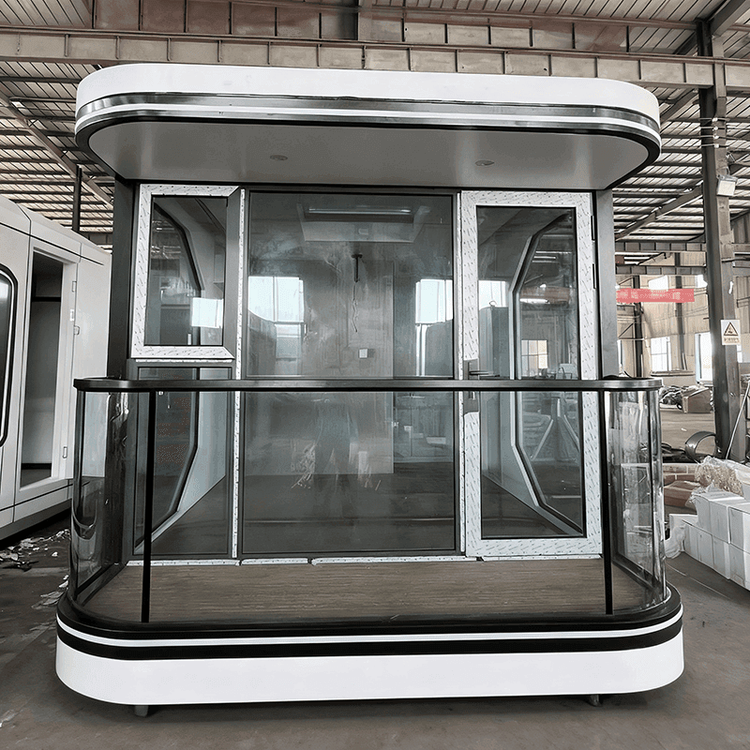
How Are Mobile Toilets Shipped
The shipping process for mobile toilets mainly includes four key steps: preparation before transportation, loading, transportation management, and unloading and installation.

Preparation Before Transportation
After production, mobile toilets must undergo a rigorous inspection to ensure that the equipment is undamaged, all accessories are present, and dimensions, weight, and special features (such as barrier-free facilities) are verified. The choice of transportation vehicle depends on the type and quantity of toilets: flatbed trucks are suitable for short distances or structurally simple toilets, enclosed vans provide wind and rain protection, and semi-trailers are required for long-distance transportation or large equipment. If the toilets contain fragile components (such as glass or electronic parts), they must be secured with materials like foam or wooden frames to prevent damage from movement during transit.
Loading
The loading process requires matching equipment based on the size and weight of the toilets. Small toilets can be directly moved onto a 6-meter flatbed truck using forklifts or manual labor, with protective strips attached to the edges of the truck bed to prevent scratches. Large public toilets (such as multi-stall modular units) require a 25-ton crane for loading onto a 17.5-meter semi-trailer. During lifting, the bottom frame of the toilet must be secured with lifting straps to ensure a stable center of gravity. After loading, ropes or fasteners must be used to secure the toilet to the truck bed to prevent shifting during sudden stops.
Transportation Management
Route planning should avoid height and width restrictions, as well as congested areas such as city centers or bridges and tunnels. If the toilet height exceeds 4.5 meters or the width exceeds 3 meters, a special transportation permit must be obtained from traffic authorities in advance, and travel should be conducted during designated times (such as at night). In rainy or snowy weather, waterproof covers should be placed on top of the truck bed, and moisture-proof mats should be laid at the bottom to prevent water infiltration and rusting of internal metal parts. During winter transportation, if the toilet includes a water tank, the water must be drained to prevent freezing and cracking.
Unloading and Installation
Upon arrival at the destination, small toilets can be unloaded directly using a forklift, while large toilets require a crane again. During unloading, ensure that the ground is level and firm to prevent the toilet from tilting; if the ground is soft, steel plates or concrete foundations should be laid in advance. During installation, connect water and electricity lines (such as septic tank interfaces and power cords) and test functions like flushing, lighting, and ventilation to ensure they are working properly. Finally, clean up any debris at the site to ensure a tidy environment around the toilet.