
How About Mobile Toilets
Mobile toilets are versatile, easy-to-install, and widely applicable sanitation facilities that can meet the public needs in various scenarios.
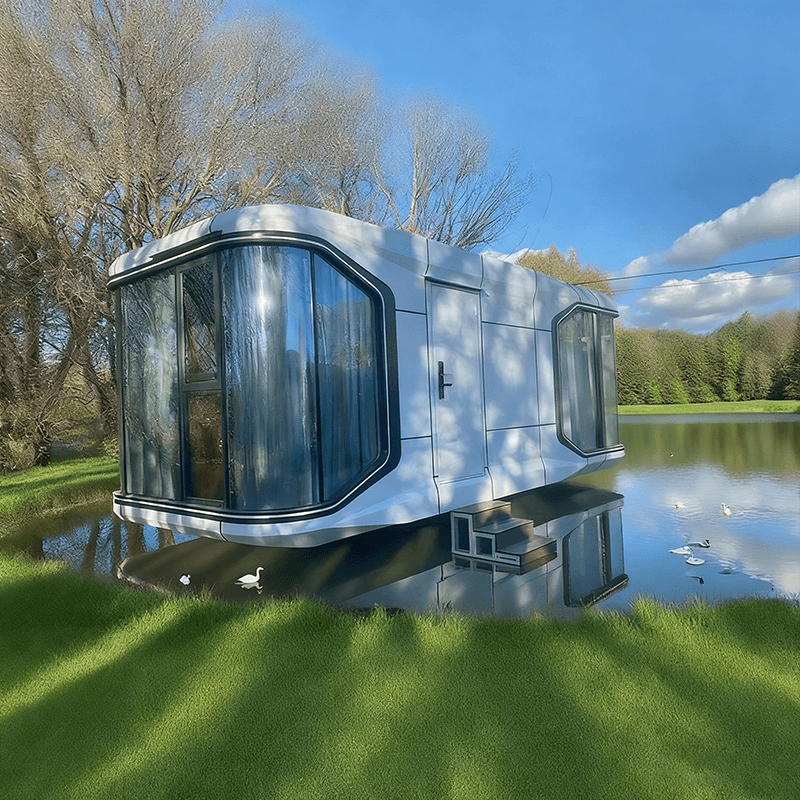
Comprehensive Functions
Mobile toilets are equipped with a variety of basic and advanced facilities. The basic configurations include light bulb sockets, exhaust fans, air outlets, flush tanks, etc., ensuring basic usage requirements. Some mobile eco-friendly public toilets adopt new materials and water-saving technologies. For example, they automatically collect hand-washing water and add special agents, achieving a flushing effect with only 0.46 liters of water per person, significantly saving water resources. Internally, they are also equipped with an independent toilet pit partitioned treatment system. The urine channel utilizes gravity self-flow, while the feces channel is cleaned by a piston-type scraper mechanical device. Additionally, they are equipped with anti-slip floors, automatic flushing toilet bowls, and ventilation and lighting systems to enhance comfort and safety during use.
Easy Installation
Mobile toilets do not require civil engineering work. They are installed as finished products and can be used immediately upon placement. The installation process is similar to building with blocks, involving simple steps such as column installation and splicing fixation, completing the installation in one go. This greatly shortens the construction period and reduces construction difficulty and costs.
Diverse and Durable Materials
There is a wide selection of exterior wall materials, which can be chosen according to customer requirements or the surrounding environment of the usage location, including color steel plates, metal carved plates, anti-corrosion wood, stainless steel plates, and aluminum-plastic plates. The main structure is welded with national standard light steel keels to meet overall hoisting requirements. The frame is welded with national standard steel, and the surface is covered with anti-corrosion and fire-resistant materials such as color steel plates or carved plates, ensuring a service life of over 20 years and guaranteeing the long-term stable use of the facilities.
Rich Technical Types
Classified by sewage treatment methods, there are water-flush and waterless suction types, circulating water-flush types, and dry packing types. The circulating water-flush type is equipped with intermittent aerobic and anaerobic fecal sewage treatment devices, adding biological strains and using biofilm technology to accelerate decomposition. The treated water can be recycled for flushing. The dry packing type is a waterless flushing device where excreta is received by biodegradable plastic bags, automatically replaced after use, and collected centrally for treatment. In addition, there are also foam sealing types, packing types, water-saving flush types, waterless rechargeable types, microbial types, and many other technical types to choose from.
Flexible Configurations
Standard configurations include toilet bowls (urinals), coat hooks, vanity mirrors, paper baskets, lighting fixtures, exhaust fans, door locks, and occupancy indicator lights. Optional configurations include heating and cooling air conditioners, air purifiers, anti-freeze systems, heating systems, background music, hand-washing basins, water-saving faucets, etc., which can be individually configured according to different usage scenarios and needs.
Wide Applications
Mobile toilets are suitable for various public places such as scenic spots, service areas, and rural areas, providing convenient sanitation services for the public.



