
How About Doing Business with Container Houses
Currently, doing business with container houses presents multiple positive trends and potential, with an overall promising outlook. However, it is essential to carry out the business in combination with specific scenarios and compliance requirements.
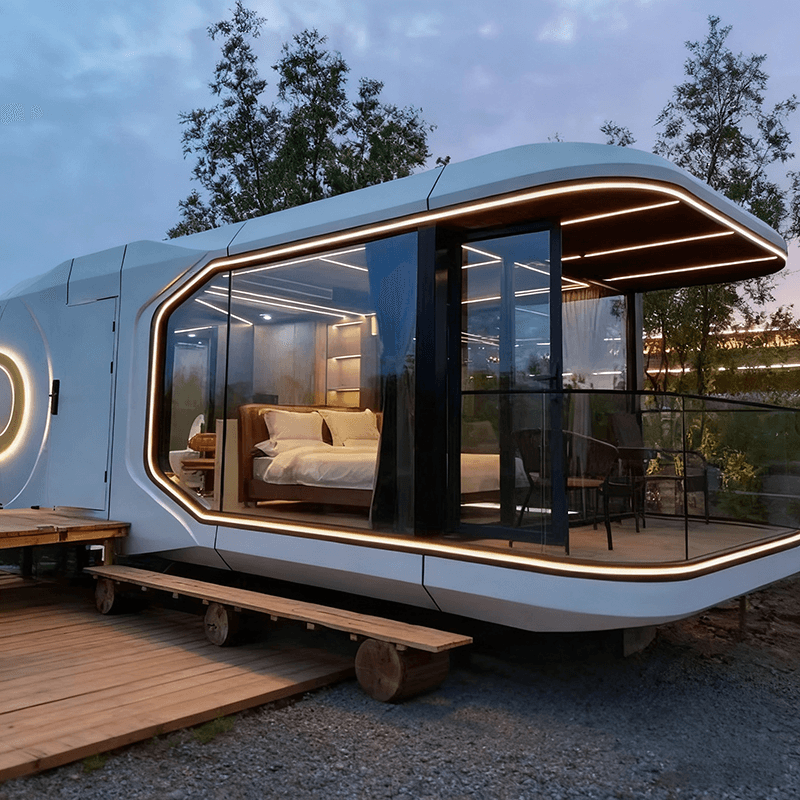
Diversified Application Scenarios Bring Broad Market Opportunities
The application scenarios of container houses have expanded from traditional temporary housing on construction sites and sales offices to commercial operations, such as container commercial streets, scenic area shops, cafes, and convenience stores. Additionally, in urban renewal and rural construction, they can serve as micro public facilities and supplementary residential units. This diversification provides a broad market space for container house businesses, meeting the needs of various customer groups across different scenarios.
Demand for Combination and Complete Assembly Enhances Product Value-Added
Purchasers are no longer satisfied with single-unit purchases but prefer multi-unit combinations and two-story buildings, with design focus shifting from single-unit configurations to overall structures. Furthermore, there is an increasing demand for complete factory assembly, where purchasers expect walls, ceilings, floors, lighting, sockets, basic utilities, and some equipment to be completed in the factory to shorten on-site construction time. This requires manufacturers to enhance their design and production capabilities, offering more complex and comprehensive products, thereby increasing product value-added and profit margins.
Significant Cost Advantages Strengthen Competitiveness
Taking express delivery stations as an example, the cost of container houses is significantly lower than that of traditional shops. In second-tier cities, the initial investment for renting a shop to open an express delivery station may exceed 80,000 yuan, while a brand-new customized container house costs only 50,000 yuan (including moisture-proof and insulation layers), and a second-hand renovated model can be as low as 23,000 yuan. Moreover, they support daily or monthly rentals and are highly mobile, allowing flexible relocation based on demand. This cost advantage makes container houses more attractive in market competition.
Policy Support and Subsidies Provide Development Assistance
Many regions across the country are promoting the "express delivery to villages" initiative, offering subsidies for container express stations. For instance, a county in Shandong provides a subsidy of 12,000 yuan per village-level outlet, while some areas in Jiangsu waive site fees for three years. Additionally, the integration of green technologies such as photovoltaic power generation can also receive government subsidies. These policy supports create a favorable development environment for container house businesses, reducing operational costs and improving profitability.
Technological Advancements and Market Segmentation Meet Diverse Needs
The industry continues to advance technologically, involving the integrated prefabrication of high-performance insulation materials, renewable energy systems, and intelligent control systems. At the market level, manufacturers have differentiated their product lines based on downstream application scenarios, such as focusing on durability for oilfield camps and emphasizing aesthetic design and living comfort for cultural tourism and homestay products. This helps meet the diverse needs of different customers and enhances market competitiveness.



