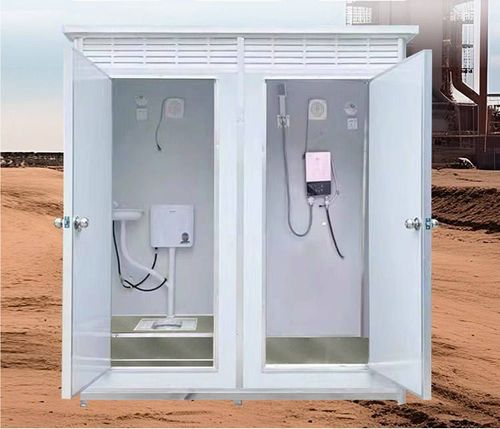
Are Housing Containers Subject to Tax? Zhihu Translation
Generally, housing containers do not require payment of real estate tax, but whether taxes apply after modification depends on a comprehensive assessment of property rights and usage. Detailed analysis is as follows:

I. Ordinary Housing Containers Are Not Subject to Real Estate Tax
According to the "Provisional Regulations of the People's Republic of China on Real Estate Tax," the objects of real estate tax collection are real estate within cities, counties, built-up towns, and industrial and mining areas. Containers themselves are movable transportation and storage equipment and do not possess the complete structure and functions of real estate. The Ministry of Finance and the State Taxation Administration further clarify that "real estate" must meet the following characteristics:
- Possess a roof and enclosing structures (such as walls or columns) capable of providing shelter from wind and rain;
- Be used for fixed activities such as production or residence, rather than temporary purposes.
As standardized transportation containers designed for easy loading, unloading, and mobility, containers do not meet the above definitions and thus do not fall within the scope of real estate, requiring no payment of real estate tax.
II. Modified Containers May Be Subject to Tax, but Dual Conditions Must Be Met
If a container is modified into a residence or business premises, whether real estate tax applies requires discussion on a case-by-case basis:
- Meeting the Definition of Real Estate: If the modified container possesses a roof and enclosing structures and is used for long-term residence or business (such as fixed shops or residences), it may be recognized as real estate. In this case, the local tax authorities will determine the tax base and rate based on factors such as actual usage and area.
- No Tax Without Property Rights: Even if modified into a residential state, if it does not obtain legal property rights (such as not being registered as real estate), it does not qualify as a real estate taxpayer. For example, temporarily constructed container residences not included in real estate management typically do not require tax payment.
III. Key Criteria for Determination: Property Rights and Usage
In practice, tax authorities primarily base their tax assessment of container residences on two points:
- Property Rights Ownership: Whether a real estate registration certificate has been obtained;
- Functional Positioning: Whether used for fixed production or residential activities.
For example, containers used for temporary office purposes on construction sites do not require tax payment, while modified containers used as shops for extended periods may require tax payment.
Summary: Ordinary housing containers do not involve real estate tax as they do not fall within the scope of real estate. Whether taxes apply after modification depends on a comprehensive assessment of property rights registration and actual usage. It is advisable to consult local tax authorities to clarify specific policies.