
Housing Container Repair Plan
The housing container repair plan should be formulated based on the type and extent of damage, covering aspects such as structural reinforcement, rust prevention treatment, waterproof sealing, functional system repair, and appearance renovation.
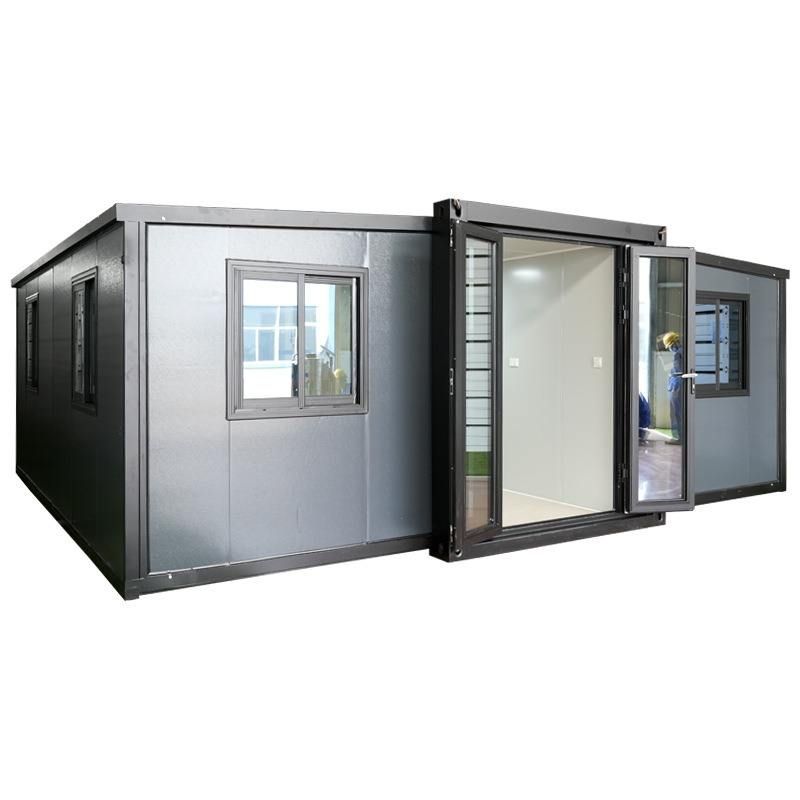
I. Structural Repair and Reinforcement
The core structure of a container house is a steel frame. If deformation occurs due to external impact or long-term load-bearing, priority should be given to repair. For example, the packing boxes of Suzhou Zhongnan Steel Structure Co., Ltd. have a frame deformation rate of only 0.18% under extreme working conditions. Their repair can refer to similar processes: use hydraulic straightening equipment to restore minor deformation to its original state; if the frame is fractured, cut out the damaged part and weld steel of the same material. After welding, perform rust prevention treatment. For cases where the overall stability is insufficient, add transverse or longitudinal support beams to enhance wind and earthquake resistance.
II. Rust Prevention and Corrosion Protection Treatment
Containers are prone to rust when exposed to humid or corrosive environments for a long time. Thoroughly remove rust and then apply anti-rust paint. The specific steps are as follows: use sandpaper or sandblasting equipment to remove rust, ensuring that the surface roughness meets the coating requirements; apply epoxy zinc-rich primer (thickness ≥ 60μm) to enhance adhesion; then cover with polyurethane topcoat (thickness ≥ 40μm) to isolate moisture. If the wall is a rock wool sandwich panel, check whether the metal panel and the core material are firmly bonded to avoid water seepage causing internal corrosion.
III. Waterproof Sealing Repair
The roof, doors, windows, and splicing seams are common leakage points. For roof repair, check whether the lap joints of the roof panels are loose and re-seal them with glue; if the roof panels are rusted through, replace them with panels of the same specifications and weld them in place. When the door and window seals are aged, replace them with weather-resistant silicone strips to ensure there are no gaps when closed. For the container splicing joints, check whether the high-strength bolts are loose and supplement with weather-resistant sealant to prevent rainwater from seeping in.
IV. Functional System Repair
If the container house is equipped with a water and electricity system, check whether the wires are aged and whether the water pipes are broken. For electrical system repair, disconnect the power supply, replace damaged wires, and re-insulate them; for water pipe repair, use hot-melt connection or clamp fixation, and conduct a pressure test after repair. In addition, if the house is used for living, check whether the ventilation system is unobstructed to avoid condensation problems caused by poor air circulation.
V. Appearance Renovation and Functional Upgrade
After the repair is completed, appearance renovation can be carried out, such as applying new environmentally friendly paint to enhance aesthetics; if the original design has low space utilization, refer to staggered stacking or multi-functional furniture design to optimize the internal layout. For example, connect two containers to form an integrated living and dining space, or add folding beds to enhance living flexibility.



