
Household Portable Toilet for Male and Female
Household portable toilets for male and female are typically designed according to usage scenarios and needs, offering a variety of structural and material options to meet the personalized requirements of different families.
1. Basic Design Types
The design of male and female household portable toilets needs to balance space utilization and ease of use. Common models include independent partition types and mixed-function types. Independent partition types use physical partitions to divide male and female areas. For example, a popular container-style portable toilet adopts a layout with a total of six stalls for both genders (including independent stalls with urinals) and is equipped with a public handwashing area, suitable for families with many members or those needing to receive guests. Mixed-function types achieve space reuse through adjustable partitions or smart sensing devices. For instance, some small portable toilets use folding door designs to flexibly switch gender partitions during single use, suitable for families with limited space.
2. Core Functional Configurations
The functional configurations of male and female portable toilets need to meet basic hygiene requirements. Independent stalls are usually equipped with anti-slip floors, ventilation systems, and lighting. Some high-end models also incorporate warm air drying and smart flushing functions. Independent urinal designs are an important distinction between male and female models. Male areas often use wall-mounted urinals to save space, while female areas primarily feature stalls or toilets. In terms of water and electricity systems, household portable toilets need to be connected to tap water or equipped with water storage tanks, with drainage interfaces reserved. The electrical design needs to meet the power supply requirements for lighting, ventilation, and smart devices, with some models supporting solar power to adapt to outdoor environments.
3. Material and Structural Choices
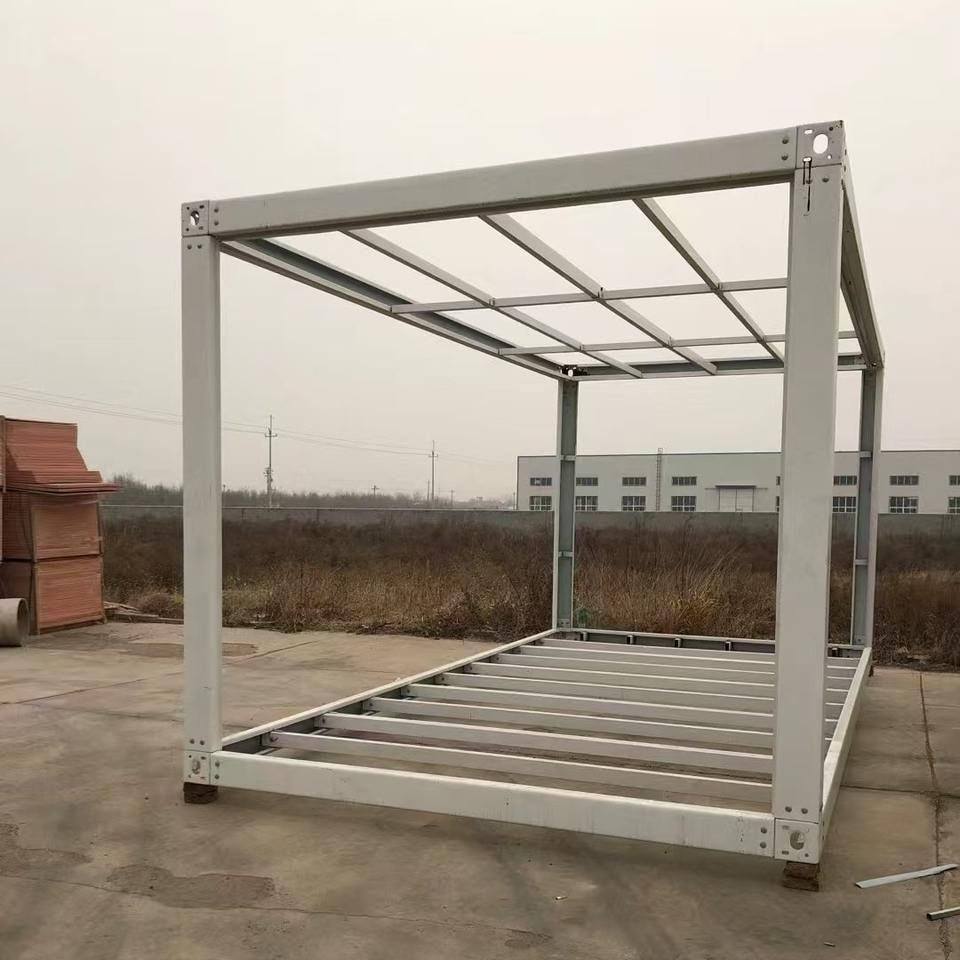
Materials directly affect the durability and maintenance costs of portable toilets. Thickened galvanized corrugated sheets are a common choice, with rust-proof and corrosion-resistant properties suitable for humid environments. Stainless steel and aluminum alloy materials are lighter and easier to clean, suitable for families pursuing a high-end feel. Composite boards and color-coated steel achieve thermal insulation and soundproofing through multi-layer structures, suitable for cold regions in the north. In terms of structure, steel frameworks provide high-strength support, while light steel or aluminum-plastic panels reduce transportation difficulty through modular designs. Families can choose appropriate structures based on installation locations (such as yards or balconies).
4. Application Scenario Adaptation
The design of male and female household portable toilets needs to match usage scenarios. Public toilet types are suitable for large residential properties such as villas and estates, capable of accommodating multiple people using them simultaneously. Outdoor restroom types require enhanced waterproofing and sun protection, along with portable water storage devices. Construction site toilet types focus on durability and quick assembly and disassembly, with materials often selected as fiberglass or galvanized sheets to reduce maintenance frequency. Family users can choose standardized products or customized designs according to actual needs, such as adding barrier-free facilities or child-specific stalls.



