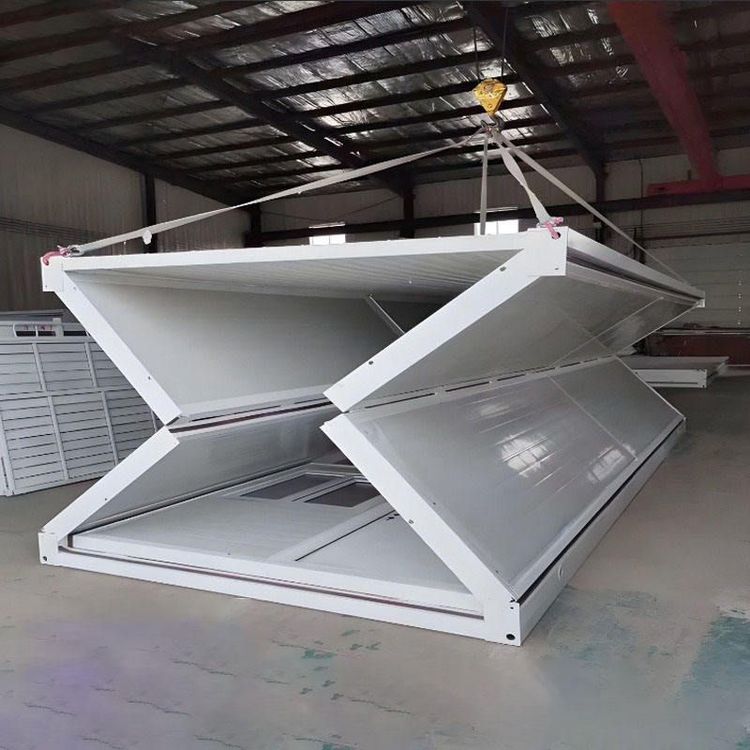
Household Mobile Toilet and Bathroom
A household mobile toilet and bathroom is a sanitary facility that is movable, combinable, and easy to transport, suitable for places such as villa areas and newly built residential communities, with economical and practical options as well as regular customized options available. The following provides a detailed introduction from the aspects of design, structure, and advantages:

Design: Taking the products of Taihe Mobile Toilet Manufacturer as an example, the overall appearance features a gray and white metal carved panel design. This material has the characteristics of thermal insulation, heat resistance, and corrosion resistance, enabling it to adapt to different climatic conditions, maintain a relatively stable internal temperature in the toilet, and extend its service life. The interior design fully considers usage needs, dividing areas for men and women and providing independent squatting positions to ensure privacy and convenience. The water and electricity fixtures are fully equipped to meet daily washing and toilet needs. The design of the light and ventilation sliding windows ensures good air circulation and sufficient light inside the toilet, preventing unpleasant odors and a dark and damp environment. The gray aluminum alloy exterior door is sturdy, durable, and aesthetically pleasing.
Structural Composition: A household mobile toilet and bathroom mainly consists of components such as a fecal sewage storage tank, floor slab, sanitary fixtures, walls, and a water tank. The fecal sewage storage tank is used to collect and store fecal sewage, facilitating subsequent treatment and cleaning. The floor slab ensures the flatness and stability inside the toilet, providing a comfortable standing and moving space for users. Sanitary fixtures are key for daily use, including toilets and washbasins. The walls not only serve to divide the space but also provide some sound insulation and thermal insulation. The water tank supplies water to the sanitary fixtures.
Advantages: Its greatest advantage lies in its mobility and combinability. When there is a need to change the usage location, it can be easily disassembled and transported, and then reinstalled at a new site without the need for complex construction and renovation like traditional toilets. This flexibility enables it to adapt to different site requirements and changes in usage scenarios. At the same time, the convenience of transportation also reduces installation and usage costs and improves resource utilization efficiency.