
Hotel Building Container Panel House
If container panel houses are used for hotel buildings, it is essential to focus on material performance, structural safety, fire compliance, and climate adaptability. The specific key points are as follows:
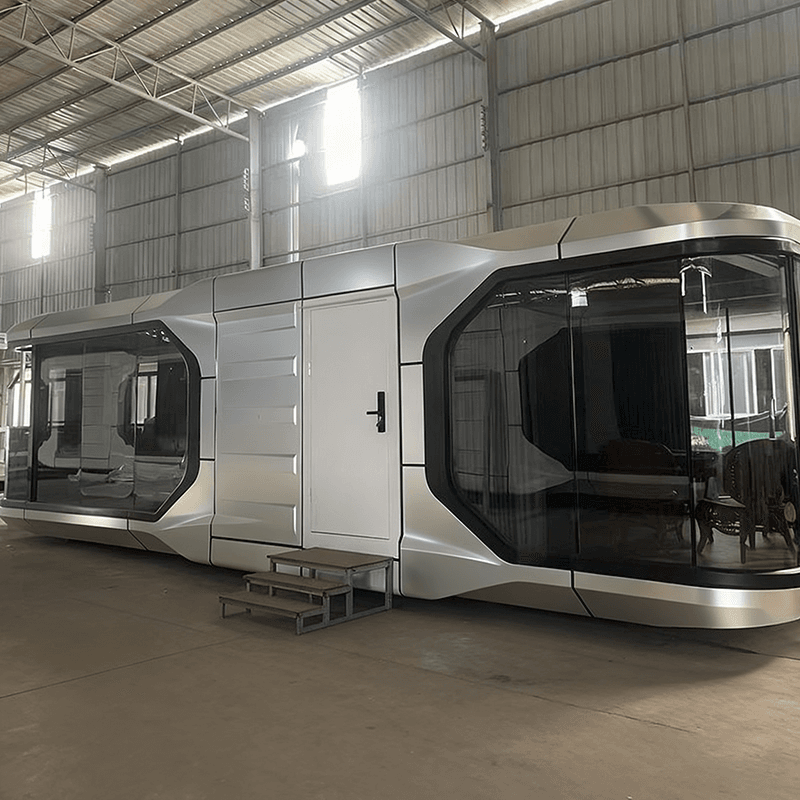
1. Material Performance and Structural Safety
The core components of container panel houses are steel structural frames and enclosure panels. The thickness of the steel directly affects the load-bearing capacity. For example, if ordinary suppliers use only 4mm thick square steel for the columns of the container body, the bottom columns may deform due to excessive local pressure after stacking two layers. Optimized suppliers, on the other hand, use 6mm thick square steel for the columns and add reinforcing ribs at the connection nodes, increasing the overall compressive strength by about 50%. Regarding enclosure panels, attention should be paid to the density of the insulation layer and the anti-corrosion process. For instance, a combination of 0.8mm thick corrugated steel plates and 100mm rock wool sandwich panels can meet the basic insulation requirements in environments as cold as -30 degrees Celsius.
2. Fire Safety and Compliance
The fire hazards of container panel houses mainly stem from non-compliant construction materials. Some products, to save costs, use flammable materials such as polystyrene and polyurethane foam for the core materials. These materials burn rapidly, are highly toxic, and are difficult to extinguish. Therefore, hotel buildings should choose container panel houses made of Class A fire-resistant materials such as rock wool panels and fire-resistant cotton, with fire resistance limits that meet construction site fire safety requirements. Additionally, electrical wiring should be protected with conduits, sockets and switch boxes should be made of metal galvanized boxes and surface-mounted, and simple fire-fighting equipment should be provided.
3. Climate Adaptability Design
For different climatic conditions, container panel houses require targeted process improvements. For example, in areas with a diurnal temperature range exceeding 20 degrees Celsius, if only ordinary galvanized plates are used, condensation is likely to form on the inner walls of the container, leading to dampness. By adjusting the coating formulas on both sides of the panels, such as using a high-weather-resistant polyester resin coating on the outer layer and adding a moisture-proof aluminum foil layer on the inner layer, the probability of condensation can be effectively reduced. In areas with heavy wind and sand, more weather-resistant seals, such as ethylene propylene diene monomer rubber seals, should be used, with a service life of over 5 years.
4. Modular Design and Functional Expansion
If hotel buildings require multi-story combinations or functional zoning, container panel houses that support modular design should be chosen. For example, by embedding pipelines within the chassis of the container and using quick-connect designs, on-site construction errors can be reduced. At the same time, it is necessary to address structural mechanics issues during vertical stacking, such as using thicker columns and reinforcing ribs to enhance overall stability.



