
Hotan Mobile Toilet Design Concept
The design concept of Hotan mobile toilets centers on modularity, environmental friendliness, flexibility, and humanization, achieving efficient and sustainable public health services through technological innovation.
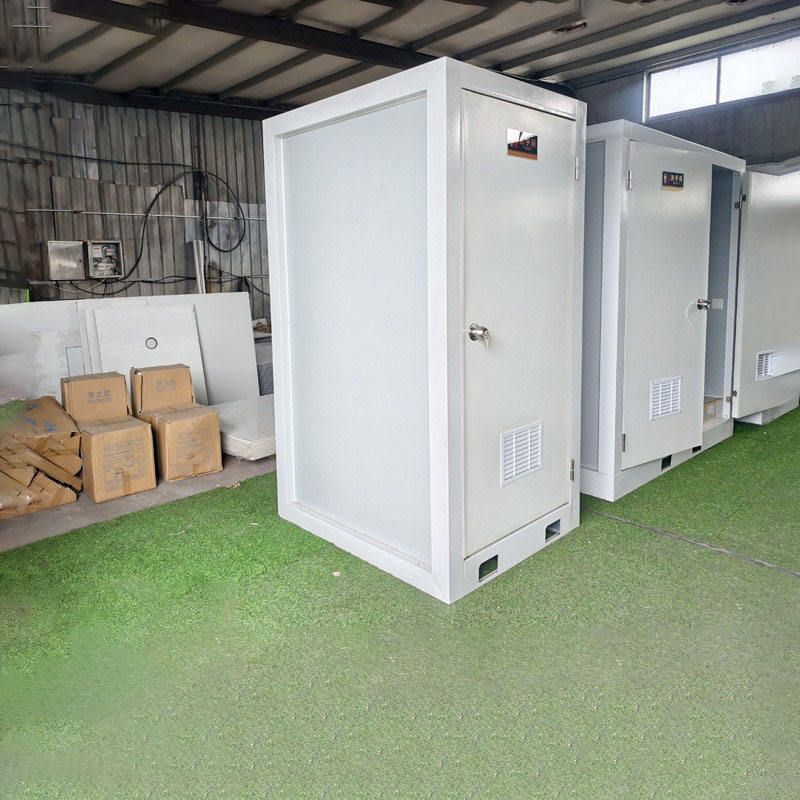
Modular and Standardized Production
Mobile toilets adopt a modular design, breaking down walls, roofs, sanitary fixtures, sewage systems, and other components into standard modules for prefabrication through industrial assembly lines. This design significantly shortens the construction period (from several months to just a few days) and supports mass production to reduce costs. For example, basic toilet modules can be processed simultaneously in factories and assembled on-site within a few hours for immediate use, making them particularly suitable for emergency scenarios (such as disaster relief) where they can quickly provide sanitation for affected populations and prevent disease transmission.
Environmental Technologies Throughout the Lifecycle
- Sewage Treatment: Microbial degradation technology (converting feces into harmless water vapor and carbon dioxide within 24 hours), vacuum suction systems (using only 0.5 liters of water per flush, achieving a 90% water-saving rate), and solar power systems are introduced to reduce reliance on municipal sewage networks and lower carbon emissions.
- Sustainable Materials: Walls are made from recycled plastic and wood fiber composites, reducing weight for easier transportation while enabling waste reuse. According to statistics, a medium-sized mobile toilet can reduce approximately 3 tons of construction waste annually, equivalent to the carbon sequestration capacity of 100 mature trees.
- Zero Sewage Discharge: In ecologically sensitive areas (such as nature reserves), self-contained sewage systems prevent groundwater contamination, and chemical treatment modules ensure wastewater meets reclaimed water standards.
Flexible Adaptation to Multiple Scenarios
- Urban Applications: Address the “toilet shortage” in temporary events (music festivals, exhibitions), old residential area renovations, or construction sites while minimizing construction disruption.
- Remote Areas: In mountainous scenic spots or desert research stations, self-contained sewage systems overcome municipal infrastructure limitations.
- Customized Services: Additional features like air conditioning, baby changing stations, barrier-free facilities, or smart monitoring systems (real-time display of user count and air quality) can be installed based on demand to enhance the humanized experience.
Humanized and High-Efficiency Design
- Space Optimization: Integrated toilets use high-density polyethylene or fiberglass-reinforced plastic materials, compressing the footprint of a single toilet stall to under 0.8 square meters while still accommodating barrier-free handrails and other facilities.
- Wind Resistance and Easy Cleaning: The curved exterior wall structure enhances wind resistance (withstanding up to Force 10 winds) and reduces pollutant adhesion.
- Resource Recycling: Gray water from sinks is filtered for flushing, and photovoltaic panels power ventilation fans and lighting, creating an independent energy cycle.
You may also like

Portable Toilet Eco-Friendly: MOQ, Samples & Quotation Guide
Read More
Top Portable Toilet Color Steel Manufacturers: How to Choose a Factory Partner
Read MorePortable Toilet Picture: Types, Features & Buying Tips
Read More