
Custom Design of Home Mobile Toilets
The custom design of home mobile toilets can be approached from aspects such as size specifications, scenario-based customization, functional integration technology, and material selection.
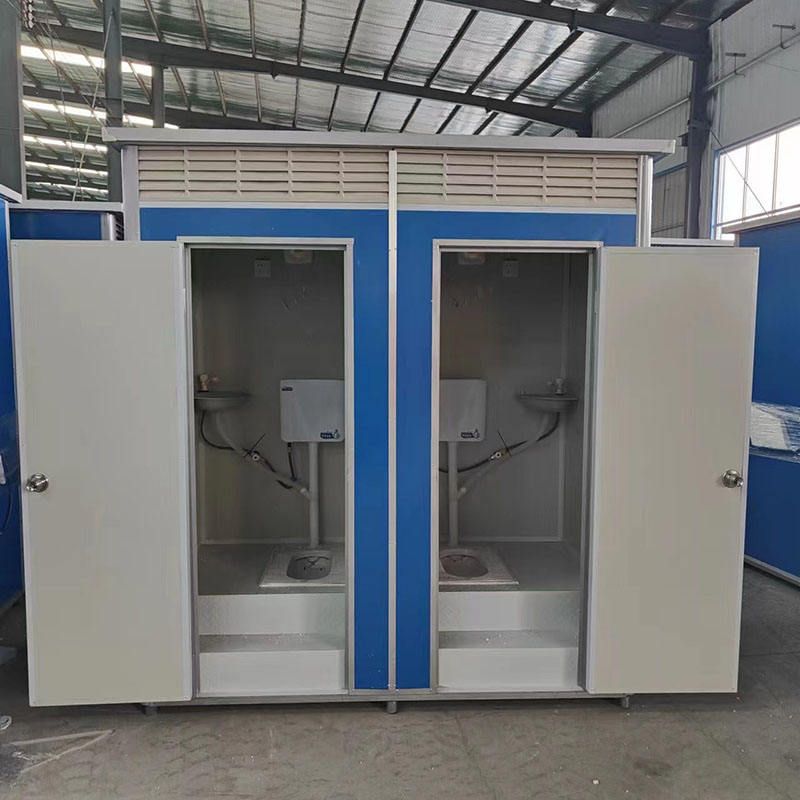
Size Specifications: The choice of size for home mobile toilets should fully consider the actual space and usage needs of the household. The minimum size for single-person use is 1×1.2 meters, suitable for space-constrained areas such as small apartment bathroom renovations or courtyard corners. The standard double-person size expands to 1.5×2 meters, meeting moderate traffic demands, such as households with more family members or occasional visitors. If the household has ample space and seeks higher comfort, a design based on the 3×5-meter specification used for large-scale events can also be considered, but care should be taken to avoid excessive space occupation.
Scenario-Based Customization: Different household scenarios have varying needs for mobile toilets. For example, households with elderly or young children may consider adding barrier-free facilities such as handrails and non-slip floors to enhance safety. If family members have special health needs, a toilet with medical assistance functions, such as an emergency call button, can be customized. Additionally, the internal layout can be adjusted according to household usage habits, such as swapping the positions of the sink and toilet to optimize movement flow.
Functional Integration Technology: Through three-dimensional space planning, the ineffective space of mobile toilets can be effectively compressed. For example, integrating a water storage tank beneath the sink, hiding ventilation ducts within structural layers, or using wall-mounted toilets to reduce floor space occupation. These technologies can reduce the volume of toilets with the same functional requirements while maintaining convenience of use.
Material Selection: The materials for home mobile toilets should balance durability, environmental friendliness, and ease of cleaning. Bamboo-wood fiberboard can be selected for interior wall panels due to its moisture-proof, mold-proof, and easy-to-clean properties. For the outer shell, materials such as fiberglass or polyethylene can be chosen, as they are lightweight, corrosion-resistant, and easy to move and install. Additionally, the floor material should be a non-slip option, such as non-slip tiles or rubber flooring, to ensure safety during use.



