Back to blog
Article
Home Mobile Large Toilet
Admin September 21, 2026
Home mobile large toilets come in various types and have distinct features. Here is a detailed introduction:

Common Types and Structural Components
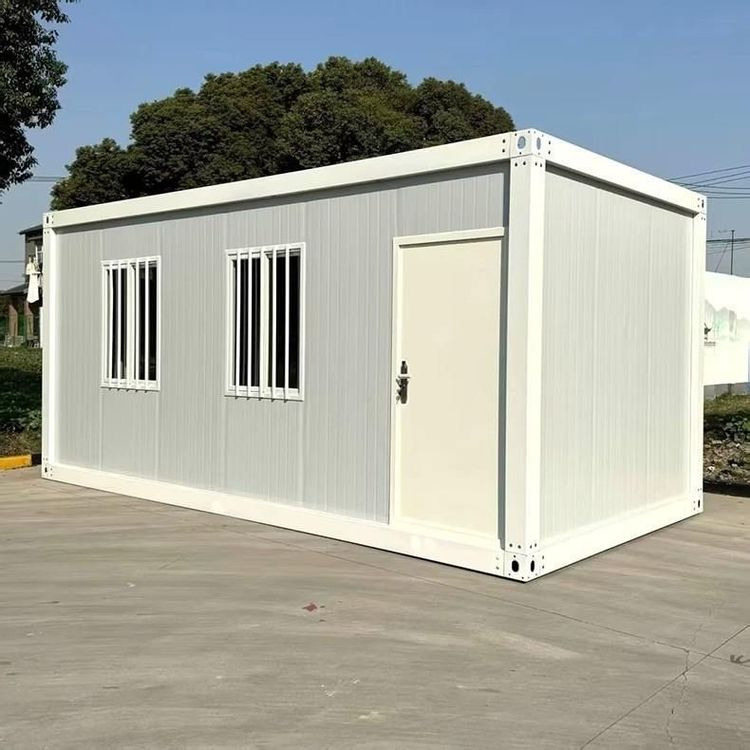
- Economical and Practical Mobile Toilet: The overall appearance features a gray-and-white metal carved panel. It is designed with 8 squatting positions, separate entrance doors for men's and women's toilets, sliding windows and stone wall lamps on the front wall, and independent squatting compartments. This type of mobile toilet generally consists of a fecal sewage storage tank (or fecal sewage treatment device), floor slab, sanitary ware, walls, washing equipment, water tank, roof, and mobile device.
- All-in-One Three-Function Mobile Bathroom: With dimensions of 1.6 meters by 2 meters, it is equipped with a ventilation window and an aluminum alloy single door. The interior is richly configured, including a sink, vanity mirror, toilet, shower, bath heater, water heater, and the plumbing for a washing machine is already in place, meeting various household needs.
Classification Methods
- By Structural Form: They can be divided into single-structure mobile toilets and composite-structure mobile toilets. Single-structure toilets are relatively independent and simple, while composite-structure toilets may offer more advantages in terms of functional integration or space utilization.
- By Mobility Method: They are classified into lifting and handling mobile toilets, and powered and towed mobile toilets. Lifting and handling mobile toilets may be more suitable for relatively fixed locations where lifting and handling are convenient; powered and towed mobile toilets have greater mobility and can be moved to different places with vehicles.
- By Sewage Treatment Method: They are divided into water-flush and non-water-flush suction mobile toilets, circulating water-flush mobile toilets, and dry-packing mobile toilets. Water-flush and non-water-flush suction mobile toilets have different methods of treating feces; circulating water-flush mobile toilets can achieve water resource recycling and are more environmentally friendly; dry-packing mobile toilets do not require water and treat feces by packing.
Materials and Uses
There are various materials available for home mobile toilets, such as fiberglass, color-coated steel, aluminum-plastic panels, and stainless steel. Different materials have different characteristics. For example, fiberglass is light yet hard, color-coated steel is colorful and has certain strength, aluminum-plastic panels are aesthetically pleasing and durable, and stainless steel is corrosion-resistant. Their uses cover outdoor toilets, public restrooms, etc., and can also be used in households to meet temporary or specific sanitation needs.
Related