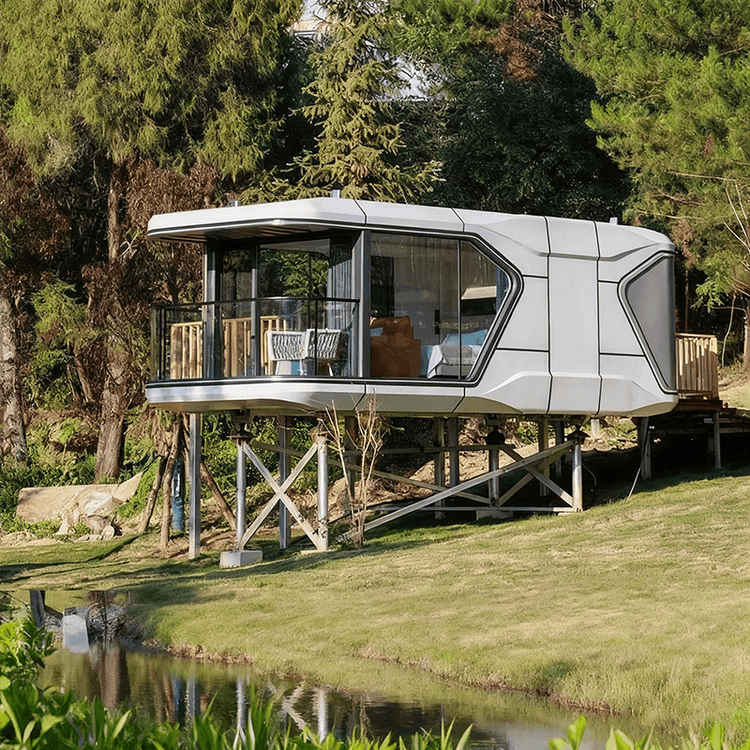
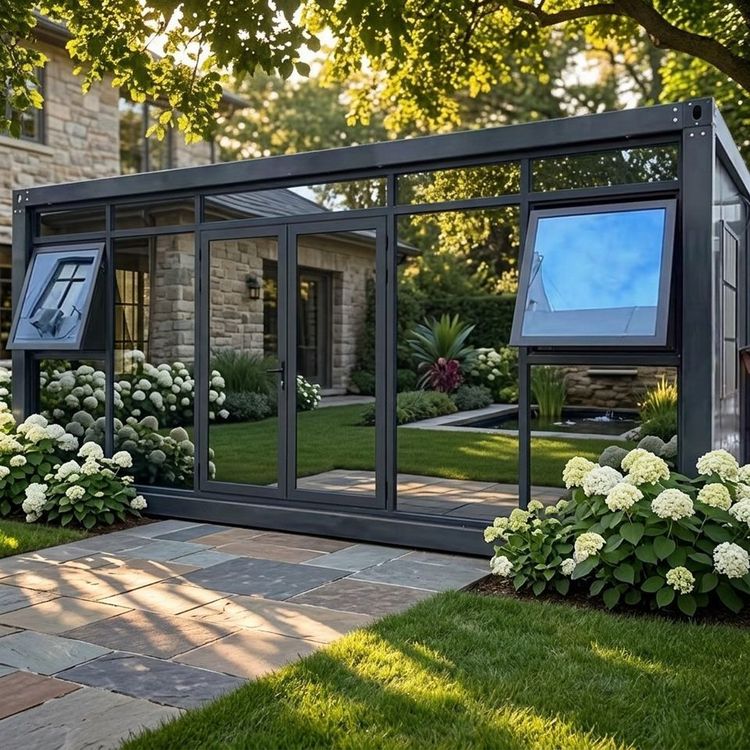
Hoisting Prefabricated Houses
Hoisting prefabricated houses are prefabricated buildings that can be hoisted and moved as a whole by cranes without the need for disassembly. Their main bodies can be composed of metal decorative insulation panels or concrete modules.

Construction Process and Characteristics
Hoisting prefabricated houses break down the building into independent modules, which are manufactured in a factory, including the complete prefabrication of ceilings, floors, and water and electricity pipelines. These modules are then transported to the construction site for assembly. For example, some projects adopt concrete modular construction technology, planning multiple prefabricated modules. Each module includes electromechanical pipelines and decorative components, and is assembled through truck hoisting. At the module joints, on-site steel bar splicing and concrete pouring processes are used. This “building block” construction method makes the construction process more efficient and precise.
Core Advantages
- Short Construction Period: Compared to traditional buildings, the construction period of modular buildings can be shortened by more than 60%. For example, in a public housing project in Shenzhen, Guangdong, five residential buildings nearly 100 meters high were assembled from 6,028 concrete modules, reducing the completion and delivery time from 2.5 to 3 years to just 1 year.
- Controllable Quality: Factories use parallel operations, combined with automated three-dimensional warehouses and intelligent production lines, to control errors and precision to the millimeter. Each module has a detailed “ID card,” including the project name, product model, and production date, achieving industrial production standards.
- Energy Efficiency and Environmental Protection: Most of the construction processes are completed in the factory, with only on-site casting required for connections, significantly reducing noise, dust, construction waste, and traffic congestion, aligning with green building concepts.
- Easy Maintenance: The modular design makes maintenance more flexible and has a wide range of applications, suitable for various scenarios such as guardhouses, kiosks, hotels, apartments, and hospitals. In 2023, the rural revitalization project in Huoshaocheng Village, Shimen Town, Tianzhu County, adopted hoisting houses as affordable housing.
Development Challenges and Prospects
This model places extremely high demands on the industrial base, requiring support from technical systems, production systems, and industrial clusters. Nevertheless, its efficient and environmentally friendly characteristics continue to drive rapid market growth. According to market research agency predictions, the global modular construction market size will exceed $142.8 billion by 2030, indicating immense future application potential.