
High-Quality Container House Design
High-quality container house design requires comprehensive consideration of multiple factors, including material selection, structural mechanics, thermal performance, connection nodes, surface corrosion protection, and spatial layout.
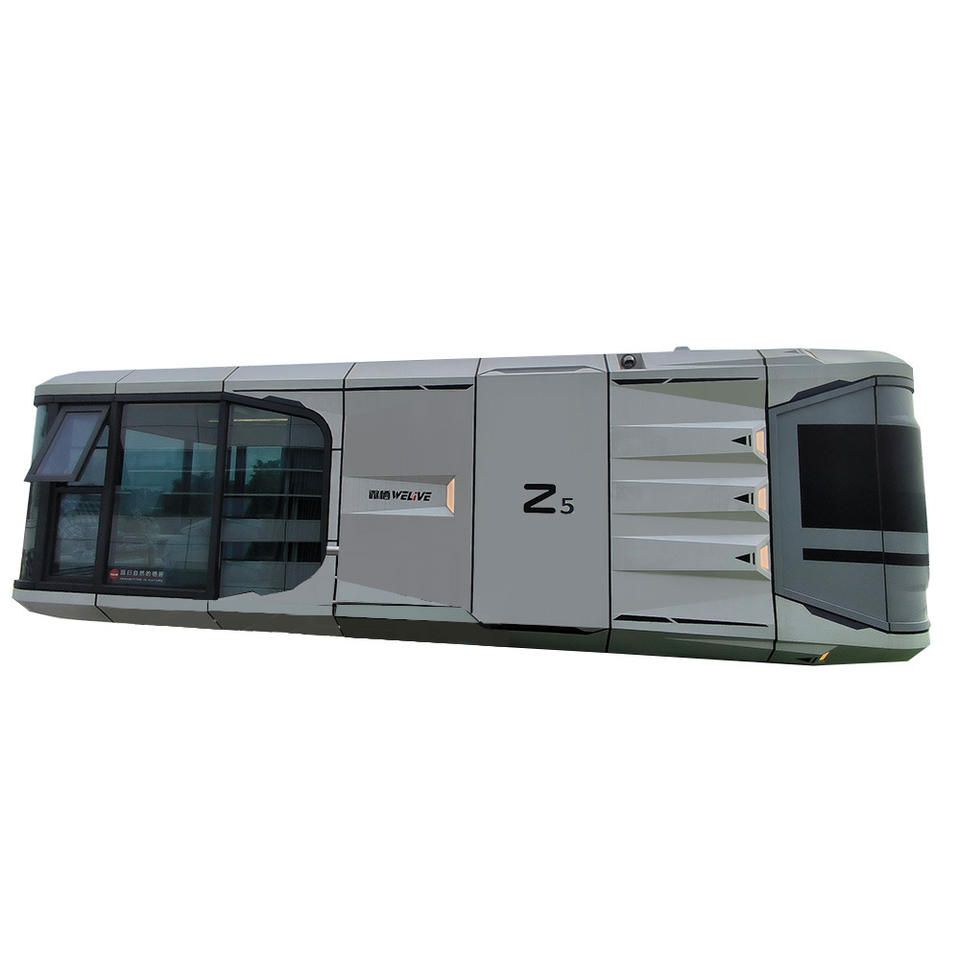
Material Selection and Structural Mechanics: High-strength weathering steel (such as Q355B grade) is used as the main frame of the container body, with a yield strength approximately 30% higher than that of ordinary carbon steel, forming a self-balancing system and reducing material usage. The longitudinal corrugated plates on the top of the container body disperse stress through their corrugated geometry, avoiding local buckling. For living spaces, C-shaped steel purlins need to be installed between the bottom beams to evenly distribute loads and maintain structural stability.
Thermal Performance: The enclosure structure adopts a three-layer composite construction of 'rock wool-air layer-aluminized zinc plate'. The thickness of the rock wool layer is controlled between 75mm and 100mm, with a thermal conductivity limited to below 0.040 W/(m·K). The 5mm air layer in the middle inhibits convective heat transfer, with an overall heat transfer coefficient below 0.5 W/(m²·K), reducing condensation risk and extending the service life of the steel structure. For the cold and hot bridge effect of the metal container walls, a broken bridge lining structure can be adopted, filled with rigid polyurethane foam and equipped with rubber thermal insulation pads to reduce heat exchange efficiency.
Connection Nodes and Seismic Adaptability: For areas with high seismic design intensity, a dual fixation mode of 'wedge lock + high-strength bolt' is introduced. The wedge lock is designed with a 15-degree inclined surface angle to produce a self-locking effect, controlling displacement and outperforming conventional welded nodes. This detachable connection method facilitates repeated assembly during secondary relocation, reducing construction waste generation.
Surface Corrosion Protection and Life Cycle Extension: The coating system adopts a combination of 'epoxy zinc-rich primer + polyurethane topcoat'. The primer contains over 80% zinc powder, protecting the base metal through the sacrificial anode principle. The topcoat is added with nano-silica particles, achieving a hardness of 3H level, resisting wind and sand erosion, and extending the service life of the container body's main structure.
Spatial Layout and Functional Zoning: According to usage requirements, the internal space is reasonably planned, such as setting up independent workstations, conference tables, storage spaces, etc., to improve area utilization. An open layout is adopted to closely connect the internal and external environments, meeting living comfort and highlighting the unique personality of container architecture.



