
Hengxi Container Mobile House
The Hengxi container mobile house is a movable building transformed from a container as its basic structural module. It features sturdiness, durability, easy construction, and controllable costs, and is widely used in scenarios such as temporary housing, construction site offices, and cultural and tourism facilities.
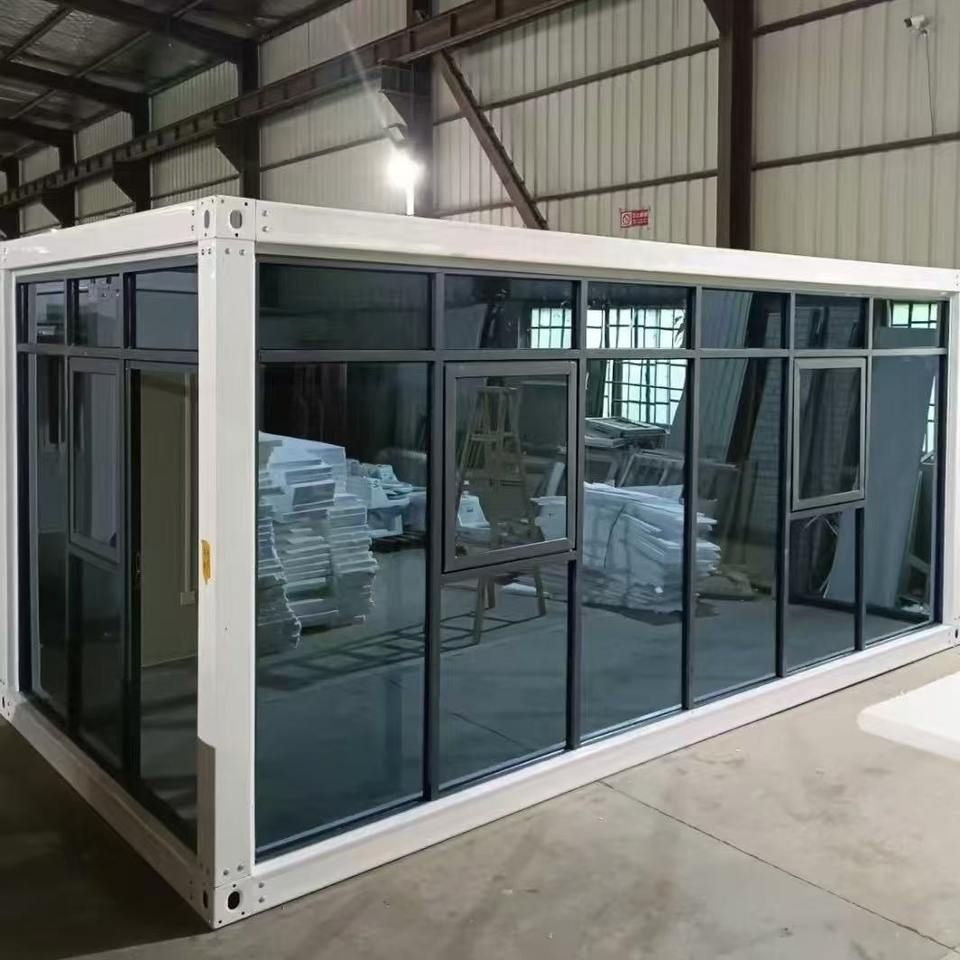
Structure and Materials
The container mobile house uses hot-dip galvanized cold-formed steel as its frame, paired with fire-resistant polyurethane sandwich panels, rock wool, or glass wool wall panels, providing both thermal insulation and fire resistance. The floor typically employs cement fiber boards or steel-wood composite floors, while the walls and ceilings use metal panels or calcium silicate boards. This material combination enables it to meet basic usage requirements in terms of thermal insulation, sound insulation, and fire resistance, and it has good rust and corrosion resistance, allowing for modular assembly without the need for heavy foundation pouring.
Types and Functions
Common types include packing-box container houses, light steel keel houses, and functional booths. Packing-box container houses can be used independently or stacked in multiple layers, suitable for construction site dormitories and office areas; light steel keel houses offer flexible customization in appearance and layout, suitable for long-term use scenarios such as self-built houses and homestays; functional booths can be adjusted in size and layout according to needs, commonly used as security booths and property booths. Additionally, there are derivative products such as container toilets, construction site panel houses, and quick-assembly containers to meet diverse needs.
Production and Installation
Container mobile houses are manufactured in batches on standardized production lines, with core processes including steel structure frame welding, wall panel prefabrication, and internal water and electricity pipeline embedding. After most processes are completed in the factory, the components are transported to the site for rapid assembly, significantly shortening the construction period and reducing on-site wet work. Trial assembly is conducted before leaving the factory to ensure component compatibility, and on-site installation only requires lifting into place and completing the assembly.
Safety and Compliance
Despite the many advantages of container mobile houses, their safety still requires attention. Products from some small and medium-sized manufacturers may lack complete third-party safety inspection documents, and their fire and wind resistance may not meet current regulations. For example, in 2025, a container makeshift house in Linping District, Hangzhou City, caught fire due to an electrical circuit fault, causing property damage. Therefore, when choosing, priority should be given to examining the manufacturer's safety qualifications and product inspection reports to ensure compliance with standards such as the "General Technical Conditions for Prefabricated Integrated Houses."



