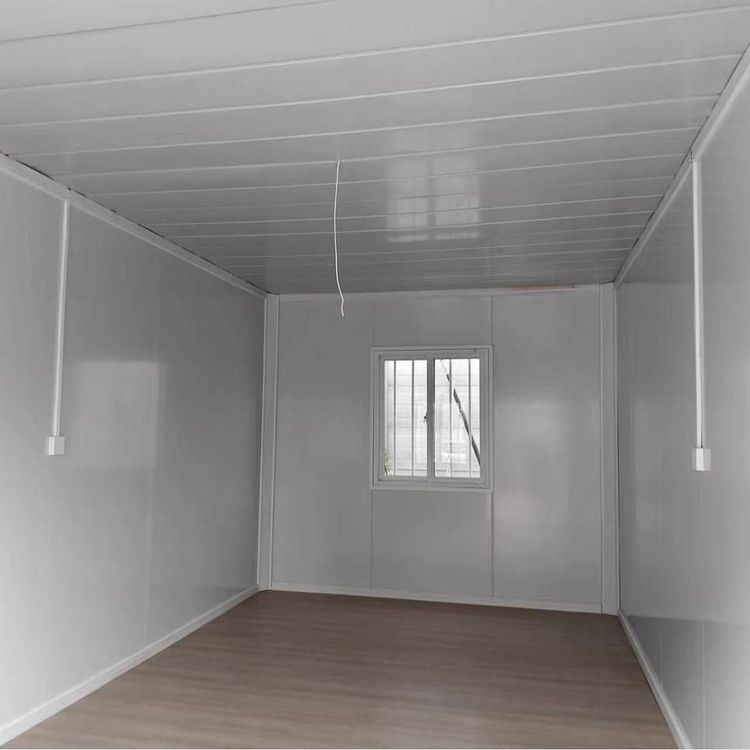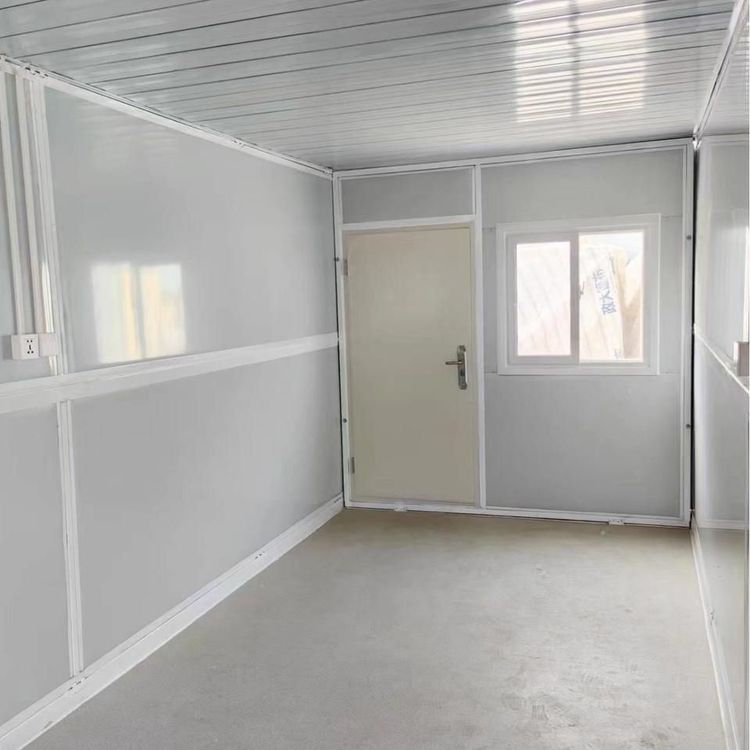
Hengshui Converted Container House
Hengshui's converted container-house industry has formed a clustered, technology-driven, multi-scenario development model. It offers clear environmental and cost advantages and is accelerating its global footprint.

1. Twin drivers: industrial clustering and technical innovation Fucheng County is the core area. Through government planning it has built a complete industry chain and put forward a three-step strategy: standardize and aggregate to lay the foundation, upgrade via "shared smart manufacturing," and refine the ecosystem through industrial division of labor—aiming for a 10-billion-yuan-class industrial cluster. Firms raise competitiveness through smarter production: Hebei Baida Mingsheng's customized houses have an export rate above 95% and upgraded insulation for Canada's severe cold; Hebei Zhongxinhe developed folding container villas that cut shipping volume by 50% while doubling on-site space, and has entered markets such as Russia. On the technology side, new insulation materials improve wall thermal performance, modular design enables fast assembly, and folding structures compress shipping volume to about one-third, sharply lowering ocean freight costs.
2. Diversified use cases across multiple sectors In Hengshui, container houses serve three main directions: residential—temporary housing on construction sites, vacation villas, and accessory garages; commercial—cafes and small shops remodeled by entrepreneurs, using a distinctive look to draw foot traffic; and office—temporary corporate workplaces that can be deployed quickly at low cost. For example, Fu Cheng, an entrepreneur born in 1993, used Alibaba.com International data to pivot into prefab-house exports, won overseas trust with quality-verification videos, and reached $19,722,222 in sales in 2023.
3. Policy support and market expansion moving together Hengshui's Sixth Party Congress explicitly backs specialty industrial clusters. Fucheng County's Development and Reform Commission helps firms case by case under a "one cluster, one plan" approach—covering trade-show subsidies, overseas warehouse buildup, and more—forming a "government guidance + enterprise innovation" model. On the market side, Alibaba.com International data show that in the first half of 2026, "container house" category GMV grew more than 50% year on year, with U.S. buyers accounting for over 20%, underscoring rising global demand.
4. Strong green economics, with performance still to optimize Converting used containers cuts construction waste; building generates less noise and dust; costs run 30%-50% below traditional construction; and build cycles shrink to 7-15 days. Insulation can still fall short, so extreme climates need extra thermal measures. Today Hengshui's industry spans a full ecosystem from steel supply to skilled labor. Through smart production, modular design, and customized service, it is reshaping the global prefab housing market.