
Functions of Container Houses in Heilongjiang
The functions of container houses in Heilongjiang are mainly reflected in cultural tourism, temporary events, rural farms, and as versatile space carriers.
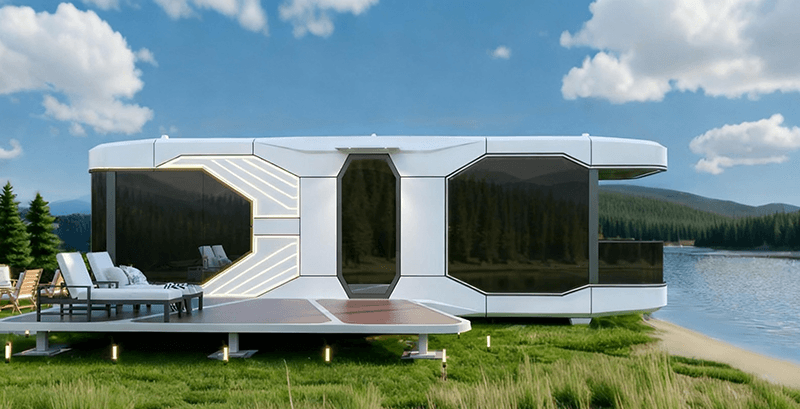
As cultural tourism space carriers, container houses in Heilongjiang demonstrate unique advantages in scenic spots or suburban tourist destinations. They can be quickly transformed into cafes, book bars, specialty restaurants, or cultural and creative product stores, among others. Not only do they have a short construction period, but they also cause minimal damage to the original natural environment. Their brightly colored designs contrast sharply with the natural landscape, making them popular spots for tourists to take photos and check in, adding modern and fashionable elements to the tourism experience.
In terms of temporary and mobile facilities, the flexibility of container houses is fully utilized. During the peak summer tourist season and the winter ice and snow season, due to large fluctuations in tourist traffic, container houses are often used as temporary ticket booths, information centers, or pop-up shops at large event venues. After the events, they can be quickly hoisted away, and the venue can be quickly restored to its original state, providing great convenience for event organization.
In terms of functional supplementation in rural areas and farms, container houses also perform excellently. In some ecological farms or rural experience projects, they are used as observation platforms, tool warehouses, or simple accommodation units. Their sturdy structures can well adapt to the wild environment, adding a touch of industrial-style modernity to the rural landscape and meeting tourists' needs for novel experiences.
In addition, container houses are new carriers for residential, office, commercial, and even public cultural spaces. Through innovative transformation designs, they can become simple residential units, including living, resting, and bathroom facilities. Multiple containers can also be combined to form larger composite spaces suitable for small bed-and-breakfasts, creative office clusters, or community activity centers. Depending on the final use, the containers can also be integrated with thermal insulation systems, water and electricity pipelines, ventilation and lighting facilities, as well as interior decoration, thereby enhancing space comfort and reflecting the wisdom of resource recycling.



