
Hebei Prefabricated Integrated Housing Construction
Hebei prefabricated integrated housing construction, with its core advantages of 'speed, cost-efficiency, and environmental friendliness,' is driving transformation in the construction industry and is widely applied in urban and rural development.
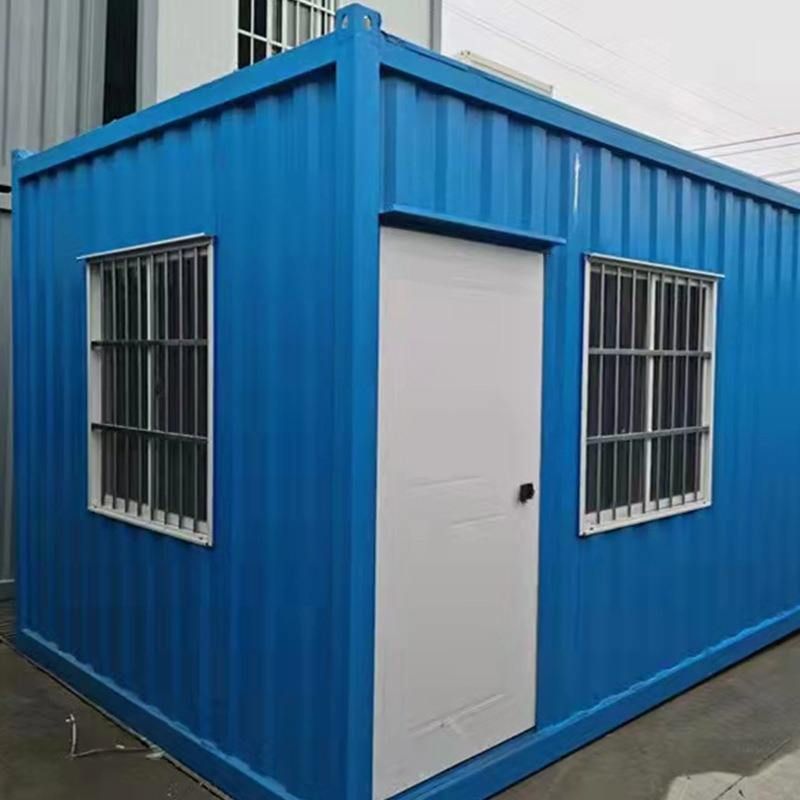
Significantly Shorter Construction Period
Traditional brick-and-mortar houses take 3-6 months from design to occupancy, whereas prefabricated integrated houses, through factory-prefabricated modular components and on-site assembly, can be completed in just 1-2 months. For example, a 200-square-meter project can be delivered in just 45 days from material arrival, saving nearly half the time compared to traditional methods. This efficiency boost stems from the parallel production of standardized components and rapid on-site assembly, making it particularly suitable for urgent housing needs (such as post-disaster reconstruction and temporary shelter).
20%-30% Reduction in Overall Costs
Integrated housing reduces costs through bulk procurement and standardized production, while minimizing labor and material waste during on-site construction. For instance, a 150-square-meter self-built rural house can see a total cost reduction of about 50,000 yuan after adopting integrated technology, with lower maintenance costs in the long run. Additionally, policy subsidies further alleviate the financial burden on farmers: Hebei Province provides a subsidy of 10,000 yuan per household for farmers building new prefabricated rural houses and simplifies the application process through the 'Yunongtong' APP, with some cities and prefectures offering additional incentive measures.
Outstanding Performance Advantages
Located in seismic zones, some areas in Hebei employ integrated housing with steel frame structures and modular assembly techniques, achieving a seismic resistance rating of over 8, significantly superior to traditional brick-and-mortar structures. Its thermal insulation performance improves by 40%, reducing winter heating energy consumption by 30% and summer cooling demand by 25%, meeting green building standards. For example, prefabricated rural houses integrate efficient insulation layers through factory-prefabricated wall panels, reducing on-site construction errors.
Policy Support and Industrial Scaling
The Hebei Provincial Housing and Urban-Rural Development Department's 'Prefabricated Building Development Plan' aims for newly built integrated houses to account for 35% of construction by 2025. Major projects such as Xiong'an New Area and Zhangjiakou Winter Olympics venues have widely adopted this technology, driving the growth of over 200 upstream and downstream enterprises. Rural promotion has yielded remarkable results: by the end of 2025, 20,000 farming households across the province had voluntarily chosen to build prefabricated rural houses, with 45 counties (cities, districts) achieving full township coverage.
Parallel Development of Foreign Trade and Technological Innovation
Hebei enterprises like Heshiji Integrated Housing Co., Ltd. have expanded foreign trade through Alibaba International Station, exporting products to countries such as the United States and Australia, with annual sales reaching $21 million. Their houses have a production cycle of just 25-30 days, are delivered with basic interior finishes, and have a sea freight delivery cycle controlled within three months, demonstrating an efficient supply chain and international competitiveness.



