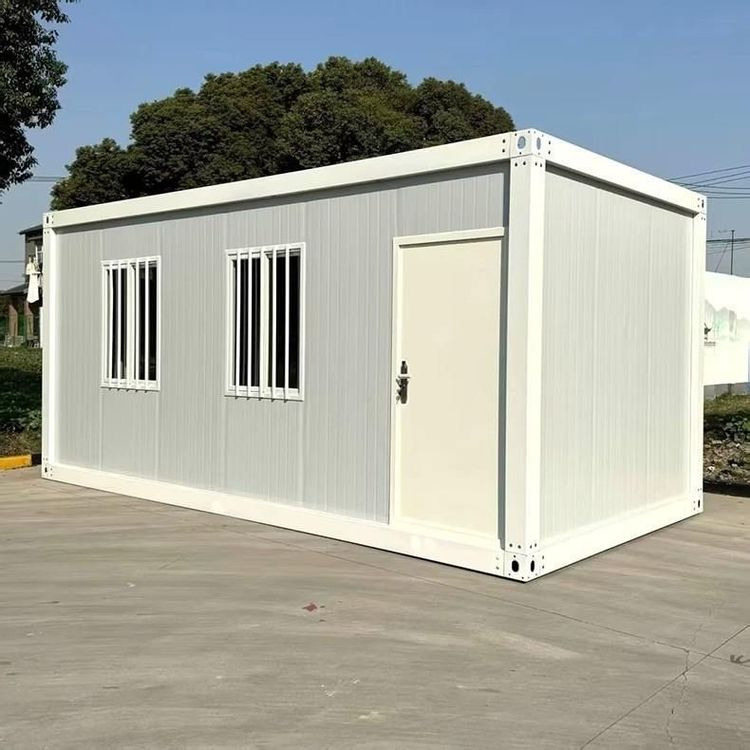
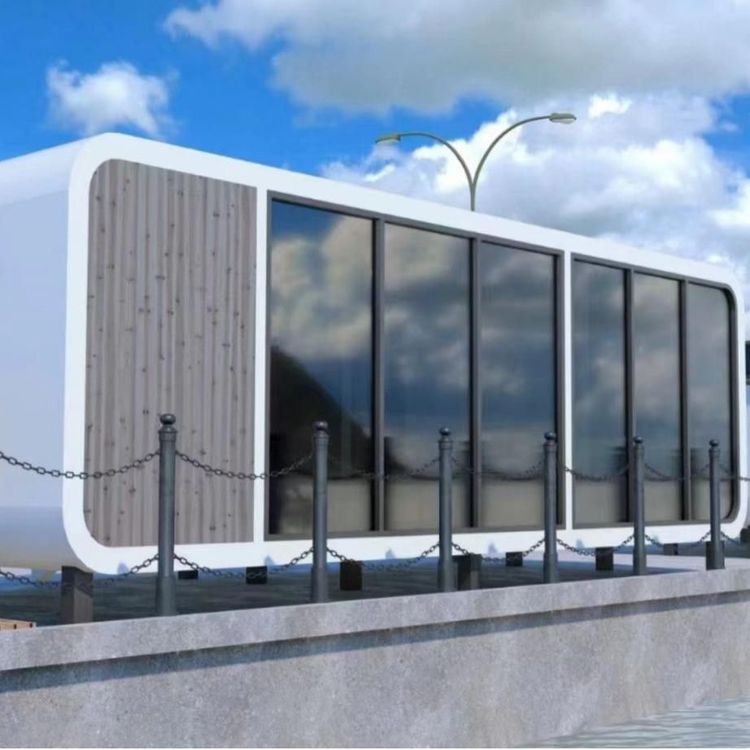
Heavy Steel Container House
The heavy steel container house is a modular building unit centered around a steel structural frame, combined with enclosure panels, featuring high strength, mobility, environmental friendliness, and adaptability to diverse scenarios. The following is an analysis from the perspectives of structure, performance, application scenarios, and purchasing considerations:

1. Structural Composition and Core Advantages
The main frame of the heavy steel container house is made of high-strength steel (such as 6mm thick square steel columns), connected by welding or bolts to form a stable structure. Its core advantages include:
- High load-bearing capacity: The thickness of the steel and the connection process (such as adding reinforcing ribs) ensure structural stability during vertical stacking. For example, Baotou Xinxing Color Plate Steel Structure Manufacturing Co., Ltd. optimized the column design, enabling the bottom columns to remain undeformed when the container is stacked three layers high, with a compressive strength increase of about 50%.
- Durability: After shot blasting for rust removal, the steel surface is coated with a zinc-rich primer and a polyurethane topcoat, forming a protective system that can maintain an effective lifespan of over 15 years in northwest windy and sandy environments with significant temperature differences.
- Modular design: Supports rapid disassembly and assembly, with standardized interfaces for water and electricity pipelines, reducing on-site construction errors. For example, pre-embedded pipelines are integrated into the container chassis, using quick-connect designs that eliminate the need for additional trenching.
2. Performance Optimization and Technological Innovation
In response to different climatic conditions, the heavy steel container house has undergone technological improvements in insulation, corrosion resistance, and condensation control:
- Thermal insulation: Adopts a broken-bridge lining structure, filling hard polyurethane foam between the steel frame and interior wall panels, and adding rubber thermal insulation pads to reduce heat exchange efficiency between the interior and exterior of the container by about 40%. For example, in -30℃ environments, 100mm rock wool sandwich panels can meet basic insulation requirements.
- Corrosion resistance process: The outer layer uses a high-weather-resistant polyester resin coating, and the inner layer adds a moisture-proof aluminum foil layer, effectively reducing the probability of condensation when the day-night temperature difference exceeds 20℃.
- Wind and earthquake resistance: The all-steel structural frame has been tested to withstand winds of up to 12 and has an earthquake resistance rating of 8, meeting the requirements of the GB50011-2010 code.
3. Application Scenarios and Environmental Value
The heavy steel container house is widely used in engineering camps, commercial temporary spaces, emergency support, and other fields. Its environmental value is reflected in:
- Material recycling: Each standard 20-foot container consumes about 1.2 tons of steel, with a disassembly loss rate controlled within 5%, and carbon emissions only 1/2.3 of those of concrete temporary buildings.
- Rapid deployment: A single module can be assembled from arrival to completion in just 4 hours, and the construction period for 10 standard camp housing units does not exceed 3 days, significantly shortening the project preparation time.
- Flexible adaptation: Supports on-demand splicing and combination, with an interior space utilization rate of over 90%, expandable into double occupancy dormitories, offices, or meeting spaces.
4. Purchasing Considerations and Process Inspection
When purchasing, focus on the following technical details:
- Steel thickness and connection process: It is recommended to choose steel wall thicknesses of 1.5mm to 3mm for columns and bottom beams, prioritizing welded integral containers (strong deformation resistance) or bolt-connected assembled containers (check the tightness of the joints).
- Coating quality: Hot-dip galvanizing has a longer corrosion-resistant lifespan than cold-dip galvanizing, especially in areas with significant day-night temperature differences and humidity changes, where the coating quality directly determines the rusting speed of the container.
- Localized improvements: For areas with long winters and significant temperature differences, such as Jining, it is necessary to inspect whether the supplier has adjusted the panel coating formula (such as outer layer high-weather-resistant polyester resin, inner layer moisture-proof aluminum foil layer) to reduce the probability of condensation.