Hangzhou Mobile Toilet Management System
The Hangzhou Mobile Toilet Management System focuses on modular deployment, full-cycle operations, and flexible resource adjustment, achieving efficient temporary sanitation service provision through standardized processes and equipment adaptation. Currently, it primarily relies on offline management and has not yet established a dedicated digital platform.
Modular Disassembly and Rapid Deployment Capability
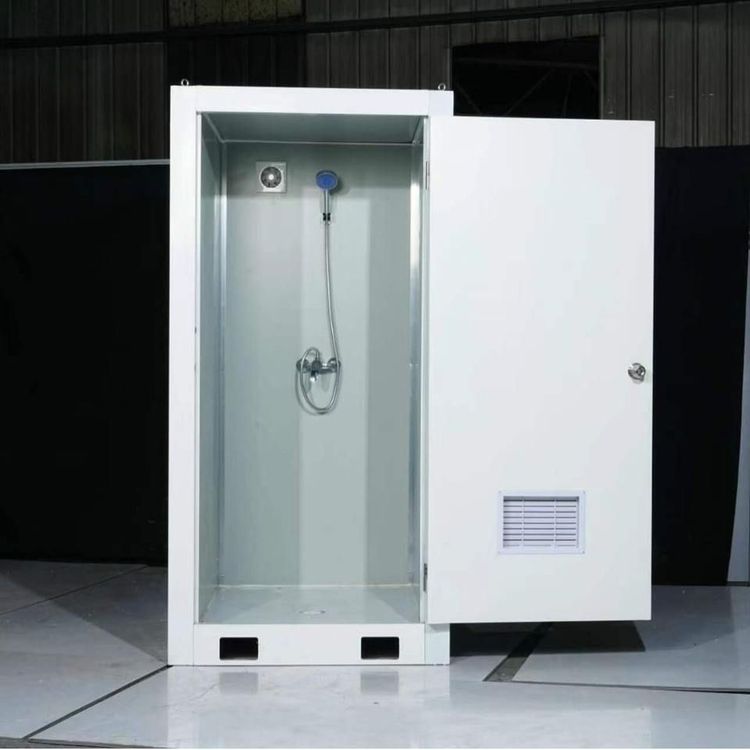
Hangzhou's mobile toilets adopt a modular design, consisting of three main modules: frame enclosure, sanitary fixtures, and auxiliary systems. The main frame is made of lightweight alloy materials, balancing structural strength and transportation convenience, allowing for quick disassembly into independent units for vehicle transport. During installation, standardized interfaces are used for assembly, eliminating the need for complex construction and enabling the entire process from transportation to operational readiness to be completed within hours. This feature allows for flexible responses to sudden high-demand scenarios such as music festivals and sports events. For example, during the Hangzhou International Marathon, pre-deployed modular toilet units can quickly supplement sanitation facilities along the race route.
Full-Cycle Operational Management Process
Systematic management covers the entire process from leasing decisions, service agreement formulation, equipment maintenance, and waste removal. Before leasing, a comprehensive assessment is conducted, considering peak user numbers, event duration, and site conditions. For instance, during holidays at West Lake, toilet unit quantities and the proportion of accessible facilities are determined based on tourist flow predictions. Service agreements specify equipment types, service periods (including installation, maintenance, and waste removal frequencies), and responsibility divisions. For example, in high-density foot traffic scenarios, cleaning and maintenance frequencies are required to be at least twice those of fixed toilets to ensure hygiene standards. During operations, regular inspections and emergency response mechanisms are implemented to promptly address equipment failures or sewage overflow issues.
Environmental Adaptation and Management Requirements
Differentiated adaptation strategies are formulated for various scenarios. In ecologically sensitive areas (such as Xixi Wetland), toilet units are equipped with anti-leakage sealing layers at the bottom, and sewage is transported through closed pipelines to treatment stations to prevent soil and water contamination. In high-foot-traffic commercial districts, appearances are designed with color schemes and styles that harmonize with surrounding buildings to reduce visual impact. During municipal construction projects, toilet units can replace obscured existing fixed facilities and expand capacity through modular combinations to meet the needs of workers and nearby residents.
Technical Support for Flexible Supply
Through modular combinations and rapid deployment capabilities, public sanitation resources can be dynamically adjusted. For example, during peak tourist seasons, short-term leasing can increase toilet unit quantities to alleviate queuing pressures at fixed toilets. During municipal road construction, mobile toilets can be quickly deployed to replace demolished existing facilities, ensuring continuous basic service provision. Currently, Hangzhou's mobile toilet management primarily relies on offline operations, depending on standardized service agreements and modular equipment matching, and has not yet established a dedicated digital management platform. However, basic management functions are achieved through manual inspections and data recording.