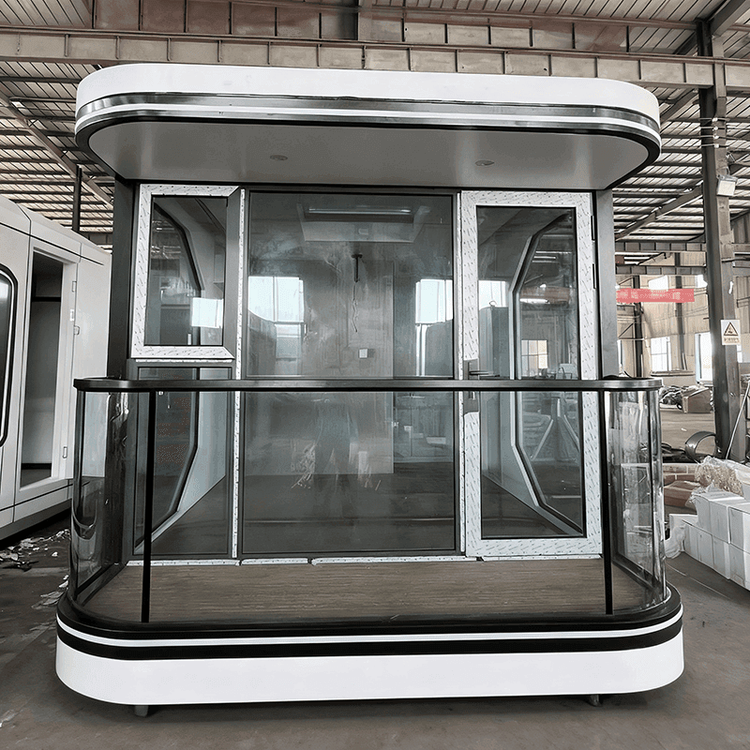
Hangzhou Mobile Bus Toilet
The Hangzhou mobile bus toilet is a vehicle-mounted mobile toilet purchased by the Hangzhou Xihu District Urban Management Bureau to welcome the 2022 Hangzhou Asian Games (Paralympic Games).

Internal Facilities and Functions
This mobile toilet is equipped with five independent restrooms and one independent restroom for special populations, capable of meeting the needs of six people using the facilities simultaneously. The vehicle is fully equipped with basic amenities such as air conditioning, USB charging ports, and handrails to enhance user comfort. The restroom for special populations includes a foldable baby care table, facilitating parents in changing diapers for infants. On the right side of the vehicle, an electric wheelchair lift is installed, operating in a fully electric mode for easy operation, effectively addressing the challenge of wheelchair users boarding and alighting, and embodying the concept of barrier-free design.
Comparative Advantages Over Traditional Mobile Public Toilets
Traditional mobile public toilets require transportation vehicles and forklifts for loading and unloading, which is time-consuming. Additionally, some toilets need external septic tanks, necessitating the collaboration of three different groups of workers, resulting in high labor costs. In contrast, the Hangzhou mobile bus toilet adopts an integrated design, requiring only one driver for deployment, without the need for additional loading and unloading equipment or external facilities, significantly reducing labor and time costs while improving operational efficiency. Its mobility advantage enables it to quickly respond to the needs of different scenarios, avoiding the deployment difficulties faced by traditional toilets due to site limitations.
Application Scenarios and Future Plans
This mobile toilet primarily serves large-scale exhibitions, events, cultural and entertainment activities, and other densely populated scenarios, particularly targeting international events such as the Hangzhou Asian Games and Paralympic Games, effectively alleviating the pressure on restroom facilities around venues. Its design balances functionality and flexibility, and it will serve as an important component of urban emergency support facilities in the future, providing efficient and convenient sanitation services for public activities while offering replicable practical examples for barrier-free environment construction.