
Hangzhou Foam Sealing Mobile Toilet
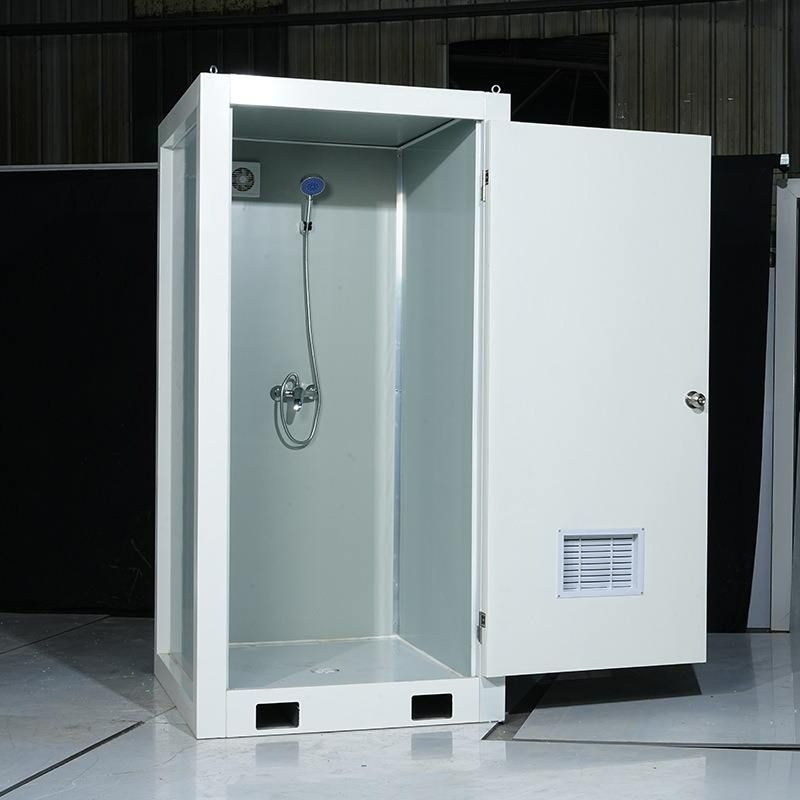
The Hangzhou foam sealing mobile toilet is a new type of mobile toilet that adopts foam ecological flush-free technology, featuring high-efficiency water conservation and environmental protection.
Technical Principles and Water-Saving Advantages
The core of this technology lies in the control of the wetting angle in interfacial chemistry. A foaming device mixes water with a surfactant to generate foam, which covers the surface of excreta to form a sealed layer, blocking odors and reducing water consumption. The water-saving effect is remarkable: The first foam public toilet in Hangzhou consumes only 4 liters of water per day on average, while a traditional toilet requires 6-13 liters of water per flush, representing a water reduction of over 90%.
Structural Design and Temperature Control Characteristics
The toilet shell is molded from polymer composite materials, offering corrosion resistance and lightweight properties. Its thermal conductivity is lower than that of traditional brick-and-mortar structures, reducing heat loss in winter. Some models are filled with phase change energy storage materials in the interlayer, utilizing the latent heat exchange during solidification-melting to reduce internal temperature fluctuations by more than 40%, achieving passive temperature control without external energy supply.
Sewage Treatment and Recycling
The built-in bioreactor employs immobilized microbial technology, attaching microbial communities from activated sludge to the surface of specially designed carriers. The carriers are optimized through fluid dynamics design, increasing the contact area between sewage and microorganisms by five times and significantly improving organic matter decomposition efficiency. The treated gray water meets the urban miscellaneous water quality standards and can be directly used for greening irrigation or road cleaning, forming a closed-loop water cycle.
Energy Supply and Intelligent Operation and Maintenance
The energy system consists of a complementary system of solar photovoltaic panels and cogeneration units: the photovoltaic panels convert light energy during the day, while at night, microbial fuel cells utilize the chemical energy of organic matter in the sewage to generate electricity. After embedding IoT technology, sensors inside the toilet stalls monitor ammonia concentration, toilet paper levels, and door lock status in real-time, uploading data to the cloud via the LoRaWAN protocol. Algorithms predict cleaning cycles based on foot traffic and dynamically dispatch sanitation workers, achieving intelligent operation and maintenance management.
Application History and Promotion Value
Hangzhou first applied this technology on November 30, 2005, during the renovation of the Taohuahexia public toilet in Xiacheng District, building the first foam public toilet and planning to construct another in Beijingyuan. This technology effectively solves the odor problem of traditional public toilets, becoming a promotion direction for new projects in the jurisdiction and providing an innovative solution for water conservation and environmental protection in urban public facilities.



