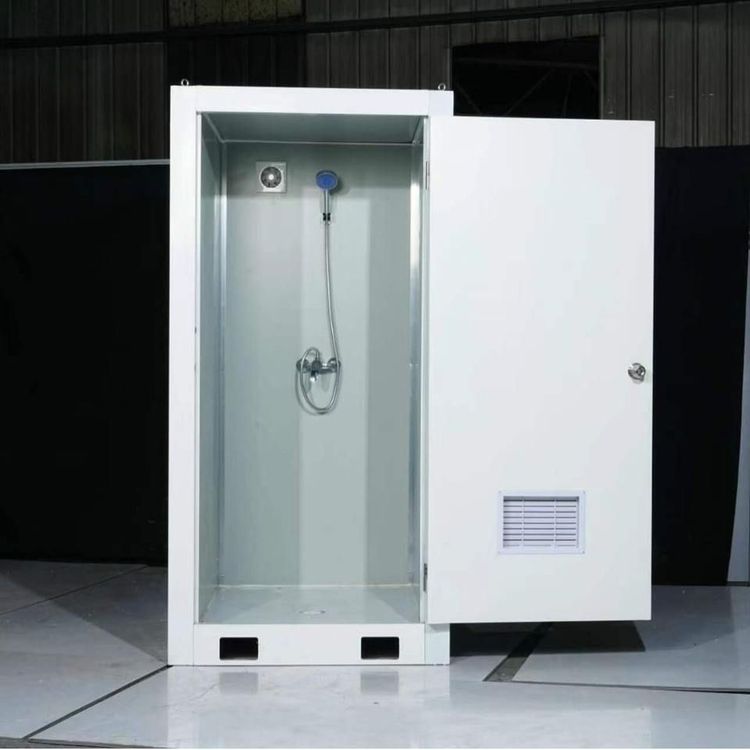
Hanging Small Mobile Toilet
Currently, there is no standardized product information directly targeting the 'hanging small mobile toilet', but its possible design directions and functional characteristics can be inferred by combining the technical features of towable mobile toilets and wall-mounted toilets. The following points explain its potential features based on the technical logic of existing related products:

1. Structural Form: Towable Chassis + Hanging Main Body
Existing towable mobile toilets (such as four-unit towable toilets and waterless vehicle-mounted mobile toilets) typically use a wheeled chassis and are moved by a towing vehicle, with the main structure fixed to the chassis. If designed as a 'hanging' type, two technical paths may be adopted:
- Main Body Hanging: The toilet cabin is suspended above the chassis using shock-absorbing devices (such as springs or hydraulic rods) to reduce the impact of vibrations during travel on internal facilities and improve space utilization.
- Partial Hanging: Only core components such as the toilet and sink are suspended on the cabin wall (similar to wall-mounted toilets), reducing floor space and suitable for miniaturized design.
2. Miniaturized Design: Space Optimization and Functional Simplification
'Miniaturized' may be reflected in the following aspects:
- Size Compression: The area of a single cabin may be controlled within 2-4 square meters, accommodating only 1-2 toilet stalls, suitable for temporary events, scenic spots, etc.
- Functional Integration: Waterless or micro-flush technologies (such as foam sealing and vacuum suction) are adopted, omitting traditional water tanks and sewage pipes to reduce volume; the sink may be combined into a foldable type to further save space.
3. Enhanced Mobility: Lightweight and Rapid Deployment
- Material Selection: The main body may use high-strength aluminum alloy or fiberglass-reinforced plastic to ensure structural strength while reducing self-weight for easy towing and transportation.
- Modular Design: The cabin and chassis can be quickly separated, supporting manual transportation to roadless areas (such as mountains and beaches) to enhance flexibility.
4. Potential Challenges of Hanging Technology
- Stability: The hanging structure needs to balance shock absorption effects with anti-roll capabilities, especially when traveling on complex terrains, requiring low center-of-gravity design or electronic stability systems to ensure safety.
- Maintenance Costs: Hanging components (such as shock absorbers and connectors) may accelerate wear due to frequent movement, requiring regular maintenance or the use of durable materials.
5. Inferred Application Scenarios
Such products may serve the following scenarios:
- Temporary Events: Music festivals, sports events, etc., where sanitary facilities need to be quickly deployed.
- Remote Areas: Wild research stations and tourist attractions without fixed sewage systems.
- Emergency Rescue: As temporary sanitary solutions after earthquakes, floods, and other disasters.
Note: Currently, no mature 'hanging small mobile toilet' products have been found in publicly available information. The above analysis is based on the technical logic of towable mobile toilets and wall-mounted toilets, and actual design needs to be further validated based on specific requirements.