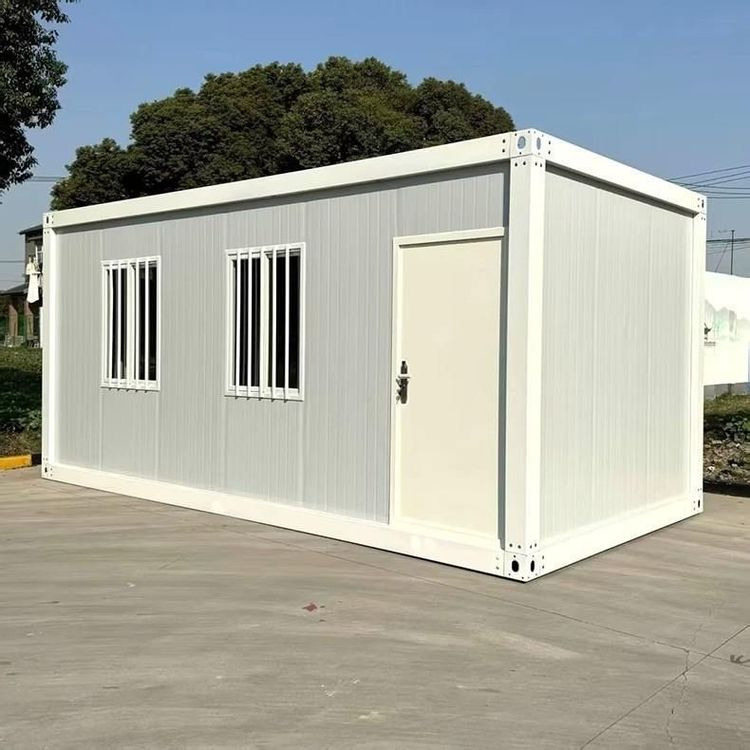
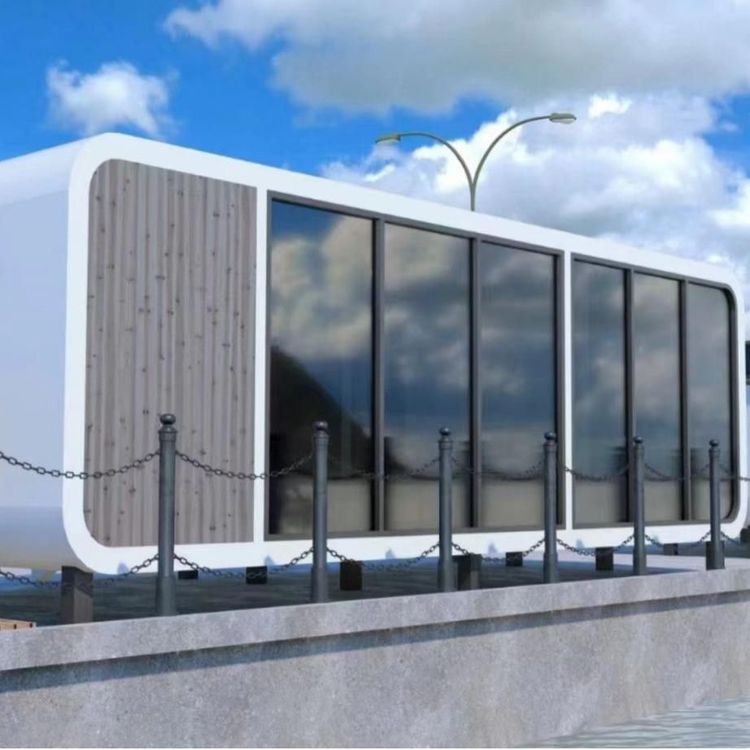
Hami Mobile Toilet Design
The design of Hami mobile toilets integrates functionality, aesthetics, environmental protection, and human-centered needs, featuring versatility to meet the requirements of various scenarios.

1. Structural and decorative design balancing functionality and aesthetics
Hami mobile toilets employ a structure combining thickened steel frames with anti-corrosion wood-grain finishes, ensuring overall stability. Customized relief patterns are embedded in door panels, window frames, and eaves, enhancing visual harmony while reflecting regional cultural characteristics. Internally, they are equipped with anti-slip floor tiles, stainless steel sinks, smart sensor flushing systems, and efficient exhaust fans, balancing durability with ease of daily maintenance. For example, the smart sensor flushing system reduces contact contamination, while the efficient exhaust fan quickly replaces air to suppress odor retention.
2. Modular design enhancing flexibility and adaptability
The core of modular design lies in an integrated stainless steel frame and anti-slip, anti-corrosion panel structure, internally integrating constant-temperature lighting, smart sensor flushing systems, antibacterial sinks, and ample toilet paper holders to meet basic usage needs. The ventilation system has been optimized through on-site wind pressure testing to ensure air circulation under different climatic conditions; the ground is thickened with anti-slip textures to enhance safety during rainy or snowy weather. Modular design also supports rapid assembly, disassembly, and transportation, facilitating layout adjustments according to site requirements.
3. Multi-scenario adaptive design meeting differentiated needs
To cater to varying usage intensities and environmental conditions, Hami mobile toilets offer multiple models:
- Construction site scenarios: Equipped with reinforced chassis and sand-gravel foundation-compatible bases to enhance structural stability and adapt to high-intensity usage demands;
- Outdoor festivals: Fitted with sunshade canopies and nighttime LED guide lights to improve usage comfort and safety;
- Remote areas: Integrated with solar power supply and biodegradable waste storage modules to reduce reliance on municipal facilities and lower collection frequencies.
4. Human-centered design addressing the needs of special groups
Low-positioned handrails are precisely tailored for wheelchair users, ensuring barrier-free access; mirror angles are optimized to avoid glare interference; and internal space layouts are reasonable, reserving sufficient operational space. These design details reflect care for special groups such as the elderly and disabled, enhancing the user experience.
5. Environmentally friendly design reducing resource consumption and pollution
The exterior coating of the toilet body is made of UV-resistant weather-resistant paint, which does not fade or crack easily under prolonged exposure to sunlight; the internal water tank is made of food-grade PE material to eliminate odor retention; fecal waste treatment is compatible with both biodegradation and vacuum collection methods, allowing flexible switching based on on-site sewage disposal conditions. Some models also integrate rainwater collection and preliminary filtration devices for pre-flushing of toilets, further reducing water consumption.