
Half-Process Container Renovation House
The half-process container renovation house requires comprehensive consideration of structural design, functional optimization, environmental protection measures, and cost control. The specific key points are as follows:
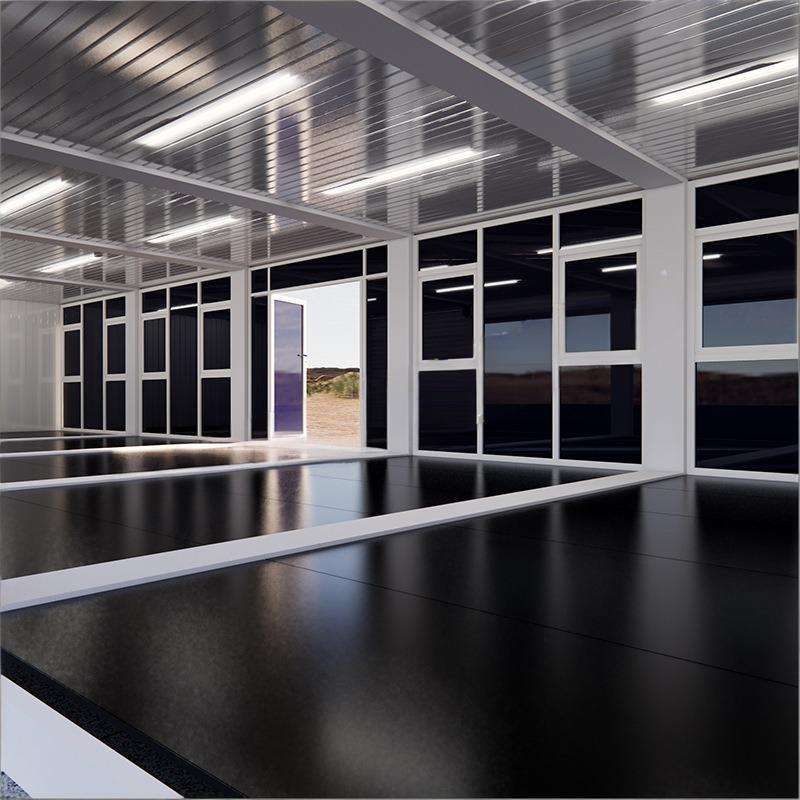
1. Structural Design Optimization
Container renovation needs to address the limitations of the original structure. For example, the large spacing between the longitudinal beams of the bottom frame of a traditional container can lead to insufficient floor stiffness when used directly as a living space. This can be resolved by adding C-shaped steel purlins between the bottom beams to evenly distribute the load to the main beams, enabling the container to remain structurally stable even when stacked three layers high. In addition, the container surface should undergo shot blasting for rust removal and then be coated with zinc-rich primer and polyurethane topcoat to form a protective system, extending the service life of the steel in windy and sandy environments with temperature variations to over 15 years.
2. Functional Zoning and Space Utilization
Renovation should divide functional areas according to needs. For example, a 15㎡ container can achieve maximum space utilization through an open-plan design: using a foldable custom bed that serves as a sofa during the day and unfolds into a double bed at night; adopting a linear layout for the kitchen to save space and increase storage cabinets; and implementing dry-wet separation in the bathroom with rounded corner designs to enhance aesthetics. For spaces larger than 30㎡, multiple containers can be combined to create functional zones, such as separate bedrooms, kitchens, bathrooms, and patios.
3. Environmental Protection and Energy-Saving Measures
Container renovation should focus on environmental performance. For example, a broken-bridge lining structure can be used, filling hard polyurethane foam between the steel frame and interior wall panels and adding rubber insulation pads to reduce heat exchange efficiency by about 40% and decrease heating energy consumption. Additionally, an self-circulating sewage system can be integrated to treat gray water (from bathing and washing) and black water (from toilets) through sewage collection tanks and gravity separators. The gray water can be used for vegetation irrigation after sedimentation and activated carbon filtration, while the black water can be converted into liquid fertilizer through microbial fermentation, achieving a water self-sufficiency rate of over 70%.
4. Cost Control and Material Selection
Renovation costs are significantly influenced by materials and processes. For example, used containers are relatively inexpensive (e.g., a standard 3m x 6m container costs about 4,000 yuan), but their structural integrity needs to be evaluated; new containers are more expensive (e.g., a 40-foot shipping container renovation costs about 10,000 yuan) but have a longer service life. For interior decoration, cost-effective artificial boards can be used, combined with thermal insulation materials to balance economy and functionality. Additionally, modular design enables rapid assembly and disassembly, reducing labor costs.



