
Haining Mobile Toilet Design
The design of Haining mobile toilets focuses on customization, environmental friendliness, durability, rapid installation, comprehensive functionality, and strong adaptability, meeting diverse needs across different scenarios.
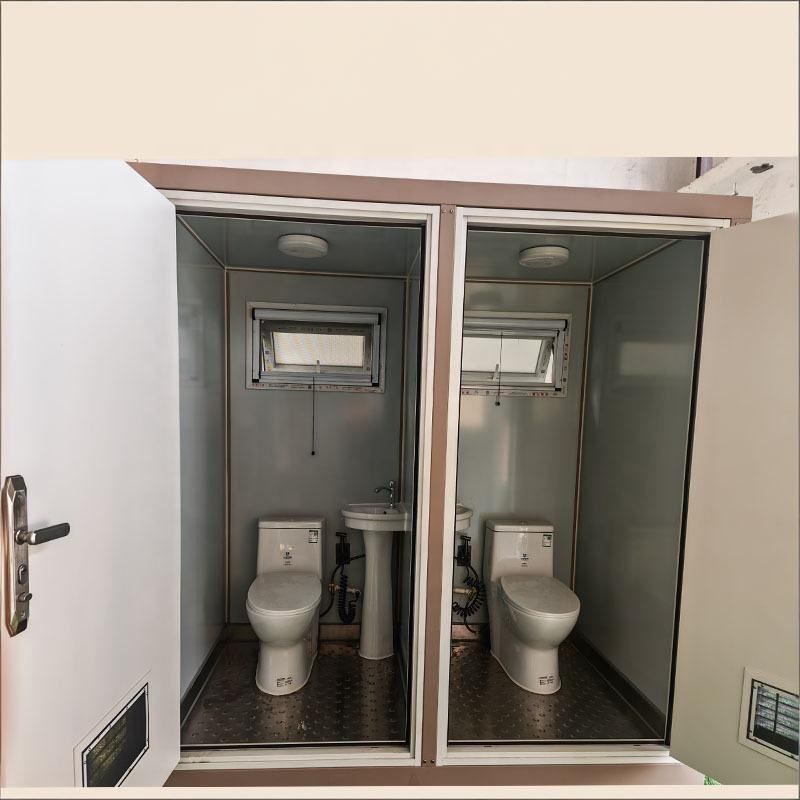
1. Customized R&D
The design of Haining mobile toilets emphasizes scenario adaptability. Companies like Falilai Group develop customized products for various scenarios, including infrastructure projects, cultural and tourism attractions, and outdoor events. For example, construction sites require high-strength structures to withstand frequent relocation, while cultural and tourism areas prioritize aesthetic harmony with the environment. This design approach breaks away from the uniformity of traditional mobile toilets, achieving a balance between functionality and aesthetics through modular combinations.
2. Environmentally Friendly and Durable
In terms of material selection, Haining mobile toilets use eco-friendly composite materials such as high-density polyethylene (HDPE) or fiberglass-reinforced plastic, which offer corrosion resistance, anti-aging properties, and reduced overall weight for easier transportation. Internally, they are equipped with water-saving flushing systems that optimize water flow paths to minimize water usage. Some products also employ microbial degradation technology for waste treatment, achieving zero sewage discharge. Structurally, they feature lightweight frames and wind-resistant anchoring designs to ensure stability in harsh weather conditions.
3. Rapid Installation and Recyclability
The design incorporates standardized interfaces and modular components, allowing assembly within 2 hours without specialized tools, significantly shortening construction timelines. Modules are connected via bolts or clips, facilitating easy disassembly and reuse, thereby reducing long-term costs. For instance, after an exhibition, toilet modules can be quickly relocated and reassembled at another site, avoiding resource waste and aligning with circular economy principles.
4. Comprehensive Functionality
Basic configurations include independent toilet stalls, sinks, ventilation systems, and lighting. Premium models may feature additional amenities such as barrier-free access, baby care stations, and smart sensors. Ventilation systems utilize negative pressure extraction and activated carbon filtration to effectively control odors, while sinks are equipped with foot-operated or sensor-activated faucets to minimize contact contamination. Some products also integrate solar panels for self-sufficient energy supply.
5. Strong Adaptability
The design incorporates wind, rain, and moisture resistance, with elevated bases to prevent water accumulation and double-walled hollow structures for enhanced thermal insulation. In extreme environments, heating modules or insulation layers can be added to adapt to low temperatures. Additionally, mobile toilets can be rapidly deployed on non-hardened surfaces like sand or grass, using adjustable legs to maintain levelness, meeting the flexible needs of temporary scenarios such as music festivals and emergency rescue operations.



