
Haidong Mobile Toilet Design
The design of Haidong mobile toilets focuses on flexibility, environmental protection, and practicality, meeting diverse scenario demands through modular structures and customized functions. Key features are as follows:
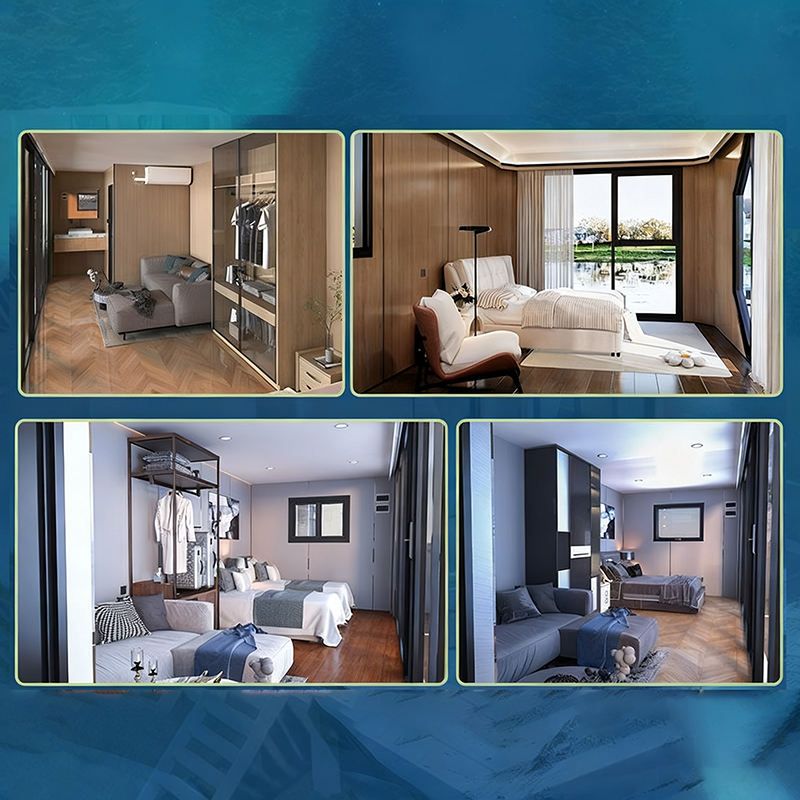
1. Flexibility and Scenario Adaptability Mobile toilets adopt a modular design, allowing rapid adjustment of size and functionality based on the needs of scenic spots, construction sites, temporary gatherings, and other scenarios. For example, toilets in scenic areas emphasize blending with the natural environment, while those on construction sites prioritize structural durability. Their lack of complex infrastructure significantly shortens deployment cycles, enabling “ready-to-use” operation upon delivery via trucks or trailers, particularly suitable for remote areas lacking fixed sanitation facilities.
2. Environmental Protection and Resource Efficiency The design emphasizes reducing environmental impact:
- Water-saving technology: Some models are equipped with vacuum suction or recirculating water systems, reducing single-flush water consumption by over 60% compared to traditional toilets. Color-steel toilets treat sewage through three-stage sedimentation tanks, with cooling water recirculation systems achieving a 65% water-saving rate. Rainwater collection devices are installed for equipment cleaning.
- Energy management: High-end models integrate solar power systems combined with LED energy-efficient lighting to lower operational energy consumption. Coating processes use corrosion-resistant materials to reduce chemical pollution during production.
- Material recycling: The composite structure of color-steel plate substrates and coatings supports recycling and reuse, meeting green building standards.
3. Structural Safety and Material Innovation
- Frame design: A high-strength steel welded chassis is used, combined with finite element analysis to simulate wind loads, ensuring structural deformation remains below 0.3% under 8-level wind pressure. Hydraulic lifting systems adapt to uneven ground, enhancing transportation stability.
- Wall panels and roofs: Metal composite materials like color-steel plates are selected, formed into C-shaped or Z-shaped studs through cold-forming processes, offering thermal insulation, sound insulation, and fire resistance. For high-altitude or regions with large temperature variations (such as Qinghai), coating formulations are adjusted (adding UV absorbers) and substrate treatment processes (low-temperature adhesives) are enhanced to improve anti-aging and low-temperature toughness.
4. Functional Customization and User Experience
- Internal space optimization: Layouts are adjusted based on usage scenarios, such as barrier-free toilets equipped with handrails and low-positioned sinks; scenic area toilets incorporating view windows or cultural decorative elements.
- Health management: Integrated deodorization and sterilization modules use photocatalyst or negative ion technology to purify air. Sewage systems follow fluid mechanics design, with pipe diameters matched to fluid viscosity coefficients. Anti-freeze structures are achieved through electric tracing tapes combined with thermal insulation layers.
- Thermal comfort: Polyurethane foam insulation layers form closed-cell structures, with phase-change microcapsules automatically regulating temperature within the 23°C to 26°C range. Ventilation ducts adopt Venturi structures to create negative pressure, coordinated with adjustable louvers to optimize airflow efficiency.
5. Environmental Adaptability and Technical Details For extreme environments, the design incorporates multiple adaptive technologies:
- High-altitude adjustments: Solar panel tilt angles and battery capacities are adjusted to compensate for increased UV intensity affecting materials.
- Temperature variation response: Heat exchangers use aluminum fin structures, with optimized fin spacing to enhance heat transfer efficiency. Insulation layers work in tandem with ventilation systems to maintain internal temperature fluctuations below ±3°C.
These designs position Haidong mobile toilets as a sanitation facility solution that balances efficiency, sustainability, and user experience.



