
Haibei Prefecture Rural Mobile Toilets
The rural mobile toilets in Haibei Prefecture have formed a comprehensive system featuring large-scale deployment, technology adapted to the plateau environment, and customized development at the county level. The specific characteristics are as follows:
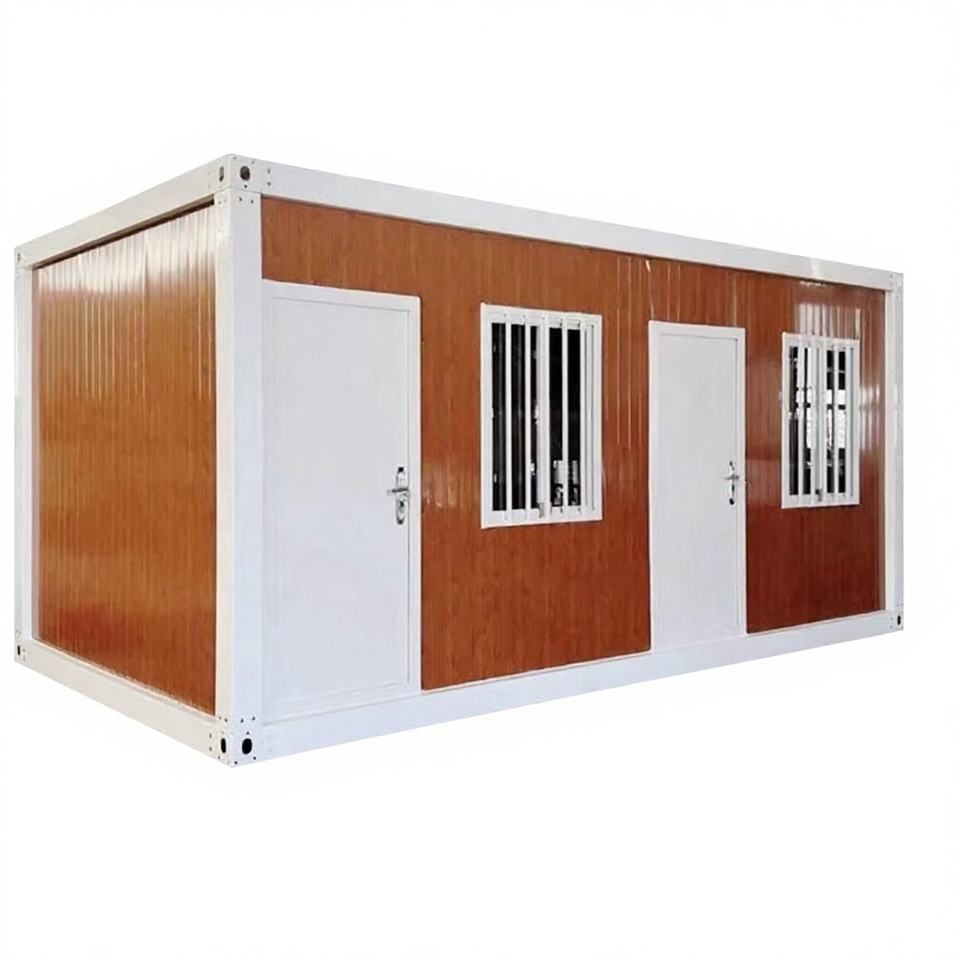
1. Large-scale Deployment and Policy-driven Initiatives
As of 2024, over 1,860 mobile toilets have been deployed across Haibei Prefecture, with an average annual increase in demand ranging from 220 to 280 units. The compound annual growth rate of the market size over the past three years has reached 13.7%. At the policy level, driven by the rural revitalization infrastructure improvement policy, 29 out of the 37 townships in the prefecture have included “harmless mobile public toilets” in their village-level public service lists, forming a government-led large-scale construction model.
2. Technical Adaptability to High-altitude and Cold Environments
To cope with the extreme plateau climate, mobile toilets must meet stringent requirements such as operating at temperatures as low as -30°C, preventing freezing in sewage disposal, and enabling modular assembly. For example, Guting Metal Products uses a Q355B weather-resistant steel main body with modular sandwich panel cladding, achieving a wind resistance rating of Level 10, suitable for the strong ultraviolet radiation and freeze-thaw cycles of the plateau. The Aru Grassland Post Station project in Qilian County has verified its continuous operation capability at -28°C, with restrooms and shower rooms supporting both independent power supply and grid-connected dual-mode switching, addressing energy supply challenges in off-grid areas.
3. County-level Customization Trends
- Gangcha County: Addressing the issue of soft ground in pastoral areas, adjustable legs and lightweight steel structures are used, along with the integration of sixteen convenience services such as free charging and parking guidance, promoting the upgrade of public toilets to “comprehensive service stations”.
- Qilian County: At an altitude of nearly 3,200 meters, oxygen supply interfaces and double-layer vacuum insulation designs are reinforced to ensure human comfort in high-altitude areas.
- Menyuan County: Emphasizes Tibetan-style exterior customization and redundant solar power supply, balancing cultural characteristics with energy sustainability.
4. Environmental Compliance Upgrades
The “Technical Guidelines for Pollutant Control in Plateau Mobile Public Toilets (Trial)”, implemented from January 2025, requires that the fecal storage capacity be at least 1.8 times the single-day peak usage, with sewage treatment modules passing CMA-certified COD/NH₃-N removal rate tests. Urine separation systems have become mandatory for new projects. For example, Jinmuhe Metal Products' environmentally friendly public toilets integrate a three-stage biological filter bed + ultraviolet disinfection unit, achieving measured COD removal rates of 76.3% and NH₃-N removal rates of 68.9%, and are equipped with gravity-type urine separators and anti-overflow urine storage tanks as standard.
5. New Energy Applications and Service Model Innovations
In January 2026, Panbao Village in Gangcha County launched the first pilot project for “converting dry toilets to water toilets + new energy power supply”, adopting the “NICE Energy Storage Unit” system (solid-state thermal storage + multi-energy integrated microgrid technology) to achieve energy self-sufficiency and stable operation in extremely cold environments. Meanwhile, Gangcha County has reduced operation and maintenance costs through a “local management + remote support” model, with the pilot project operating continuously and stably for over 3,000 hours, with a failure rate much lower than expected.



