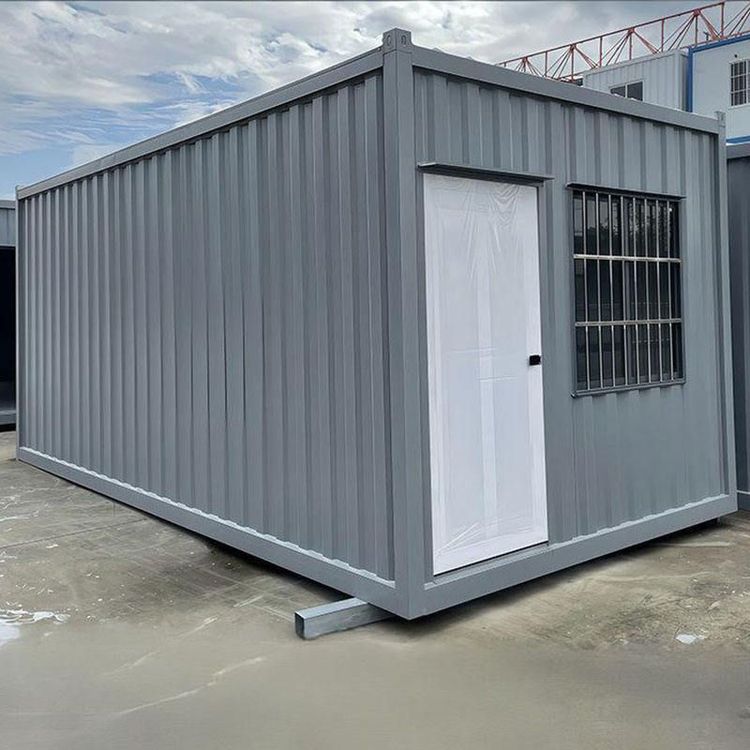
Haibei Mobile Toilet Design
Haibei mobile toilet design focuses on environmental protection, durability, and humanization, achieving comprehensive performance optimization through multi-dimensional innovations in materials, structure, and functions.

Material selection balances performance and environmental protection The core material is color-coated steel plate. Its surface zinc coating can resist oxidation caused by strong ultraviolet rays and temperature differences between day and night on the plateau. The middle layer is filled with polyurethane or rock wool for efficient thermal insulation, and the bottom moisture-proof film blocks water vapor penetration. Some manufacturers incorporate the concept of resource recycling into the material system by increasing the proportion of recycled steel, reducing the environmental load while ensuring structural strength.
Structural design enhances durability and safety The frame adopts a modular truss structure. Computer simulations are used to optimize the load-bearing capacity and deformation threshold of the joints, ensuring wind and earthquake resistance. The connection between the side panels and the roof uses hidden latches and sealing strips for double fixation, improving air tightness. The floor innovatively combines anti-slip patterned steel plates with anti-corrosion wooden interlayers, enhancing friction to prevent slipping and blocking ground moisture through the wooden layer to extend the equipment's lifespan.
Function integration highlights environmental protection and humanization
- Environmental protection technologies: The water-saving flushing system is equipped with pressure-sensitive valves and atomizing nozzles, reducing water consumption per flush by more than 60% compared to traditional toilets. Some units are connected to small-scale biological treatment tanks, using microorganisms to decompose waste and achieve zero sewage discharge. The roof integrates solar photovoltaic panels to power lighting and ventilation equipment. The ventilation system adopts a passive air duct design, using natural wind pressure for 24-hour air exchange and reducing energy consumption.
- Humanized design: According to the standards of the tourism toilet quality improvement project, handrails, barrier-free toilet stalls, third toilets, and mother-and-child facilities are added to meet the needs of special groups. The ratio of male to female toilet stalls is optimized to 1:1.5, and mobile and tidal toilet layouts are promoted to dynamically adjust the number of stalls in response to tourist peak flows. The interior is equipped with basic facilities such as ceramic squatting pans, flush tanks, and exhaust fans, and some units have ceiling lights added to improve nighttime usability.
Manufacturing processes ensure quality stability The plate cutting uses CNC equipment with an accuracy of ±0.5mm. Inert gas shielded welding is used to prevent oxidation. The surface treatment undergoes three processes: pickling, phosphating, and spraying, significantly improving the coating's adhesion and uniformity. During assembly, each functional module is independently tested for air tightness and load-bearing capacity, and an overall performance acceptance is conducted after final assembly to ensure the product can adapt to the complex plateau environment.