
Guyuan Mobile Toilet Production
The production of mobile toilets in Guyuan involves multiple aspects such as design, selection, materials, and installation.
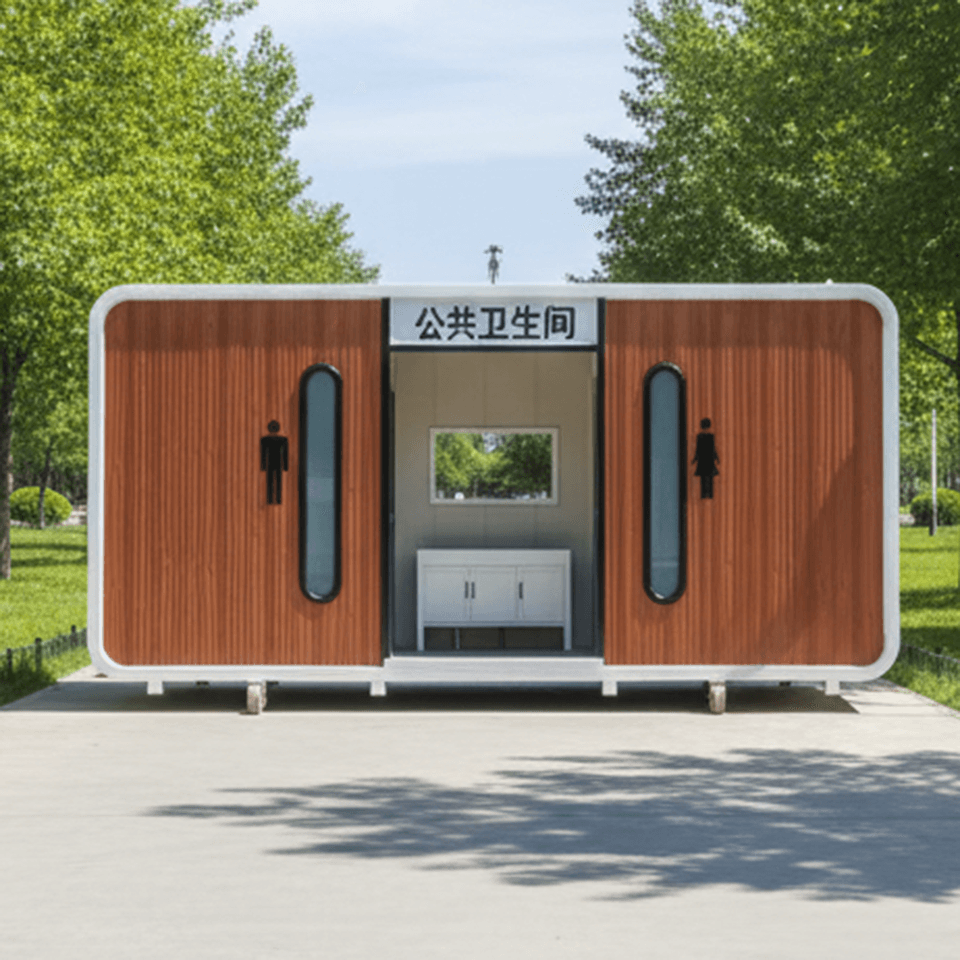
I. Design and Customization
Some companies, such as Jinhua Xin'an Steel Structure Engineering Co., Ltd., offer integrated services for mobile toilets, including design, production, sales, and installation. They can provide personalized design and customization according to customer needs. For example, for tourist attractions, construction sites, or temporary event venues, the size, layout, and functional modules of the toilets can be adjusted to meet the differentiated needs of different usage scenarios.
II. Functional Type Selection
The functional type of mobile toilets directly affects the production process. Cangzhou Hengtai Sanitation Equipment Co., Ltd. has developed various technical routes:
- Waterless Packaging Ecological Toilets: These toilets collect excreta using biodegradable film bags without the need for flushing, making them suitable for water-scarce areas.
- Vacuum Adsorption Ecological Toilets: These toilets use a negative pressure system to quickly suction excreta, saving water and reducing odors.
- Microbial Degradation Toilets: These toilets decompose organic matter through microbial colonies, achieving harmless treatment and reducing sewage discharge requirements.
- Foam Sealing Toilets: These toilets cover the surface of excreta with foaming liquid to block odors and reduce flushing water volume.
Other types, such as high-pressure soda water flushing, modular, and automated control toilets, require the selection of appropriate solutions based on usage frequency, environmental conditions, and budget.
III. Materials and Structure
Conventional public toilets use standardized material combinations:
- Exterior Wall: Metal carved panels (corrosion-resistant and heat-insulating).
- Interior Wall: Integrated decorative wall panels (easy to clean and aesthetically pleasing).
- Insulation Layer: Rock wool (fire-resistant and with excellent thermal insulation performance).
- Floor: Marble or anti-slip floor tiles (wear-resistant and moisture-proof).
- Ceiling: PVC ceiling (waterproof and lightweight).
- Skeleton: Welded steel structure with 50×50mm or 50×25mm square tubes (ensuring overall stability).
Material selection should take into account durability, environmental friendliness, and cost. For example, in cold regions, the thickness of the insulation layer should be increased, and in humid environments, anti-rust treatment should be optimized.
IV. Installation and Debugging
After production, on-site installation is required, including steel structure assembly, pipeline connection (such as water, electricity, and sewage), and functional module debugging (such as microbial colony introduction and foam generator calibration). After installation, the flushing system, ventilation system, and sewage discharge efficiency should be tested to ensure compliance with sanitary standards and usage safety.



