
Guyana Prefabricated Houses
Guyana prefabricated houses are characterized by customization, low cost, efficient installation, and localized distribution.
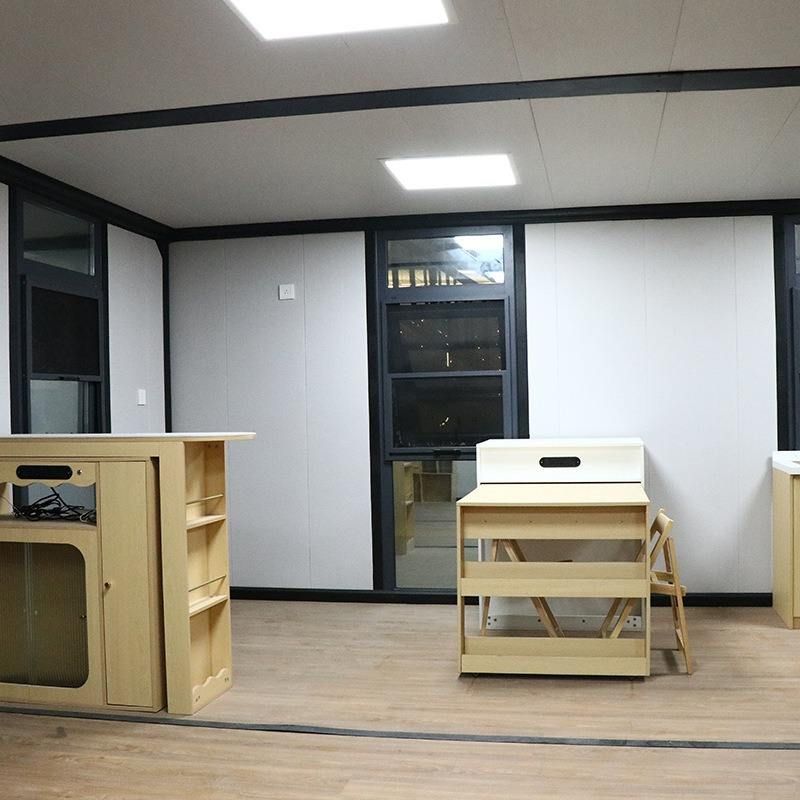
1. Product Types and Price Ranges
The prefabricated houses in the Guyana market are primarily customized flat-pack container houses, such as the 5-in-1 flat-pack houses like the "Hip Roof Villa" offered by Suzhou Daxiang Container House Co., Ltd. These houses feature a modular design, including components like prefabricated flat floors, with price ranges from ¥3,020.13 to 15,436.22 per set. The minimum order quantity is 1 set, suitable for individual or small project needs. Their flat-pack form facilitates transportation, especially in areas of Guyana with limited infrastructure.
2. Transportation and Installation Cost Advantages
For Guyana's infrastructure needs, the transportation cost of prefabricated house components is 22% lower than that of traditional building materials. This is due to the modular design, which reduces material waste and loading space, while the flat-pack form lowers logistical complexity. In terms of installation efficiency, prefabricated houses, through standardized components and simplified processes, achieve a 5-fold increase in construction speed compared to traditional buildings, significantly shortening project timelines and reducing labor costs. For example, a 2000㎡ exhibition center can be quickly erected using the "exhibition warehouse + local distribution" model, serving the surrounding market.
3. Localized Distribution and Market Coverage
Guyana adopts an "exhibition warehouse + local distribution" model, establishing a 2000㎡ exhibition center in the capital, Georgetown, as a product display and storage hub. This model attracts potential customers by showcasing the diversity and functionality of prefabricated houses, while relying on a local distribution network for rapid delivery, covering surrounding areas. This strategy reduces logistics costs and enhances market responsiveness, particularly suited to Guyana's dispersed geographical environment and infrastructure needs.
4. Application Scenarios and Adaptability
Prefabricated houses in Guyana have a wide range of applications, including residential use, temporary office spaces, and post-disaster reconstruction. Their modular design allows for flexible combination according to needs, such as space adjustment through stacking or expanding modules. Additionally, prefabricated houses offer superior earthquake resistance and moisture proofing compared to traditional buildings, adapting to Guyana's tropical rainforest climate and geological conditions, providing safe and comfortable living environments for local residents.
In summary, Guyana prefabricated houses, through customized design, cost optimization, and localized distribution, represent an efficient solution for meeting infrastructure needs, combining economic viability with practicality.



