
Guangyuan Mobile Toilet Renovation
The renovation of mobile toilets in Guangyuan requires comprehensive consideration of various factors, including the current state of public toilets, product types, performance parameters, and exterior design.
I. Renovation of Current Public Toilet Conditions Public toilets that do not meet the 'Urban Public Toilet Design Standards' require targeted renovations. For example, the public toilet in Phase 3 of Tianli Huafu Xuetin Community, Dongping Community, Dongba Subdistrict, which lacks natural ventilation through its windows and does not have separate areas for men and women, needs to be renovated by the developer according to the standards before being handed over for maintenance. Such renovations should prioritize resolving basic functional issues like ventilation and zoning to ensure compliance with hygiene and usability standards.
II. Adaptation of Mobile Toilet Product Types Depending on the renovation scenario requirements, different box-structured mobile toilets can be selected:
- Integrally Welded Fixed Type: Suitable for long-term temporary constructions on construction sites or fixed locations in scenic spots. Its advantages include full-function assembly and debugging completed in the factory, ready for immediate use upon on-site hoisting, with a sturdy structure, good sealing, and a service life of up to 15-20 years.
- Quick-Assembly Container Finished Toilets: Ideal for short-term construction projects or bulk temporary locations. Modular prefabricated components support rapid assembly, with empty boxes stackable for transport, allowing over 10 sets to be carried in one vehicle, and can be disassembled and reused multiple times.
- Foldable Container Toilets: Designed for scenarios requiring rapid deployment, such as emergency relief and field operations. When folded, their volume is only 1/4 of the expanded state, and they can be fully deployed in 15-30 minutes, with core functions pre-installed in the factory and ready for use upon connection to electricity.
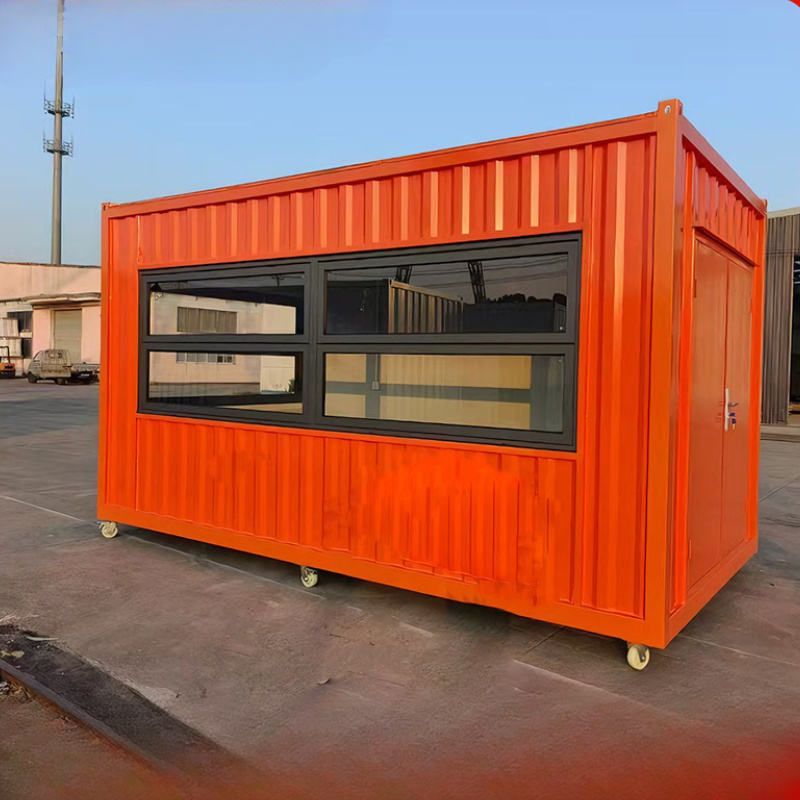
- Shipping Container Renovation Models: Suitable for extreme environment operations or industrial mining areas. Renovated from discarded shipping containers, they offer high structural strength but are heavy, have high renovation costs, and weaker insulation and soundproofing performance.
III. Optimization of Performance Parameters Renovations should focus on parameters such as electrical control, flushing methods, energy consumption, and operational costs. For example, adopting foot-operated controls and flushing methods can reduce the risk of contact transmission; the operating temperature range should cover -40℃ to 50℃ to adapt to extreme climates; low-energy designs with a daily power consumption of 0.5W and an operational cost of 0.016 yuan per use can reduce long-term operational costs. Additionally, product features like marble non-slip floors, 304 stainless steel toilet basins, odorless designs, and automatic control functions can enhance the user experience and management efficiency.
IV. Exterior Design Requirements Renovations should balance aesthetics and practicality, with exterior designs meeting the needs of citizens and the city's image. It is recommended to use lively and bright colors, with durable materials selected for doors, windows, and wall materials to ensure structural stability and ease of maintenance. A simple and practical style can blend into the urban environment while reducing long-term maintenance costs.



