
Types of Mobile Toilets in Guangxi
The main types of mobile toilets in Guangxi include mobile toilets, eco-friendly toilets, and container toilets. They can be classified into direct-discharge and sewage-storage types based on usage mode, and water-flush and foam-flush types based on flushing method. Here are the specific classifications and characteristics:
Classification by Basic Type
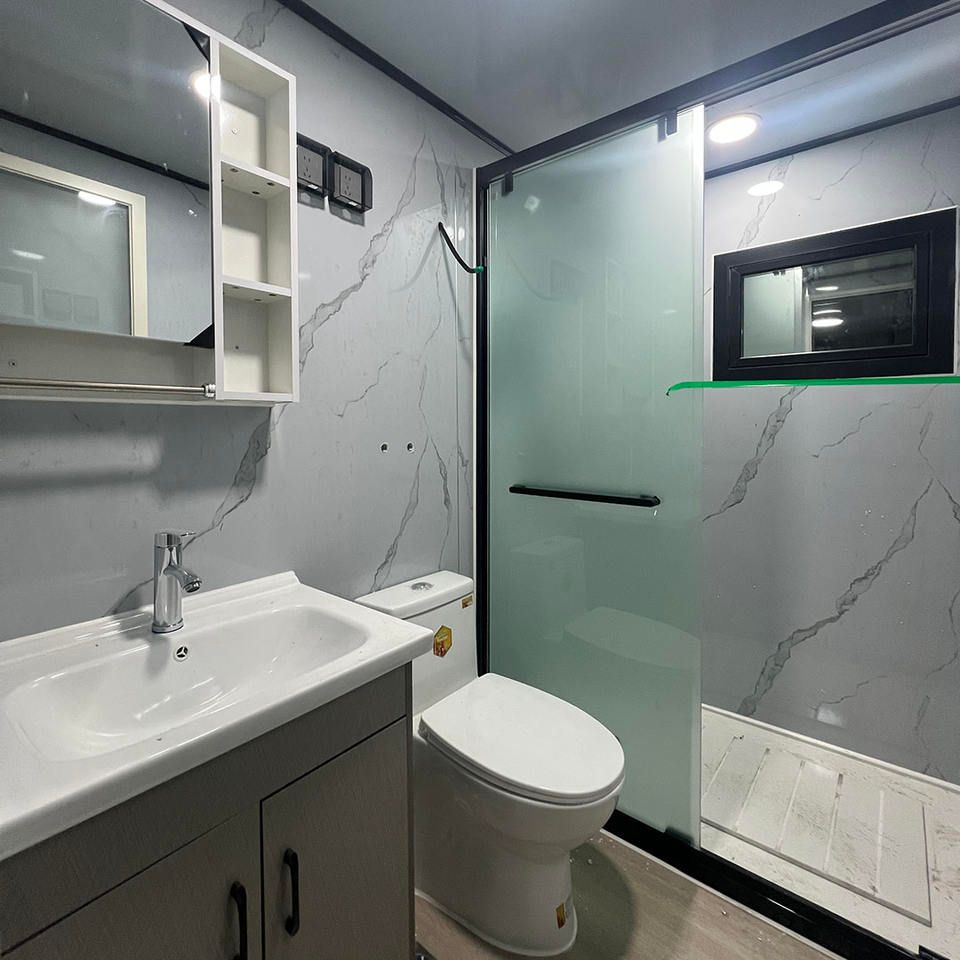
Mobile toilets are the most common type in Guangxi. They are typically made of lightweight materials (such as fiberglass reinforced plastic and metal frames), are movable, and are suitable for temporary events and construction sites. Eco-friendly toilets emphasize ecological friendliness, reducing pollution through technologies such as biodegradation and recycling, and are commonly found in scenic spots or ecologically sensitive areas. Container toilets use standard containers as carriers and achieve toilet functions by modifying their internal structures. They are modular and can be quickly deployed, making them suitable for emergency or long-term temporary use.
Classification by Usage Mode
Direct-discharge mobile toilets are directly connected to municipal sewage networks through hoses, with sewage being discharged in real-time to urban sewage treatment systems. They are suitable for venues with fixed sewage discharge interfaces, such as city squares and commercial streets. Their advantage lies in the fact that they do not require manual cleaning but rely on municipal infrastructure. Sewage-storage mobile toilets are equipped with large sewage collection tanks inside and are regularly cleaned by sewage suction trucks. They are suitable for temporary venues without sewage discharge conditions, such as outdoor construction sites and large event venues. These toilets offer high flexibility but require regular maintenance.
Classification by Flushing Method
Water-flush mobile toilets use traditional water-flushing methods, discharging sewage into collection tanks or networks through gravity or pressure. They are technologically mature and offer good cleaning effects, but consume a large amount of water and require a配套 (supporting) water supply system. Foam-flush mobile toilets use a small amount of water and foaming agents to generate foam, which lubricates the pipes and suppresses odor diffusion. They have significant water-saving effects (using only 1/10 of the water used by water-flush toilets) and do not require frequent cleaning, making them suitable for water-scarce or environmentally demanding scenarios, such as arid regions and ecological protection zones.
The diverse designs of mobile toilets in Guangxi meet the needs of different scenarios, demonstrating a combination of practicality and environmental friendliness from basic types to functional subdivisions.



