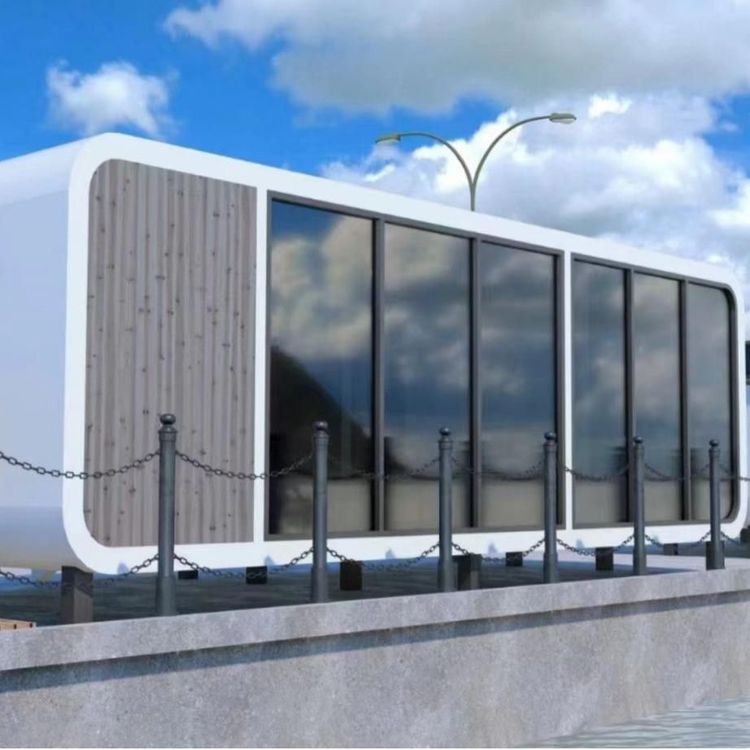
Grounding of Container Mobile Homes
The grounding of container mobile homes should be carried out with targeted measures based on their intended use and the complexity of the electrical system to ensure electrical safety and electrostatic protection. The key points are as follows:

1. Necessity of Grounding
If container mobile homes are equipped with electrical equipment (such as lighting, air conditioners, and distribution boxes), grounding is required to prevent electric shock accidents. When the insulation of the equipment is damaged and the casing becomes live, the grounding system can conduct the current into the ground, preventing the formation of a current loop when personnel come into contact. The grounding resistance should be no more than 4Ω to reduce the risk of electric shock.
2. Grounding Specifications for Energy Storage Containers
If the container is used for energy storage systems (such as battery energy storage stations), it must strictly comply with the "Code for Design of Grounding of AC Electrical Installations" (GB 50065—2011):
- Internal Grounding Grid: Lay a dedicated 250mm² copper grounding bar under the anti-static floor to form an equipotential grounding grid, and connect it to the external grounding point of the container body via copper cables.
- Equipment Grounding: Electrical equipment (such as BMS and PCS control boards) should be connected to their own grounding copper bars via 4mm² yellow-green bicolored grounding wires, and then connected to the internal grounding grid. Series grounding is strictly prohibited.
- External Connection: The container should provide at least two grounding points at diagonal positions, using a 250mm² copper bar or more than four 50mm² copper strip cables, and connected to the external main grounding grid via a single-point connection using copper bolts with a diameter of no less than 10mm to avoid introducing potential differences into the container.
3. Grounding Measures for Ordinary Residential Containers
For ordinary container homes used only for living or office purposes:
- Foundation Grounding: If the container is placed directly on the ground, it can be welded to the ground foundation (such as concrete piles or angle steel) via the bottom beam to form a natural grounding body.
- Anti-Static Treatment: If anti-static flooring (such as fully steel load-bearing or thick wood-based ceramic anti-static flooring) is laid inside, ensure that the floor system resistance is between 1×10⁶ and 1×10⁹Ω, and the surface resistance is between 2.5×10⁴ and 1.0×10⁹Ω to discharge static charges.
- Electrical Equipment Grounding: Distribution boxes, sockets, and other equipment should be connected to the bottom beam of the container or external grounding electrodes via grounding wires, and the cross-sectional area of the grounding wires should comply with electrical specifications (such as no less than 2.5mm²).
4. Grounding Adaptability in Mobile Scenarios
When container mobile homes are frequently hoisted or transported, ensure that the grounding system can be quickly disassembled and reinstalled. For example, using a bolt-connected grounding terminal structure facilitates the restoration of grounding functionality during redeployment.